

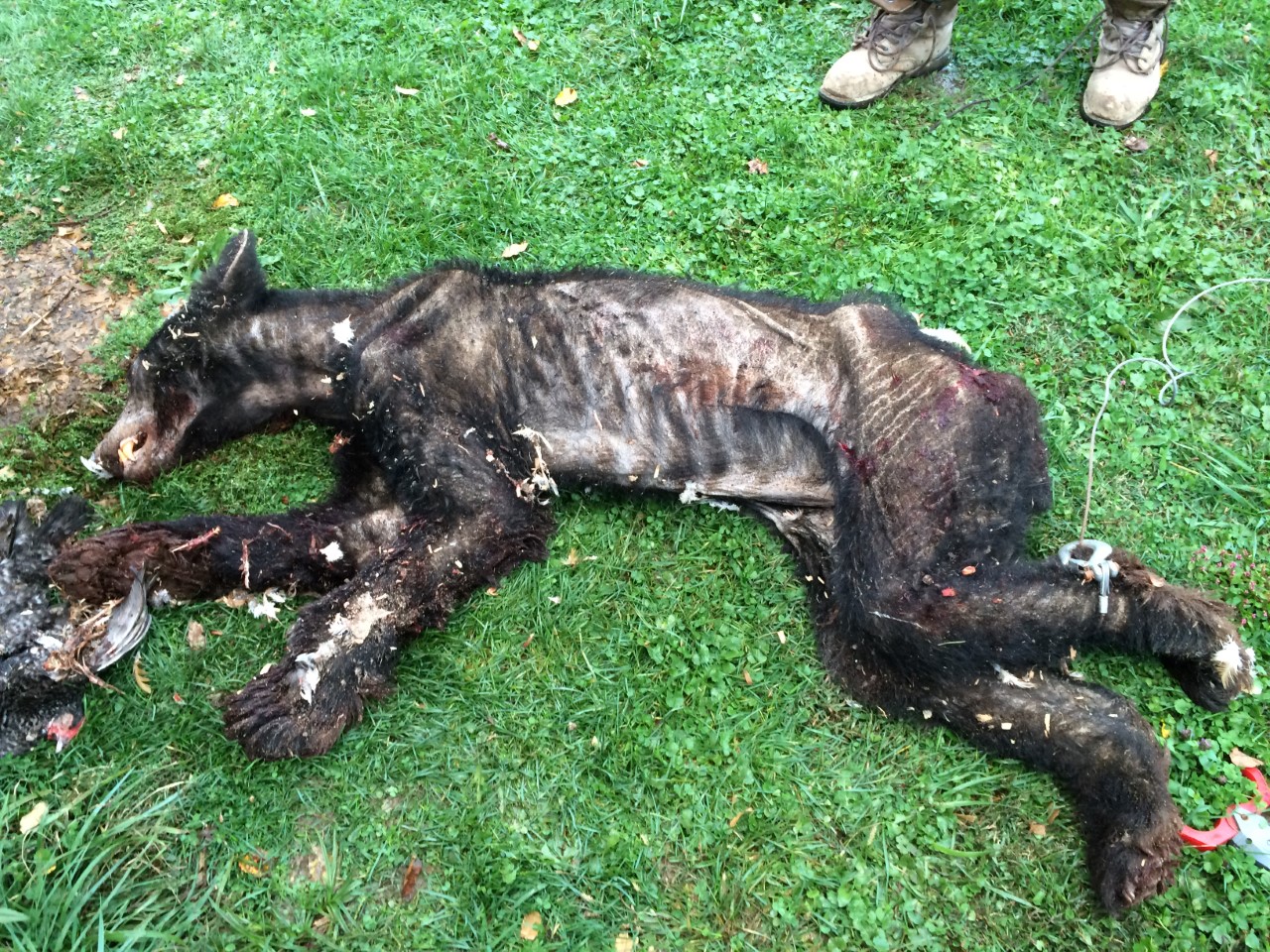
BECKLEY, W.Va. — Despite severe outbreaks of mange in black bears in neighboring Virginia and Pennsylvania, West Virginia game officials say the problem isn’t nearly as severe in the Mountain State.
“So far, mange does not appear to be a population limiting factor and that includes in Pennsylvania, Virginia, and our surrounding states that have it,” said Colin Carpenter, Bear Project Leader of the West Virginia Division of Natural Resources.
The first detection of mange in black bears was in Pennsylvania in the early 1990’s in southwestern Pennsylvania. It spread north and east and into the state of New York. It took a lot longer to come south into West Virginia. The first hunter harvested bear in West Virginia suffering from mange was killed in Pendleton County in 2010.
Carpenter, and other bear researchers, are unsure why it took so much longer to spread into West Virginia than it did to move across Pennsylvania’s bear range and into New York. There are some theories and those are being studied by multiple states.
“We have been actively trying to stabilize population growth and reduce bear populations to some extent in our primary bear range, which is the eastern mountains,” Carpenter said in a recent conversation on West Virginia Outdoors.
“We’ve been able to do that. Whether this was a fortuitous thing that we were in reduction mode just as mange started coming toward us is hard to say. The fact that we have reduced that population in the mountain counties may have helped us to not see mange as badly as our neighbors are seeing it,” he explained.
Carpenter suggested the black bears solitary nature has also probably helped stifle any severe mange outbreaks. Bears generally only congregate during mating season and in feeding areas.
Mange is spread by mites, and the one most prevalent in bears is the same one spread through foxes and coyotes. Carpenter said the disease has been around for centuries but only recently has become an issue for black bears.
“That’s one of the things we’re trying to figure out. There’s a good bit of research that has gone on and is going on to find out what the future of mange holds for bears and whether or not this is something that is going to circle for low level throughout the population,” he said.
Although the condition is starting to draw more attention, Carpenter is quick to note it’s not a level which would create grave concern. The worst year for clinical mange cases in West Virginia was 2020 when the DNR handled 30 cases. Carpenter said in a normal year, more than 100 bears will be killed by cars on the highway. The impact is extremely low.