

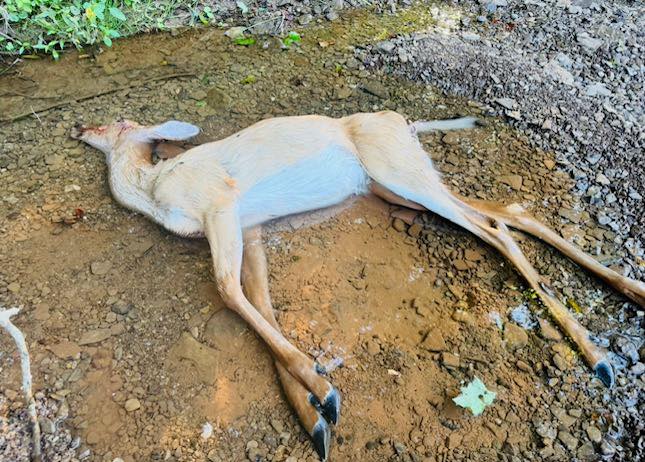
MINERAL WELLS, W.Va. — The impact of epizootic hemorrhagic disease may be worse than most initially thought in parts of West Virginia. Dead deer started turning up about four or five weeks ago in Wood, Jackson, Pleasants, Ritchie, and other counties in the mid-Ohio Valley. The impact was considerably worse across the Ohio River in Washington and Meigs County, Ohio. There large numbers of deer were being found dead throughout the region.
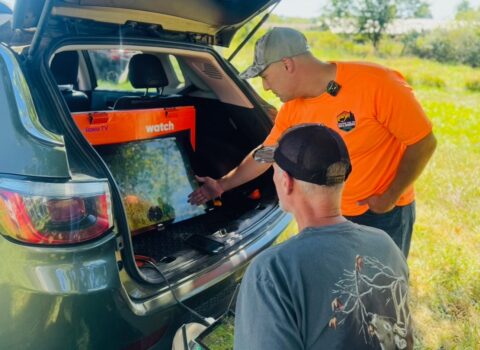
Shon Butler, owner of Longspur Tracking, said surveys his company conducted in recent weeks both on foot and with a drone revealed even more deer have died than many though. He believed it was probably enough to have an impact on the numbers when the hunting season opens this fall.
“We’ve done some surveys over in Ohio. We saw some alarming rates over there, which are widely publicized. West Virginia started on a slow crawl in Wood County, but it has just exploded,” Butler explained.
Butler said they have walked private tracks of land and surveyed some with drones where they picked up large numbers of dead whitetails.
“Some of the properties are 50 to 100 acres and we’re finding sometimes 20 to 25 deer on those small properties,” he said.
The impact is severe, especially to guys who are engaged in scouting for the coming season. A lot of social media posts include pictures of trophy bucks lying dead in a pond or a stream with a massive rack in velvet.
“As a company, we’re so in-tune with these hunters because we work with them to recover deer and helping with wildlife management services. So this sort of goes hand in hand. I’ve seen guys almost with tears in their eyes saying they had been watching a buck for the past three years after we find him dead,” Butler explained.
Although it’s a shocker to see 20 dead deer in a small area, it’s nothing new. Although the deer numbers in the areas where EHD is most prevalent will be down this year, it’s anticipated they’ll rebound fairly quickly in the years ahead. Butler agreed, EHD is nothing new.
“Everybody wonders why it’s happening so much and so intensely today. I don’t think it is, I just think social media blows it up. This has been part of the whitetail deer herd for the past hundred years,” he added.
The spread of EHD can be traced to a small biting fly called a midge. The midge is gone after the first frost and along with it, the virus. Although the virus is in most cases fatal, some survive it and build immunity which can be passed to offspring. But for now, it’s expected to reduce opportunities for hunters in the short term.
“We surveyed Marion and Monongalia Counties last year and this is about the same or maybe even a little worse. That Mineral Wells area has been hit really hard,” Butler explained.
“We really just need to get to that first frost,” he said.