


When U.S. Immigration and Customs Enforcement agents wear masks and use unmarked vehicles to make arrests, a federal judge from West Virginia wrote, the tactics violate the U.S. Constitution’s Fourth Amendment by eliminating officer accountability and stripping people of due process.
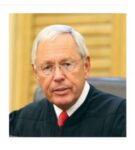
“A mask does not stop a bullet. It does not deflect a blow. It provides no physical protection that the tactical equipment these officers already carry does not provide,” U.S. District Judge Joseph Goodwin of the Southern District of West Virginia wrote in an order this past week.
“A mask does one thing: it hides the face of the officer wearing it. On a public highway, in a civil arrest of a person suspected of no crime, the only purpose served by hiding an officer’s face is to prevent his identification. And preventing identification serves only to eliminate accountability.”
The Fourth Amendment protects against unreasonable government searches and seizures of persons, houses, papers and effects. It requires that warrants be issued only upon probable cause, supported by oath and specifically describing the place to be searched and the items to be seized.
Goodwin’s order was filed in one of a series of cases in the Southern District with people seized in immigration sweeps contesting the basis of their arrests and subsequent incarceration.
These cases have typically involved people who first entered the United States unlawfully and then wound up at processing centers, where they were released under conditions that their immigration status would be reviewed. Many of the people in these cases have declared asylum because of upheaval in their home countries.
Lawyers for the people in these cases contend that they have cooperated with the immigration system and that judges in that system should make final determinations of status. Instead, they have been caught up in sweeps, arrested and sent to jail without being charged with a criminal offense.
Just last week, such cases were before Judges Thomas Johnston, Irene Berger and Goodwin in the southern district. In each case, the judges agreed that the original basis for arrest was flimsy, that being held in jail without a hearing was improper and that the people who were arrested should be released.

In cases involving a couple of people in Berger’s court, the judge wrote, “Both were detained following traffic stops purportedly based on minor infractions. Neither Petitioner was arrested pursuant to a warrant, and neither Petitioner was afforded a hearing before or after being detained.”
COMMENTARY by HOPPY KERCHEVAL: WV federal judges stop ICE overreach.
A recent case before Goodwin involved Anderson Jesus Urquilla-Ramos, a 21-year-old national of El Salvador.
He entered the United States as an unaccompanied minor and was placed under the care of the U.S. Department of Health and Human Services, through its Office of Refugee Resettlement. He was released from custody into the United States, where he maintains a pending asylum application, lawful work authorization and a valid driver’s license.
On Jan. 7, he was driving through West Virginia when he was stopped by an unmarked vehicle. The federal judge’s order indicates Urquilla-Ramos does not appear to have violated any traffic laws: “The officer cited only a plastic cover on his license plate as the reason for the stop.”
Despite presenting a valid driver’s license and an employment authorization document issued by U.S. immigration authorities, Urquilla-Ramos was ordered out of the vehicle “and handcuffed by masked individuals without any explanation,” the judge wrote.
“He was taken into custody by masked, unknown federal agents, leaving him unable to identify those seizing him. I conclude that the use of masked agents to effect a civil immigration detention under these circumstances is unreasonable and unconstitutional.”
Goodwin concluded that Urquilla-Ramos’ constitutional rights “were unquestionably violated. The Petitioner cannot identify the agents who seized him. He knows the seizure occurred at a particular place and time, but he cannot name the individuals, attribute their conduct, or identify who used force, who made statements, or who violated what procedure.
“The seizure is functionally unanswerable. That is not a procedural gap. It is the elimination of constitutional accountability itself.”
Goodwin’s 34 page order contemplates the tension between the circumstances of the arrest and the civil rights spelled out in the Fourth and Fifth Amendments. The order characterizes the aggressive tactics as an assault on the constitutional order that mirrors kidnapping rather than lawful state authority.
“The overarching issue is whether the federal government may deploy anonymous agents to seize persons on American streets and highways for civil violations, without warrants, without identification, and without any process before or after,” wrote Goodwin, a Bill Clinton appointee who has served on the federal bench since 1995.
“The Constitution does not permit that.”
The judge continued by saying the government’s power is legitimate only because it is derived from the people and exercised through law by identifiable public officers answerable to the public and to the courts.
When the government uses force against the public, the citizen can recognize the officer as a lawful representative, the judge wrote. The public can evaluate the act, the judiciary can later review it.
“Every public official who exercises coercive power assumes some personal exposure as the price of legitimate authority. Judges sentence. Prosecutors accuse. Officers seize. None is entitled to anonymity as a default condition of exercising state force,” Goodwin wrote.
“The officer who arrests a person stands in no different constitutional position than the judge who sentences him or the prosecutor who sought the conviction. All exercise delegated authority. All do so under their own names and in their own persons, because accountability is not a burden imposed on public officials as a matter of grace. It is the structural condition of their authority. Remove it and what remains is not law enforcement. It is force without a face, which is another name for the thing the Fourth Amendment was written to prevent.”
Congressional Democrats are pushing to ban U.S. Immigration and Customs Enforcement agents from wearing face masks during operations, arguing the practice reduces accountability, prevents identification and acts as an intimidation tactic.
As part of broader reform demands, they are leveraging Department of Homeland Security funding to force agents to show their faces and display identification. That is one of the main factors in the current partial government shutdown involving DHS.
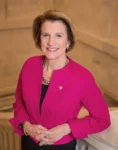
Senator Shelley Moore Capito, R-W.Va., authored a recent opinion piece titled “Democrats turn their backs on DHS and ICE when America needs them most.”
Capito wrote, “Democrats are refusing to stand with the very law enforcement officers tasked with protecting our communities. Instead of supporting DHS and ICE in carrying out their mission, they are pursuing a dangerous crusade to weaken enforcement and undermine the rule of law.”
In prior public comments, Capito has hesitated to support prohibiting ICE agents from wearing face masks, saying she has safety concerns about a no-mask rule.
In her op-ed, the senator wrote, “I stand firmly with the courageous men and women of U.S. Immigration and Customs Enforcement (ICE). These professionals carry out a difficult and often dangerous mission to safeguard our communities. They deserve our respect, our gratitude, and the resources necessary to do their jobs effectively.”
Capito made reference to last month’s sweep in West Virginia that resulted in 650 arrests.
“Recent events here in West Virginia illustrate how effective enforcement can work when there is cooperation,” Capito wrote. “This operation took place successfully with minimal disruption to the public.”
Her opinion piece concluded, “Protecting West Virginians will always be my priority. That starts with standing firmly behind DHS and ICE — and rejecting efforts to weaken them.”