

Lawyers for families seeking religious exemptions to mandatory school vaccinations say West Virginia’s immunization requirements have a “kaleidoscope” of other opt-outs.
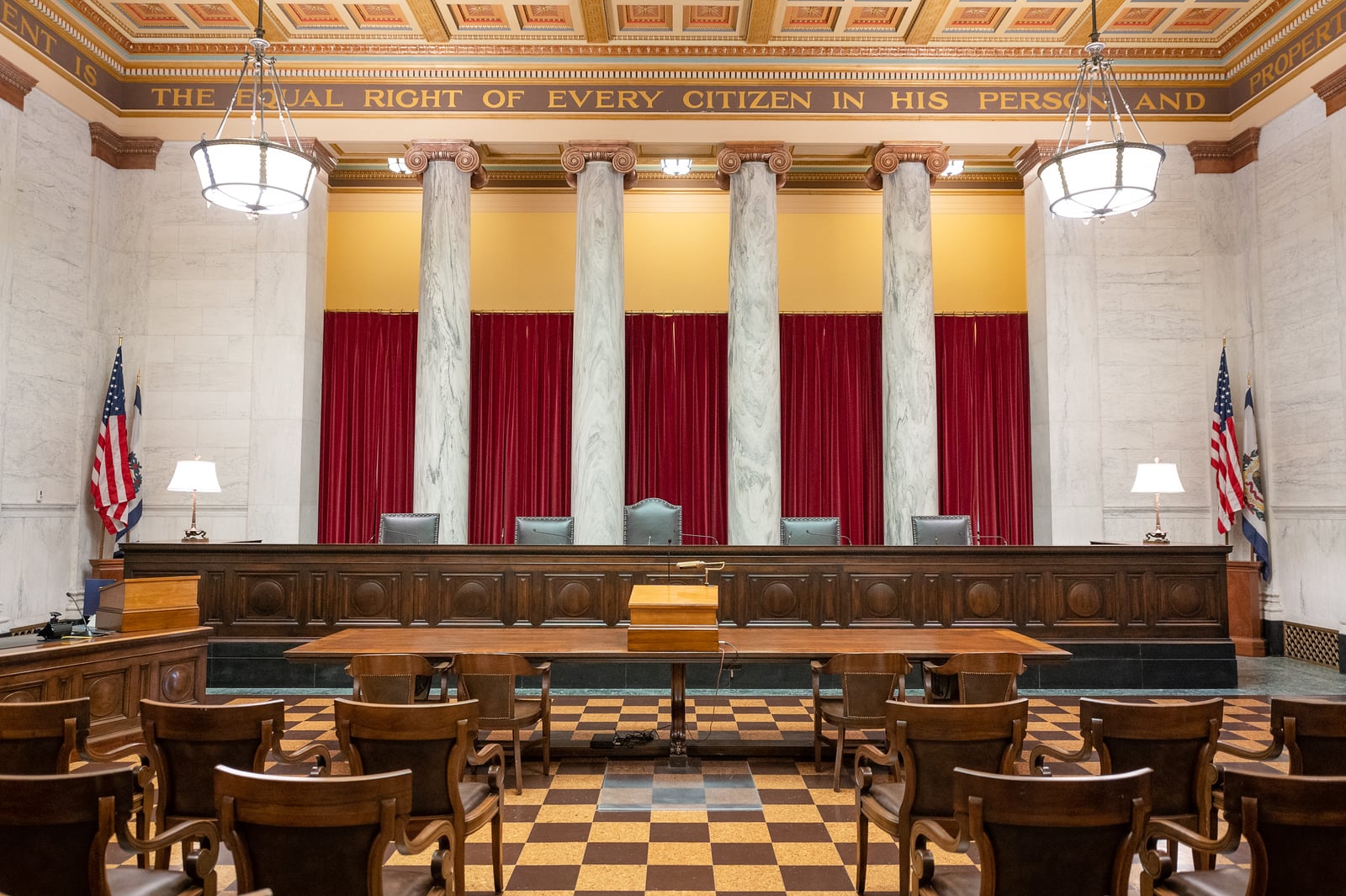
West Virginia’s Supreme Court justices are reviewing a case about whether West Virginia’s religious freedoms law passed in 2023 directly affects the longstanding mandatory vaccinations law for the public school system.
Attorneys for the families seeking religious exemptions to West Virginia’s school vaccination law filed their brief in the appeal last week. The Supreme Court has not yet set a date for oral arguments.
The plaintiffs argue that state education officials have violated the Equal Protection for Religion Act by enforcing a categorical ban on religious exemptions for school vaccines while simultaneously allowing numerous secular opt-outs for students citing medical reasons, adults who work in school systems and homeschoolers.
“This Appeal revolves around West Virginia’s sweeping religious protection statute, and its exception-riddled compulsory vaccination law,” wrote the lawyers for the families seeking religious exemptions.
The lawyers for those families contend that under the religious freedoms act, the government cannot treat religious conduct more restrictively than secular activities that pose a reasonably comparable risk to public health.
One of the mothers in the case “is a Christian and has maintained profound religious objections to abortion going back to her teenage years in the 1990s,” her lawyers wrote in the filing.
The mother sincerely believes that the taking of an unborn life is murder, is concerned about vaccine development studies involving the use of tissue from aborted babies and believes injecting her daughter, A.G., with these vaccines “would invoke eternal consequences.”
Another mother in the case maintains religious objections to vaccinating her 17-year-old daughter, E.G., who lacks only the meningococcal booster vaccine required to enter 12th grade.
However, after a period of thoughtful prayer and scripture reading, Mrs. Hunter’s religious objections to vaccinating E.G. were cemented after she concluded vaccinating E.G. would be “spiritually impure.”
Several common vaccines including those for rubella, chickenpox, and hepatitis A were developed using cell lines that originated from lung tissue taken from two elective abortions performed in the 1960s.
The cell lines are “immortalized,” meaning they have been grown in laboratories for decades. Modern vaccine production uses these self-replicating lab cultures and does not require new or ongoing abortions to manufacture current doses.
West Virginia’s compulsory vaccination law means students entering school for the first time must show proof of immunization against diphtheria, pertussis, tetanus, polio, measles, mumps, rubella, varicella, and hepatitis B unless properly medically exempted.
Gov. Patrick Morrisey issued an executive order earlier last year linking the Equal Protection for Religion Act with the vaccine law, which has no explicit religious exceptions.
The religious protections law gives citizens the right to sue if they believe their deeply held beliefs are being suppressed. But the law includes additional factors to weigh, including whether a compelling state interest exists to uphold a policy under the least restrictive means.
The Morrisey administration directed families to apply for exemptions through the state health department, but West Virginia school systems did not accept them.
In circuit court in Raleigh County last year, Judge Michael Froble ruled that the state’s school vaccine law should allow exemptions for people with religious objections. Froble’s order has been put on pause during an appeal.
Now, heading toward Supreme Court review, the 53-page filing on behalf of families seeking religious exemptions asks the justices to uphold the circuit court’s permanent injunction.