

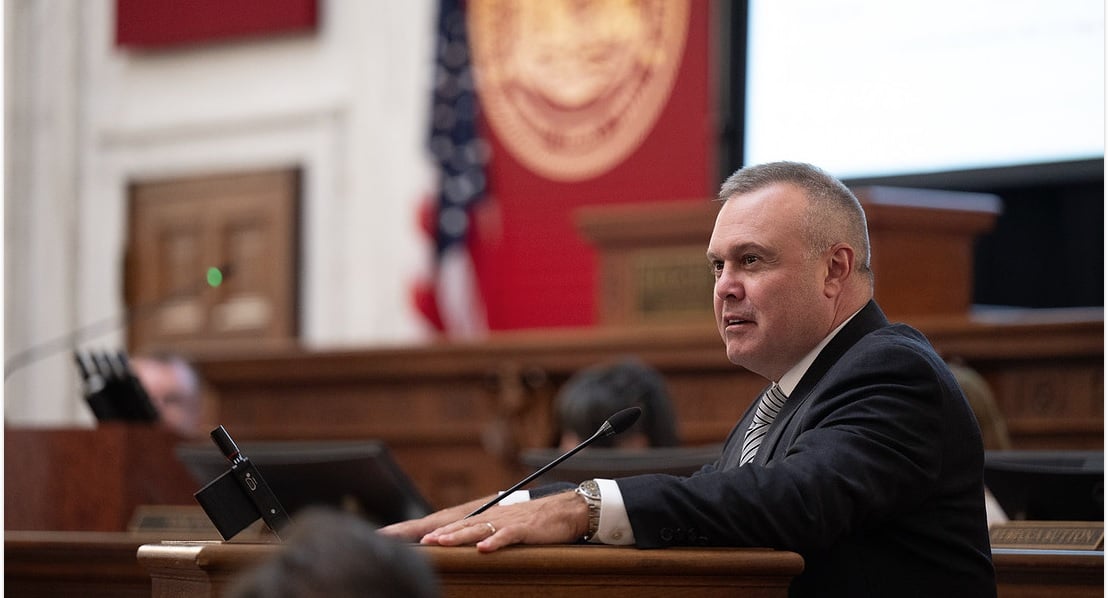
CHARLESTON, W.Va. — Members of the Joint Standing Committee on Energy and Infrastructure heard testimony about keeping electricity rates low from FirstEnergy and Appalachian Power on the final day of interim meetings in Charleston.
FirstEnergy Senior Counsel Gary Jack and Appalachian Power President and COO Brian Abraham told lawmakers data centers are driving the need for the future demand of electricity.

Jack told lawmakers the FirstEnergy contract with an unnamed data center requires minimum monthly payments regardless of their operational status. Residential customers of both utilities will not be asked to pay higher bills due to increased demand caused by the data center boom, according to both representatives.
“They are still going to pay 85 percent of their monthly bill,” Jack said. “They will still pay us even if they don’t use anything because we need that revenue to pay for the transmission we built for them and for the new generation.”
Abraham explained the proposed data centers have been listening to concerns and are acting. The use of water won’t be a large issue in this case because the operator has engineered a new cooling system that will conserve water and protect the environment. Appalachian Power also has contract provisions that will require a data center to pay for the additional generation and transmission costs for the utility to power them up.

“They don’t want our water; they don’t need it because they’ve all figured out a way to run a closed-loop cooling system,” Abraham said. “They’re not going to raise the residential rates because we figured out a way to make them pay for their share and they’re stepping up to the plate.”
Jack told lawmakers they have commitments for 4,000 new megawatts of electricity demand that is expected over the next ten years. Jack said they have to plan now for demand that will cascade into the system in the coming years.
“To give you some context on that 4,000 megawatts, our peak right now on the hottest days of the summer and the coldest days of the winter is about 3,000 megawatts, so we are looking to double our load in the next ten years,” Jack said.
Both companies said new generation opportunities will be pursued to meet the new demand. Much of the capacity additions in the PJM system in recent years have been renewable, which Jack pointed out cannot keep up with the on-demand access fossil fuels provide.
“As you guys know, that’s not dispatchable,” Jack said. “You cannot rely on the renewables, so we need fossil fuel base-load generation to meet these needs.”
Abraham said many of their potential customers want to locate along the Virginia border to better serve customers. He believes when these companies set up shop in smaller communities, the change will be positive, and in many cases it happens overnight with increased tax revenue and support from the companies that elect to relocate.
“It will overnight cause the tax base in those schools, in those communities, for the fire and ambulance services that we’ve always wondered where the money was coming from—overnight that will change,” Abraham said.