


The State of West Virginia issued a 30-day cancellation notice today for a $63 million contract meant to upgrade the computer systems at the Division of Motor Vehicles.
The company that originally won the bid, AstreaX, had representatives in Charleston the same day of the cancellation, trying to talk through the situation with state officials.

Eric Jorgensen, chief executive officer of AstreaX, said in an interview with MetroNews that any delay in starting work on the modernization project represents more time that citizens experience a DMV that is less efficient than it could be.
“On the one hand it’s upgrading the system that the employees at the DMV use to deliver services to the citizens of West Virginia, but on the other hand it also is providing additional online services to the citizens directly, getting them out of the line, safely on the road, doing the things they need to be doing without even having to come into the DMV.”
With the cancellation, he said, “That’s really discouraging to being able to deliver that value. So, yeah, I think that that’s the that’s the bad news for the citizens of West Virginia.”
The contract was envisioned to have three phases: moving off an outdated mainframe and onto the cloud, tying the driver’s license system into the new cloud-based upgrade and then a user experience overhaul that represented the bulk of the cost.
The contract was first bid out in 2024-25 with AstreaX notified to be the winning bidder. That process began in the concluding months of the Justice administration.
But as the new Morrisey administration came into office, the contract came under review. As part of the review, the contract was canceled then.
Then, in late 2025 to early 2026, the contract was rebid. This past June, AstreaX was again the winning bidder.
Another vendor this June protested the award. AstreaX defended its proposal. On June 26, state officials notified AstreaX that the protest had been resolved.
Now, Jorgensen asks, “Why rebid the contract a third time when you’ve got a viable contract, properly procured and properly awarded? We should just start moving forward.”
‘Advanced without adequate input’
This week, the matter got hot again.
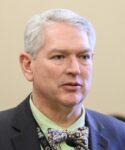
On Monday, state Transportation Secretary Todd Rumbaugh released a statement saying West Virginia government’s approach to the project would have to change.
“The bidding process the West Virginia Department of Transportation recently completed for the DMV modernization project was advanced without adequate input by executive leadership, resulting in a proposal that is too costly for taxpayers,” Rumbaugh said, although the statement did not name specific executives who should have been consulted.
“As such, I have directed my staff to restructure the project, focusing only on the initial, most critical phases of the multi-year project. The WVDOT will re-do the procurement to accommodate this change.”
Rumbaugh continued, “We can and must do better for our citizens who use DMV services. The new procurement will ensure we achieve our twin goals: improving consumer experience and prudently spending taxpayer dollars. I have conferred with the Governor, and he is in agreement with this approach.”
Rumbaugh’s statement said the end result should be mindful of customer service for the citizens.
“All West Virginians want a faster, more convenient DMV experience. While our goal is to automate as many of DMV’s services as possible, we must do so in the most cost-effective manner for West Virginia taxpayers,” he said.
‘Awarded but we’re reviewing it’
The DMV modernization project came up earlier this month during legislative interim meetings.
The Joint Committee on Finance on June 10 quizzed Rumbaugh for about an hour, including about the modernization contract.
Rumbaugh told lawmakers that bids ranged from a law end of $7.9 million up to $101.5 million.
The DMV originally had about $46 million budgeted for modernization.
One bidder, the company that currently runs the digital titling system that legislators say is working well, submitted a proposal at about $30 million. The vendor matching that description was a company called Tyler Technologies, which had protested the award to AstreaX.
The selection was based 70% on technical score and 30% on price. A technical score measures how well a vendor’s proposal meets an organization’s non-price requirements during the bidding process.
The bidder of about $30 million did not achieve the minimum technical score, so its price was not considered eligible for award.
“They were one of the ones that didn’t have the high enough technical score,” Rumbaugh told lawmakers.
Rumbaugh told lawmakers that the $63.5 million AstreaX bid came in as the lowest acceptable bidder, meaning it passed the technical bar and was cheaper than the only other technically acceptable bidder.
In the meeting, Rumbaugh told lawmakers that the $63.5 million proposal had been selected as the intended awardee, but the contract had not been signed while state officials reassess scope and affordability.
“We’re currently, as I said, reviewing the contract, trying to figure out exactly what we can afford to do, and and how to go about doing that,” Rumbaugh told lawmakers.
Legislators spent much of a Q&A session that morning pressing Rumbaugh about why the state might pay $63.5 million instead of around $30 million and whether that decision and the scoring process make sense.
The lawmakers who asked questions expressed worry that the overall cost could reduce money available for paving and bridge work.
If the project costs more than the projected amount, Rumbaugh told lawmakers, “it’ll take additional funds from highways in order to to fund this modernization, and that’s part of what is under review right now because the the bids came in over the budgeted amount that they had set aside or had asked for for that.
“We’re trying to review and and figure out how to make this work,” he said, “because it all comes from the road funds and the DMV funds.”

Senator Ben Queen, R-Harrison, told the secretary: “Well, I love the idea of of saving money, but I hope you can keep us updated. We don’t need any less money going to roads, so if you can help us solve that, that would be greatly appreciated.”
‘We’re ready’
Now the contract is canceled, with 30 days notice. On that timeline, it would officially conclude on Sept. 24.
AstreaX is still trying to talk to officials from the Governor’s Office and the Department of Transportation, potentially exploring options to keep the existing contract in place instead of rebidding a third time. Conceivably, if it had to, the company could bid yet again.
Jorgensen said the company is ready to start work under the existing contract, open to adjustments and hoping to avoid the offiical cancellation date and further delay.
“That’s what brought us to West Virginia to have some conversations with folks to make sure that we understood what was happening and what maybe we could do to to help the the state not not lose any time or on on delivering new value to its citizens,” said Jorgensen, who flew overnight from Arizona to Charlotte to West Virginia.
He concluded, “This was properly procured twice, and we’re ready to deliver value. We’re we’re ready to to make sure that the citizens have the best DMV experience possible, and we look forward to to being able to do that as soon as possible.”