

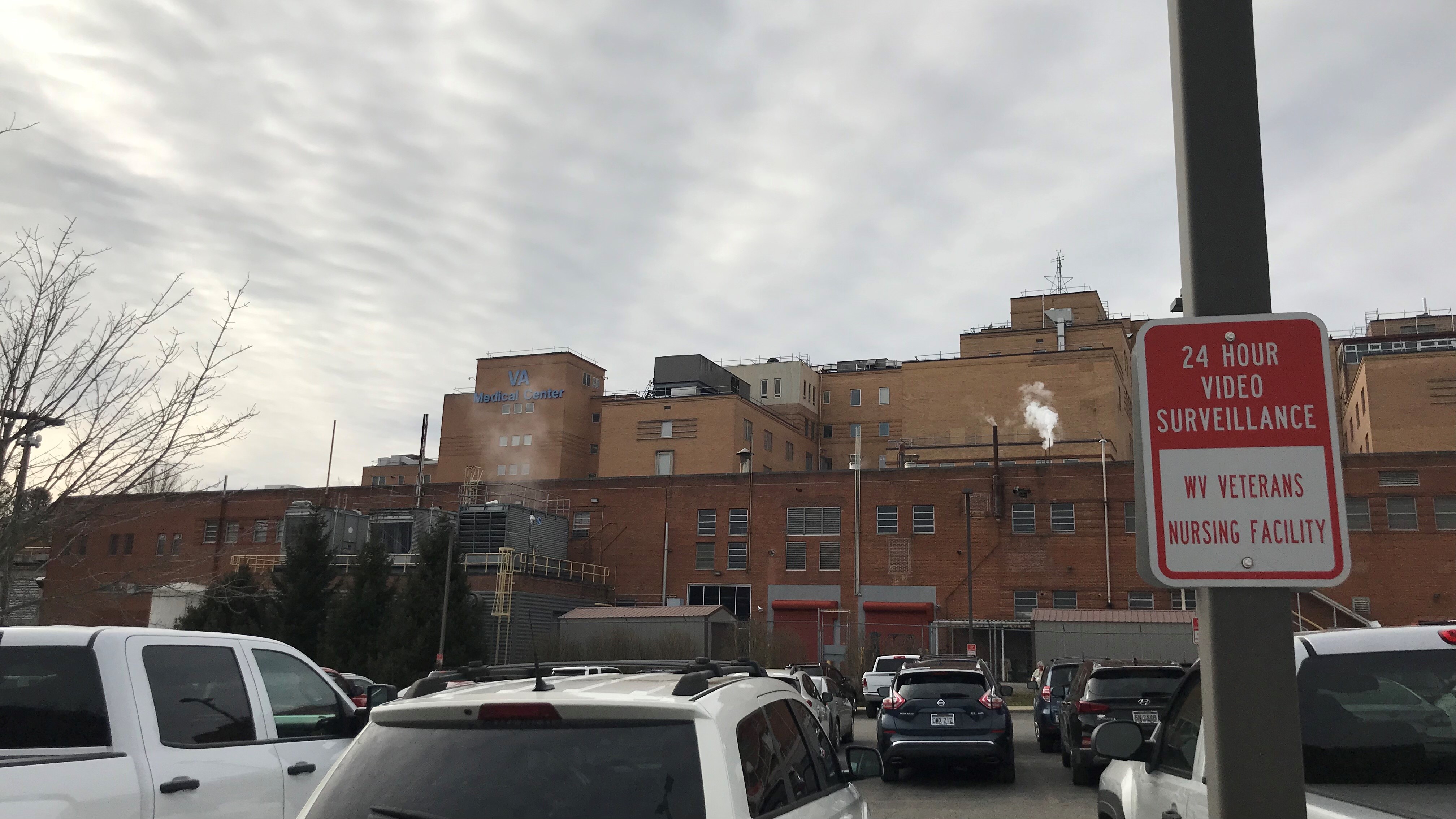
In the wake of critical findings about lapses that allowed a nursing assistant to kill multiple patients at a West Virginia veterans hospital, the U.S. House of Representatives has passed a bill meant to increase the use of video cameras for patient safety.
Each of West Virginia’s House members — David McKinley, Alex Mooney and Carol Miller — signed on as sponsors of the bill. Congress suspended rules and passed the bill Tuesday evening.
After recent findings that veterans deaths in Clarksburg could have been prevented with greater precautions in place, McKinley said there was motivation for Congress to take some action. McKinley had sponsored similar bills for a couple of years.
“I think people are aware that some of the things we’ve learned about — they were just anecdotal; now they know it’s actually happening,” McKinley, the bill’s lead sponsor, said this week on MetroNews’ “Talkline.”
.@RepMcKinley joins @HoppyKercheval to discuss his visit to the VA Hospital in Clarksburg yesterday, and what he learned from listening to VA Secretary Denis McDonough. WATCH: https://t.co/yCFQ3nDJuy pic.twitter.com/ciJaJxNfcM
— MetroNews (@WVMetroNews) May 18, 2021
The bill still would need to be considered in the U.S. Senate, where a companion version has been introduced by senators Shelley Moore Capito and Joe Manchin, both representing West Virginia.
Increased use of cameras in veterans healthcare facilities was a key recommendation of a 100-page probe of the deaths at Louis A. Johnson VA Medical Center in Clarksburg. The inspector general for Veterans Affairs concluded installation of cameras in sensitive areas of hospitals could suppress criminal behavior, one of several recommendations made through the probe.
Former nursing assistant Reta Mays was sentenced last week to consecutive life terms for the deaths of eight veterans. Mays admitted causing their deaths by administering unnecessary and lethal doses of insulin while she worked the overnight shift. She had obtained the insulin from supplies at the hospital, although she was not supposed to possess it or administer it.

“If we’ve learned anything from what happened at Clarksburg, it’s that we need more transparency and oversight in our VA system,” McKinley, R-W.Va., stated after the House bill’s passage.
“Greater use of cameras is one step towards that. It will provide an additional safety measure for veterans, staff and visitors. We owe it to our veterans to restore their confidence in the VA and ensure they receive the quality care they deserve.”
The bill would require the VA to report to Congress on the use and maintenance of all cameras used for patient safety and law enforcement purposes in Veterans Affairs medical facilities. The report would include VA recommendations for improving and monitoring camera use throughout its healthcare system.

Congressman Mike Bost, R-Ill., ranking member of the Veterans Affairs Committee, said the bill will provide needed clarity on the use of cameras at VA facilities.
“Veterans and their families deserve to be safe at VA,” Bost stated. “That’s why I was proud to join my friend, Rep. McKinley, in introducing the Veterans’ Camera Reporting Act and getting it passed by the House.”

Mooney praised passage of the bill.
“Together we are ensuring that VA medical centers are upheld to the highest standards of patient safety, transparency and accountability for our nation’s heroes. Those who served our nation in the military deserve not only our utmost respect, but also continued care,” stated Mooney, R-W.Va.

Miller called the legislation crucial for protecting veterans. Her statement also made reference to the sentencing of a doctor in the sexual abuse of multiple patients at the Beckley VA Medical Center, which is in the district she represents. Federal lawsuits over what happened in Beckley represent the experiences of more than 40 veterans.
“The passage of the Veterans’ Camera Reporting Act is a momentous step forward in our effort to ensure they are safely taken care of, and that another tragedy like we saw in Clarksburg and Beckley never happens again,” stated Miller, R-W.Va.
The former nursing assistant in Clarksburg pleaded guilty to killing veterans Robert Kozul, Robert Edge Sr., Archie Edgell, George Shaw, a patient identified only as W.A.H., Felix McDermott and Raymond Golden. She is also accused of administering insulin to “R.R.P.,” another patient who was not diabetic, with intent to kill him.
All had checked into the hospital’s Ward 3A to seek healthcare and all had expected to recover. None were being treated for diabetes, yet their blood sugar crashed under suspicious circumstances. Mays admitted causing their deaths by administering unnecessary and lethal doses of insulin while she worked the overnight shift.
The inspector general’s report underscored that Mays should not have had access to the insulin that caused fatal hypoglycemic episodes among the veterans. Medication rooms and carts were not properly secured on Ward 3 where Mays worked, giving her unauthorized access, the OIG report concluded.
No cameras monitored for patient safety or security at the time.
While the Veterans Health Administration does not require video surveillance in treatment areas like Ward 3A, the inspector general’s report concluded, “facility directors are responsible for evaluating risk within the facility and can install cameras for patient safety or security purposes.”
The inspector general’s report noted that cameras have now been installed at the Clarksburg VA, providing views of Ward 3A hallways and entrance — and a motion-activated camera has been installed in the ward’s medication room.
When video monitoring occurs in treatment areas, signs alerting patients and visitors must be posted, the inspector general noted. The inspector general’s report also cautioned that although cameras may discourage improper activity, the precautions are limited by the ability of staff to monitor the video as well as to what extent the video may be stored.
“Cameras and signage may serve to discourage potential criminal activity,” the inspector general wrote. “However, there are limitations to their efficacy.”