

After four days and 15 rounds of voting, Kevin McCarthy finally gathered enough votes to become speaker of the House, with West Virginia’s representatives voting for him each time.
The final vote took place after midnight with six of McCarthy’s Republican opponents voting “present” instead of directly against him.
The California congressman finally had the 216 votes he needed for the gavel.
“Democracy is messy, but the result is a united Republican party who is stronger because of the negotiations that took place this week. It’s time to get to work,” Congresswoman Carol Miller, R-W.Va., said in a 12:43 a.m. statement.
Miller, who represents the southern counties of West Virginia, had said she would vote for McCarthy as many times as it took.
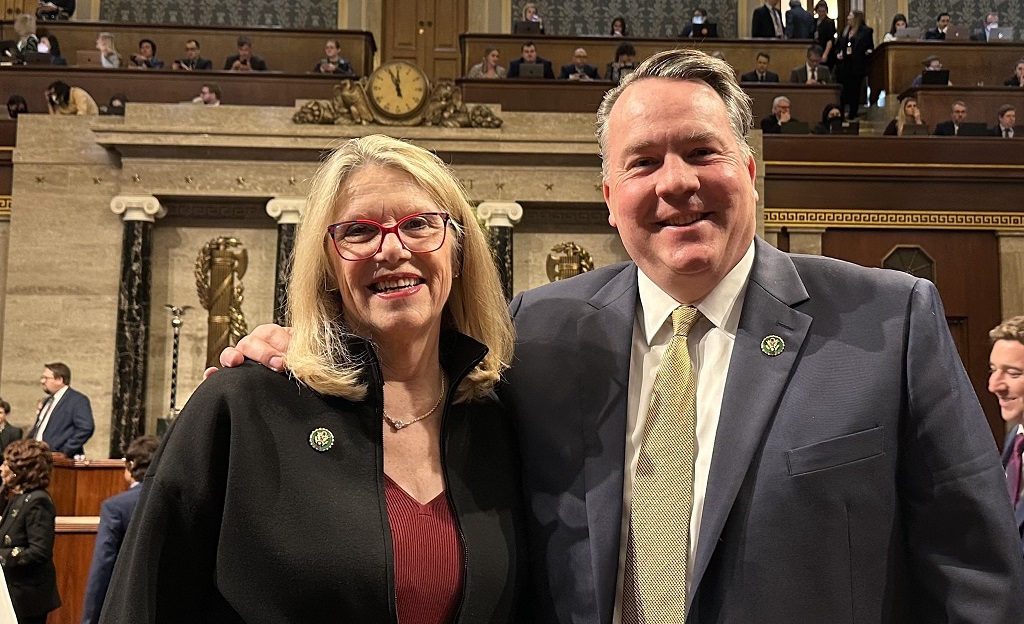
Congressman Alex Mooney, R-W.Va., also voted for McCarthy in all 15 rounds. After the voting ended, he posted a picture of himself with Miller. “We have a speaker,” Mooney wrote in the 2:05 a.m. post. “The people’s house is officially open for business. Ready to get to work for West Virginia.”
We have a Speaker. The people’s House is officially open for business. Ready to get to work for West Virginia! @RepCarolMiller pic.twitter.com/KpYKdvBJYB
— Rep. Alex Mooney (@RepAlexMooney) January 7, 2023
Until representatives selected a speaker, Congress remained unable to swear in new members, set rules, set up committees or engage in a range of basic actions. Those housekeeping matters will start Monday, and there could easily be fresh ways to fight.
The days-long struggle to pick a speaker raised questions about whether similar battles over consensus may break out over other votes the next two years.
McCarthy has been the most recent leader for Republicans in the House. But now, as Republicans were poised to take over a narrow majority, his leadership remained in doubt because of opposition by colleagues from his own party.
The threshold to become speaker is an outright majority of members of Congress taking part in the vote. The212 participating Democrats have consistently voted for Hakeem Jeffries as speaker. Most Republicans have voted for McCarthy. But the holdouts voted for others in round after round, so McCarthy remained unable to reach the necessary number for several days.
The number of holdouts was whittled down through a series of back-room agreements.
Finally from Friday night into early Saturday morning, the drama compounded in two votes.
In the first of the two, McCarthy was just on the edge of finally gathering enough votes when Congressman Matt Gaetz of Florida, who had been voting against McCarthy consistently, this time voted “present.” Gaetz was among the last to vote, and his “present” vote still wasn’t enough. McCarthy, on the 14th round, still remained one vote short.
McCarthy strode to where Gaetz was seated, confronted him face-to-face, and verbal altercations broke out in the Republican section of the chamber. At one point, a congressman had to be physically restrained from a confrontation with Gaetz.
Members appeared to be moving toward adjournment until Monday when there was a sudden switch and a move toward a 15th vote.
In that one, Gaetz and fellow holdouts like Congresswoman Lauren Boebert of Colorado voted “present,” lowering the threshold of votes needed by McCarthy.
Just past midnight, McCarthy finally had enough votes.
The 14 prior rounds meant the House had gone well past number of votes it endured — nine — the last time such a stalemate occurred, in 1923.
“Kevin McCarthy becoming the Speaker of the House is a win for the American people. For the past four years, Speaker McCarthy has proven to be a strong leader, a willing listener, and a consensus builder,” West Virginia’s Miller said in her early-morning statement.
“I’m confident he will lead us in enacting a conservative agenda which will greatly benefit the United States.”