


Story by David Beard, The Dominion Post
CHARLESTON, W.Va. — Enthusiasm abounded as the Senate Education Committee advanced what they called a “transformational” bill to improve the reading and math skills of the state’s K-3 students.
The emotion was evident but several senators also commented that they were voting “enthusiastically” for SB 274 – the Third Grade Success Act, which now heads to Finance.
The bill’s overarching purpose is to develop a statewide approach to reading and math education.
Teachers will be instructed in what is called the “science of reading,” incorporating phonics, phonemic awareness (the ability to identify and manipulate individual sounds in words),vocabulary, fluency (reading accurately, quickly and with expression), and comprehension. They will be expected to bring these skills to the classrooms to change how reading is taught.
Teachers will learn how to use screeners and benchmark assessments in K-3 classrooms to assess reading and math skills and identify such issues as dyslexia and dyscalculia – a math learning disorder – and conduct screenings three times a year in the classrooms. Students with identified issues will be provided intervention and assistance.
Children whose reading deficiencies are not corrected by third grade will be held back unless and exemption is met.
The bill details how families will be engaged in their children’s progress.
The House is advancing a bill that would set aside $100 million to hire 2,500 teaching assistants helping teachers in the first 3 grades. @AmyNicholeGrad2 passed a bill through her committee. What does her bill? Senator Grady joins @HoppyKercheval. WATCH: https://t.co/yCFQ3nDJuy pic.twitter.com/LLB0HUt0sD
— MetroNews (@WVMetroNews) January 19, 2023
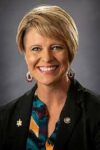
An important part of the bill will be the employment of ECCATs – early childhood classroom assistant teachers. Committee chair Amy Grady, also bill lead sponsor, said ECCAT (pronounced e-cats) are paraprofessionals a step above teacher aides. They won’t just be making copies.
ECCATs, she said, will be trained in same reading and math education skills and principles as the teachers and work alongside them in the classrooms. This will enable a move away from whole-group instruction to targeted, small-group instruction where it’s needed.
The bill requires classrooms in grades 1-3 with more than 12 students to have an ECCAT or aide. They will be in first-grade classrooms for the school year starting July 1 this year; in second-grade classrooms by July 1, 2024; and in third-grade classrooms by July 1, 2025.
Grady said Thursday on Hoppy Kercheval’s Talkline the phase-in serves two purposes: to budget for the personnel, and to get personnel – they need people to fill the posts.
Sen. Robert Plymale, D-Wayne and former Education chair, stressed the importance and consequnces of making sure kids can read by third grade. Those that can’t aren’t equipped for success in later school years. They are morel likely to fail in school and then fail in life – often ending up in courts and prisons.
Grady said on Talkline she’s been working with state schools Superintendent David Roach on this, and Roach addressed the committee on Thursday.
“We’re thrilled with the potential of what this can do for our children,” he said. The five components of the Science of Reading approach have been left out of education for the last 30 years and kids have suffered for it. “We have seen the results nationwide.”
Citing the stte’s declining reading and math scores in testing since 2002, and the state’s low scores in the most recent NAEP (National Assessment of Educational Progress) tests, he said, “Every child that cannot read, in my opinion, is doomed. … I don’t want to see any child, anymore, leaving our system that cannot read.”
Sen. Charles Trump, R-Morgan, was one of those who used the word “enthusiastically” about his vote, and was the one who called the bill “transformational.” In his legislative career, he said, he’s occasionally seen bills that fall under that heading. “I think this is one of those moments. … This bill is going to put money right into the classrooms.”
The House has in motion a similar bill, HB 2003. As MetroNews summarized it, it calls for the hiring of 2,500 assistant teachers and creates provisions that would allow teachers to hold back students in third grade if they aren’t reading on a proficient level. It has a price tag topping $96 million.
Grady said on Talkline that HB 2003 is an early version of her Senate bill that she worked on with members of the House. HB 2003 cleared House Education and is in House Finance.