

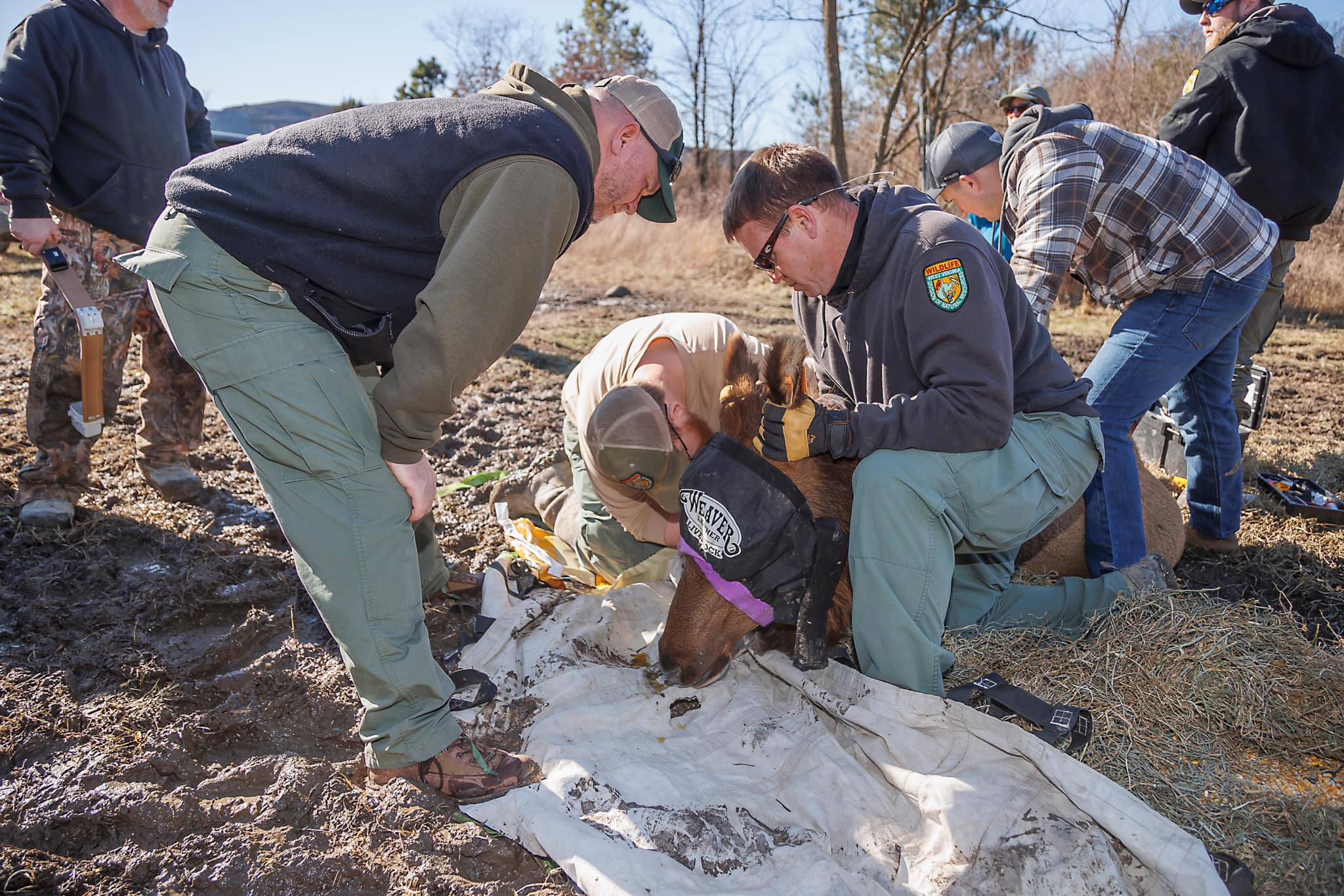
HOLDEN, W.Va. — As West Virginia’s elk herd slowly grows, the number of animals will eventually eclipse what the West Virginia Division of Natural Resources can accurately keep tabs on. As the Elk Project team works up the herd for 2023, there’s starting to be evidence that may already be happening.
“Actually we’ve handled two different young bulls apparently we missed back about 2019 or so,” said Elk Project Leader Randy Kelley in a recent appearance on West Virginia Outdoors.
Kelley admitted it’s possible they missed them and it’s also possible they could have wandered into West Virginia from another location.
“We’ll be able to tell if they did because of a DNA study we’re now doing with WVU. We’ll be able to tell if they are from our stock or from somewhere else,” he explained.

It’s hard to tell at his point if the elk are true West Virginia critters or interlopers from the other side of the Tug Fork River. It’s happened before, but Kelley said so far they haven’t been able to establish if any of the Kentucky elk have had any interactions with the West Virginia elk.
“Prior to our project starting, we know we had some elk visiting us from over there. I don’t think any were really making their home in West Virginia at that time, but we did follow up with some reports and we had elk very close to the area where we have elk now that were from Kentucky. It’s not out of the question since Pike and Martin County in Kentucky are not that far away,” said Kelley.
Along with the DNA work being done in partnership with WVU, Kelley said they are also starting to get new technology which is helping with the management like tests which can determine if cows are pregnant at the time they work with them and testing for some dreaded diseases like brain worm.
Each year the DNR works up as many of the elk as they can on the Tomblin Wildlife Management Area to keep close tabs on them during the year. Kelly has bait sites established which enable him to use a dart gun to sedate the animals. He carefully selects which animals to tranquilize so they can be outfitted with a GPS tracking collar, ear tags, and blood samples pulled to determine the DNA. The analysis can help determine if the elk are from West Virginia or elsewhere. Neighboring Virginia has a growing herd of elk as well, but so far, those haven’t been as prevalent in West Virginia as the Kentucky herd.
Eventually, the three states expect to establish what the Rocky Mountain Elk Foundation has previously called the Appalachian Elk Herd. The goal is to have them ranging someday through all three states.
For now though, West Virginia’s elk have been content on their 34,000 acre Tomblin WMA on the Logan-Mingo County line. There they have plenty of food and it’s apparently working out for them health wise.
“They’re doing great. Everything we’re handling has very good body condition. Vegetation is there. Kentucky, Virginia, and Tennessee to an extent have proven reclaimed surface mines do offer quality habitat. Of course we do a lot of work on our area to keep that sustained,” he said.
Wildlife Managers sow various grasses to provide a higher nutritional value. Aerial herbicide spraying and controlled burns have also been used effectively to eliminate invasive grasses and make way for the improved seed mixtures DNR is using on the property.
“We started there in January and we’ve had a pretty good year. We’re darting anything that doesn’t have a collar that we can put one on. We also try to put collars on any calves we can which were born in the summer of 2022. We’re not done yet, but we’ve put our hands on 28 different elk. It’s been going smooth so far,” Kelley said.