


The leading Republican candidates for governor are vying to succeed the two-term incumbent, and they’re also trying to differentiate themselves.
So while you might hear some echoes of seven years of Gov. Jim Justice’s administration, the new candidates are test driving their own messages.
Secretary of State Mac Warner has questioned whether West Virginia’s big year-end budget surplus actually means needs are being unmet. Businessman Chris Miller asks whether the state has taken the right approach to drug addiction treatment. Attorney General Patrick Morrisey aspires to give West Virginia the broadest school choice options in the land.
House Judiciary Chairman Moore Capito, son of U.S. Senator Shelley Moore Capito, hews closest to the path the state is already on and has endorsed Justice in the race for U.S. Senate. But Capito says West Virginia needs to build on its successes.
West Virginians who are shopping for their next governor will have to listen closely to the variations in their messages.
“Really, what we’re doing is, we’re selecting a chief executive officer to run our state. That’s what the job is, and I don’t think we’re doing a good enough job of really knowing who people are,” Miller said while laying out his own biography during a recent forum featuring the Republican candidates.
The four appeared on stage together last week at a forum hosted by the Move WV Forward political action committee in Morgantown. A similar marketplace of ideas unfolded in August during the West Virginia Chamber of Commerce’s annual business summit. Events like these allow primary voters to get a sense of who the candidates are and what policies they would pursue as a side-by-side-by-side-by-side comparison.
Chris Miller: Break up the good ole boy system

Miller, the son of incumbent Congresswoman Carol Miller, laid out his own history leading a network of businesses that includes auto dealerships in the Huntington area. Miller also touched on a personal experience in fighting drug addiction, a lesson that has led him to conclude West Virginia needs to improve its approach to help its many residents who have faced addiction challenges.
“I’ve been married for almost 20 years. My first year of marriage I was choosing between drugs and alcohol my wife, and I chose the right one,” he said. “I’ve been sober since April 1 2004, from alcohol and opiates, and I know what it’s like to go through that. We’re still on the tail end of the opioid epidemic. And there’s a lot of work to do, quite frankly, I think we get rehabilitation wrong. And there’s a lot of work that needs to be done to correct that problem.”
Miller, never elected, is the least known statewide of the Republican candidates. But he brings the potential of millions of dollars of his family’s own money to the race. He characterizes himself as a businessman who can bring that experience to the Governor’s Office.
West Virginia’s top problem, Miller said, isn’t its reliance on coal and natural gas exports. Instead, it’s the export of its educated young people. But he said there’s plenty to build on because society has gotten much more mobile and West Virginia has desirable attributes like its natural beauty and a low cost of living.
His message from there was a mix of social flashpoints and economic potential.
“We’ve got a conservative family-based lifestyle. We don’t have gender-modification surgeries for kids here. We don’t have critical race theory issues here. We don’t have Black Lives Matter and Antifa rioting issues here because Bubba and Jimbo and their AR 15 would stop that pretty quick. We are a safe place,” Miller said echoing themes in the “Try That in a Small Town” song that was both a hit and a controversy weeks ago.
“And we have all of these natural resources. We just have to leverage them right. Some of the things we really have to accomplish. First, first and foremost, we’ve got to run state government more like a business because they don’t spend our tax dollars the right way. And I will tell you this state government is a business. We also have to break it the good ole boy system that’s been running our state for far too long.”
Mac Warner: Do we really have a budget surplus?
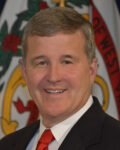
West Virginia concluded the most recent fiscal year bringing in $1.8 billion in taxes over the official estimate.
Warner, a two-term Secretary of State, asked whether that is misleading because he can identify so many unmet needs.
“Do we really have a state budget surplus in the billions when West Virginia leads the nation in drug overdoses? Almost two times as much as any other state. When certain portions of the state lack public water and sewer systems? When we lack infrastructure to attract residential and commercial development? When we have over a thousand certified teachers positions vacant?” Warner asked.
“When the National Guard has to run our prisons and regional jails for more than a year because of the shortage of over 800 correctional workers? How about when West Virginia leads the nation in the lowest workforce participation rate and the highest absentee rate of public school students who miss an average of 18 days of school a year. You see, folks, these are public policy challenges the next governor must work with the Legislature to address.”
Warner, a 23-year Army veteran, emphasized that experience along with his track record as the state’s chief elections officer.
Like some of the other candidates, Warner described taking on “the woke agenda.”
“I understand the power of every minute that you’re in front of the citizens and we can’t be wasting them on woke agendas,” Warner said.
He added, “Now it is time to elect a conservative governor that is ready to take on the task at hand, ready to take a giant leap toward addressing generational challenges.”
Morrisey: The broadest school choice policy in America
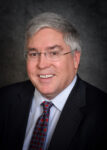
Morrisey, a three-term Attorney General, described continuing the kind of high-profile fights his office has engaged in over more than a decade. Of all the candidates, Morrisey made the most references to “the far left” and “the woke agenda.”
He made reference to defending the integrity of women’s sports, by which he meant court battles to keep transgender athletes off sports teams based on their gender identity, and defending the sanctity of life, by which he meant strict abortion policies.
“As you look to elect your next governor in the great state of West Virginia, you want to look to elect a proven conservative, who’s been there, who’s done that, who’s worked on all the tough issues, all the big challenges facing West Virginia. That’s my record is your Attorney General. And as you start to go through the list of issues, these are the things that matter for the future of our state,” Morrisey told the crowd.
“Protecting our job base here in West Virginia, tackling the drug epidemic at a level that you haven’t seen in other states before, defending the integrity of women’s sports, ensuring that people’s values in West Virginia are the way they always have been. We’re not looking to go forward with the woke left culture. We’re looking to ensure that when people move to our state, they’re going to be in a conservative place. Defending our Second Amendment rights. These are rights that we cherish — and upholding the sanctity of life.”
Morrisey said a top goal as governor would be to aggressively expand West Virginia’s school choice options. West Virginia in recent years has allowed publicly-funded charter schools that have more flexibility in exchange for the possibility of losing their charter if they fail — along with the Hope Scholarship to pay for educational expenses for students leaving the public school system.
Critics contend the school choice initiatives divert money from the public school system, weakening it.
Morrisey, who serves on the Hope Scholarship board, wants to go farther.
“I pledge to you tonight that when I’m governor, the money will follow the child and West Virginia will have the broadest Hope Scholarship, school choice policy in America, and that will be a defining opportunity to lure more people right here to the Mountain State,” he said.
Moore Capito
Moore Capito: West Virginians feel like we’re on the right track
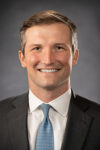
Capito said West Virginia has been on a run of progress and now needs to build on that.
“The future of West Virginia is particularly personal to me, and I’m passionate about it,” Capito said. “The most pressing economic and moral issue that we have in West Virginia right now is the future of our grandchildren and our children and the future that we set up for them.”
Capito touched on his own family heritage, including grandfather Arch Moore, who was a three-term governor. His mother, Shelley Moore Capito, was the first woman elected to Congress from West Virginia and is serving her second term in the U.S. Senate.
Capito, as a major committee chairman, is on the leadership team in the House of Delegates and described advancing “the most conservative agenda in the history of the state.”
“Right now is the time when West Virginia must go to the next level,” he said. “And we need energy and we need grit to be able to do that.”
He went on, “For the first time in a long time, West Virginians feel like we’re on the right track. In order to win, you have to feel and believe that you can win. And West Virginians believe again that we can win. But in order to go again to that next level, we need to feel like we have the safest communities in America.”
Capito described fighting a drug scourge. He called for attention to widespread mental health concerns. He, too, endorsed expansion of school choice policies while saying traditional public schools must be robust. He wants to build on the big income tax cut the state passed this year. And he wants to promote economic innovation.
“That’s how we keep young people here,” Capito said. “West Virginians are entrepreneurial. It’s the backbone. Let’s leverage that. Let’s let our kids and our folks out there take the risks that are the seeds to ultimately grow the businesses that help us all grow.”