

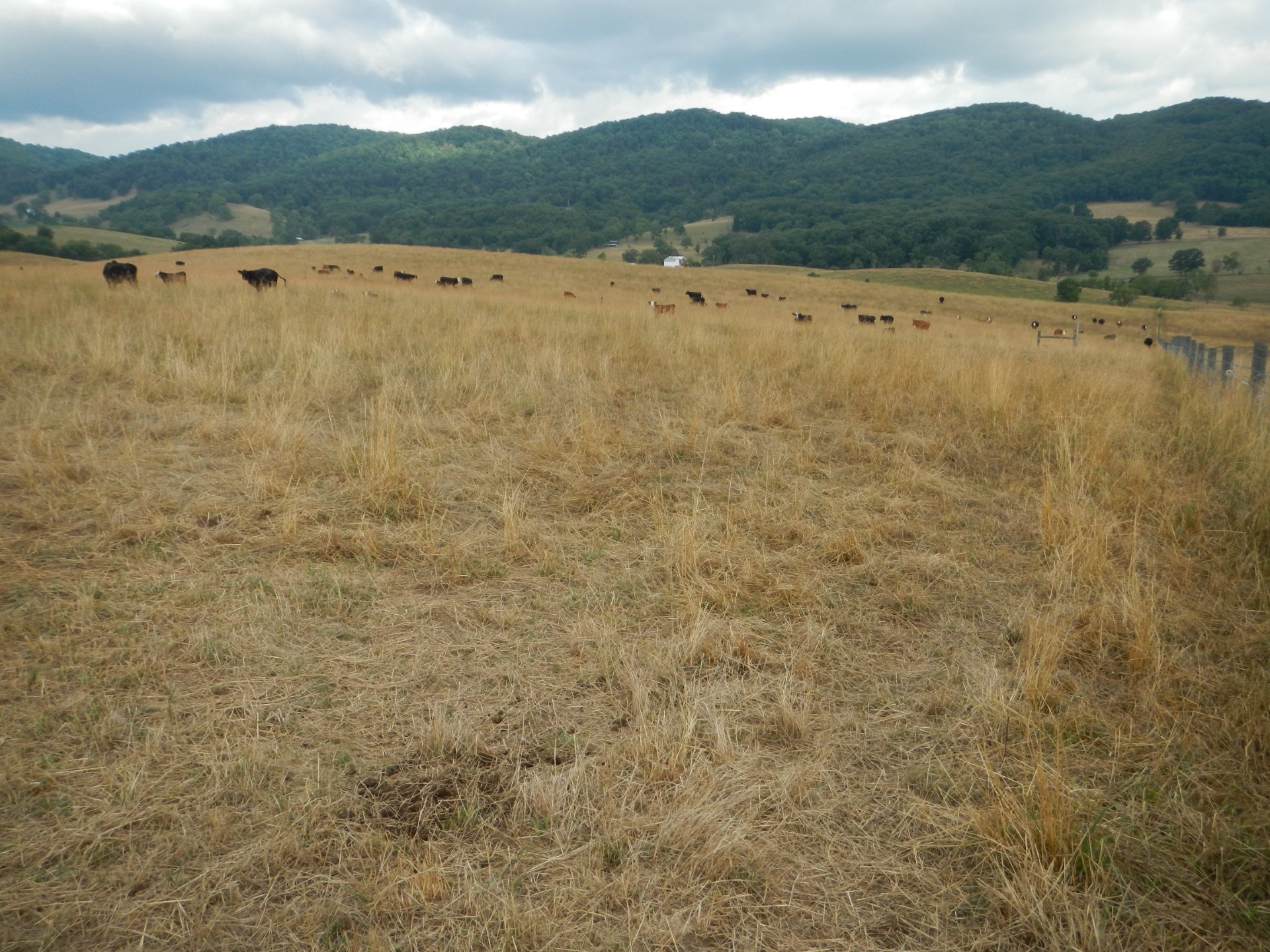
RAVENSWOOD, W.Va. — As drought conditions dried up land across West Virginia, farmers are getting information on how they can get imbursement for what they have lost.
The Farm Service Agency held a special program Tuesday evening with farmers in attendance where multiple professionals spoke on what the next steps would be.
One of those speakers Tuesday evening was Lisa Delaney, a representative of the U.S Department of Agriculture Farm Service Agency, introducing farmers to the “Livestock Forage Disaster Program.”
Delaney, who works primarily with the areas within Roane, Calhoun, and Jackson Counties, talked about the program that could potentially offer livestock disaster relief for farmers. Delaney put out what her office needs from farmers looking to apply.
“What we’ll need when you come into the office for the program, is your cattle numbers or your livestock numbers if you have sheep, goats, any kind of livestock, we’ll need your inventory,” Delaney said. “We’ll also need your grazing acres. If you lease a farm, you will have to have a lease for that farm, and that can just consist of a handwritten statement from the landowner saying that you’ve grazed cattle on that property.”
Delaney says the program will calculate a monthly payment for affected farmers.
“Step one, you turn in your cattle numbers, and it will calculate a figure. Then we take your grazing acres, and it calculates a figure. It will take the lower of those, and that comes up with a monthly payment. It will times that by 60% and that will be your monthly payment,” Delaney said.
Delaney also mentioned that the monthly payment will not be the final number every affected farmer will get. Over the last month, multiple counties in the state were under the category of exceptional drought (D4), which is the most severe on the scale. This was the first time counties in West Virginia were in the D4 category since the U.S. Drought Monitor began.
Delaney says farmers that operate in counties that have been in the D4 category will get extra money per month if they enter the program.
“Right now, because we’re in a D4, you will get paid for times that (base) monthly payment,” Delaney said.
While six counties were, at one point or another, in the D4 category, over half of the state’s 55 counties spent time in the D3 category, which is considered ‘extreme drought.”
Delaney says the base monthly payment will be tripled for those in extreme drought conditions.
“A D3, you would only get three monthly payments of that, whereas D4, you get four monthly payments, Delaney said.
Delaney also says if counties spend four weeks in D4 category, an extra payment will be added.
“If you stay in D4 for four weeks, not consecutive weeks, you’ll get one more (fifth) payment of that for being in D4,” Delaney said.
West Virginia counties that have spent time in the exceptional drought (D4) are Wood, Wirt, Calhoun, Roane, Jackson, Mason, and Putnam.
Tuesday’s meeting was broadcast live on MetroNews affiliate radio station WMOV in Ravenswood.