


Public employees in West Virginia will be subject to increased insurance costs under a plan being firmed up by a state agency, and organizations representing workers are anticipating significant pushback in the weeks ahead.

“I agonize over these changes. I know my team agonizes over it. I know the board agonizes over it. We don’t want to make these tough decisions, but we have a fiduciary responsibility to do so,” said Brian Cunningham, director of the Public Employees Agency.
“We’re not doing this to be punitive. We’re doing it because we have to.”
The PEIA Finance Board during a Thursday afternoon meeting reviewed the details of cost increases to insured workers necessary to meet anticipated expenses for medical and pharmaceutical benefits.
The next step will be to take the plan for the coming fiscal year out for public comment.

“I would expect the hearings coming up to be like it was in the olden days. I expect large crowds. So be prepared for long nights,” said Fred Albert, president of American Federation of Teachers-West Virginia.
The Public Employees Insurance Agency is proposing significant premium increases and additional out of pocket costs for the coming fiscal year because medical and drug expenses have outpaced the money available.
Public employees in the plan could face premium increases of 14% for the state fund or 16% in plans for local governments. Retirees, in an addition outlined by PEIA on Thursday afternoon, would face a 12% premium increase.
The agency is proposing increases in deductibles of 40% — on average more than $300. Additional proposed cost increases for people with the insurance, including a bump in the surcharge for spouses to $350 from the current $147, are meant to help PEIA make up a total of $113 million. The other cost increases include higher copays for inpatient services, outpatient, therapy, pharmaceuticals and emergency room treatment.

“I’m not asking that the employee not have any skin in the game. I’ve never said that,” said Dale Lee president of the West Virginia Education Association. “But gosh, we’re skinning the employees alive.”
Lee addressed PEIA officials by saying, “I don’t envy you. I wouldn’t want to be the one making these difficult decisions. But the employees, our educators, our teachers, our service professionals, our state workers, State Police and everybody else who can make so much more money crossing state lines and driving 30 more minutes, that’s exactly what’s going to happen.”
Cunningham of PEIA expressed a willingness to listen and consider potential adjustments, although he said the agency has to meet expenses.
“We don’t have all the answers. We are more than willing to listen creative ideas. If we together with an idea that makes sense, I feel comfortable this board will hear it,” Cunningham said in response to Lee’s comments.
The PEIA Finance Board first heard the proposal earlier this month during an Oct. 8 meeting. Today’s meeting was to approve the proposal to take it out for public comment at locations around the state in November.
The public hearings include: 6 p.m. Nov. 7 at the Beckley-Raleigh Convention Center; 6 p.m. Nov. 12 at Holiday Inn Martinsburg; 6 p.m. Nov. 14 at The Highlands Event Center in Triadelphia. Ohio County; 6 p.m. Nov. 18 during a virtual town hall; 6 p.m. Nov. 19 at Erickson Alumni Center in Morgantown; and 6 p.m. Nov. 21 at the Culture Center in Charleston.
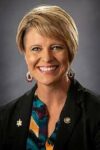
“Those public hearings are really important, so they need to hear from people to go and tell how this is going to affect their lives,” Senate Education Chairwoman Amy Nichole Grady, R-Mason, said today on “The Dave Allen Show” on 580 WCHS Radio.
“I think they need to hear voices. You need to make sure you go to those hearings and let the board know and let’s be hopeful that they’ll make some changes and the proposed increases won’t actually come to fruition.”
The next regular meeting of the PEIA Finance Board is Dec. 5, when there will be discussion of what happened at the hearings around the state. By Jan. 1, the Finance Board is supposed to provide an approved plan to state officials. PEIA representatives have said inflation in the cost of prescription drugs was a major driver of the agency’s financial strains.
Gross drug claims for fiscal 2024 were expected to be $352.9 million but actually came in at $369.9 million. Drug rebates provided less of a break than expected. The state thought it would bring back $146.8 million in drug rebates but actually only saved $127.4 million.
Specifically, the agency said GLP-1 drugs that can be prescribed to fight diabetes or obesity or both were responsible for $52.5 million in costs. PEIA only covers those drugs for diabetes, although it halted a pilot program earlier this year to explore coverage for weight loss.
“We know that the inflation and trend in prescription drugs is a substantial driver of cost increases across the plan,” Cunningham said at Thursday’s board meeting.
Medical costs were out of line with estimates this year too. State officials had expected $598 million in medical costs — but, instead, $642 million in medical costs mounted.
“One of the things that I’m asked all the time is, what is the fix? And my answer to that is, there is no single fix. PEIA has a multifaceted problem. We’ve seen growth in the cost of reimbursements to providers. We’ve seen substantial growth in cost of prescription drugs.
“So what we as a team here at PEIA are seeking to do, with the support of the board, is take a multistep approach to the fix,” Cunningham said, referring to strategies like encouraging people to use lower-cost or generic option drugs, seeking better deals on contracts and additional initiatives. “The curve is still going up, but if we can bend the curve and slow the growth we can hopefully help alleviate some of the things.”
The cost pressures for insurance have occurred after legislation passed to mandate that the insurance plans snap back to an 80-20 cost split between the government employer and insured employees. Those 2023 changes to PEIA also responded to complaints that healthcare providers were having trouble making ends meet because of the state insurance’s traditionally low reimbursement rate. Lawmakers passed a bill making reimbursement rates for medical providers up to 110 percent of the federal Medicare rate.
“The intent was to bring PEIA back to solvency,” Senator Grady said.
“For about six years, the governor froze PEIA premium increases — so there was no increase for about six years prior to this.”
Grady, a school teacher, said she voted for that legislation, believing it would be fiscally responsible for the state. “We were told that would prevent large increases on policyholders but without doing it that those large increases were certain,” she said.
“It was a hard decision, but I know it was the right thing to do. It was the responsible thing to do.”
But, she said, “Here we are, 18 months later, and they are proposing a lot of other increases.”