


An organization focused on strengthening West Virginia’s healthcare delivery system, particularly in rural areas, praised Gov. Jim Justice’s established support for immunization and urged him to maintain that position as he considers policies affecting vaccination in his new role as a U.S. senator.

“Governor Justice led by example when he chose to protect the health and safety of West Virginia’s children and communities by vetoing a bill during the last legislative session that would have weakened our childcare/school immunization policy. Further, as Governor, he selected top-notch healthcare and public health experts with significant experience for his cabinet,” said Elaine Darling, director of programs for The Center for Rural Health Development.
“We are hopeful that as he considers the president-elect’s cabinet nominations for the nation’s leading healthcare and public health positions that he supports only those who have the experience and expertise for the position and a track recording of making science-based decisions that will have a positive impact on the health of West Virginians.”
The Center for Rural Health Development, which runs the West Virginia Immunization Network, was responding to some of the governor’s remarks during an administration briefing this week about how he might apply his advice and consent role for the nomination of Robert F. Kennedy Jr., who has a long history of questioning the effects of vaccines, as secretary of the U.S. Department of Health and Human Services.
Kennedy has maintained that he is not fully against vaccines. But he has a long and broad history of representing vaccines as inadequate or unsafe. He at one point led the anti-vaccine nonprofit group, Children’s Health Defense. Kennedy said in a 2023 podcast interview that “There’s no vaccine that is safe and effective.” Kennedy has called covid shots “a crime against humanity” and has claimed children did not need covid vaccines.
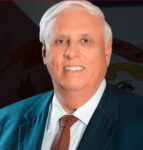
As an incoming senator, Justice will play a role in whether Kennedy is ultimately given authority as secretary of Health and Human Services, which is over agencies like the Centers for Disease Control & Prevention.
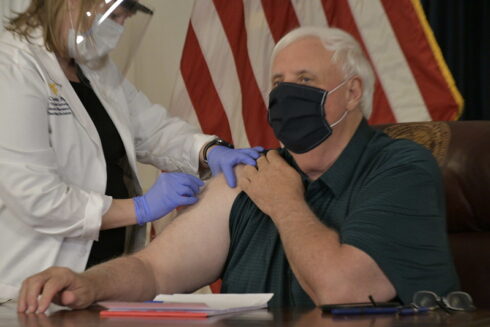
When he led the state through the effects of the covid-19 pandemic as governor, Justice surrounded himself with public health experts and urged state residents to get vaccinated — so much so that he got his own shot live on camera, named the vaccination effort after his own beloved dog and traveled around the state to give away prizes for people getting immunized.
But when asked during an administration briefing this week about how he might view Kennedy’s position on immunization, Justice’s comments seemed to back away from his earlier, full support of vaccinations while also granting leeway to the authority Kennedy might take on.
“I’ve never met him, but I can tell you this. We’ve learned a lot, haven’t we. I mean, really and truly, gracious goodness let’s be really fair — you know all of a sudden this pandemic hits and not one of us had ever seen anything like it. Donald Trump scrambled in every possible way that he could to get us the vaccines. And Donald Trump and all his administration promoted those vaccines like crazy and we all jumped behind it, and I was 100% on board,” he said in response to a MetroNews question.
“Now we learned more don’t we? Now we learned, really and truly, in many ways, that there’s medical knowledge that maybe, just maybe, they didn’t help much. On the other hand, we were so frenzied that our folks in our nursing homes or whatever, God knows we saved a potful of lives. And that’s all there is to it. And we saved them, like it or not like it no matter what anybody says, we saved an awful lot of lives because they were vaccinated. And I was a proponent of that. And I do think we did the right thing there.”
Justice, without specifying any updated and reliable guidance to the public, said there is new information.
“You know, I may have an adversarial opinion from the standpoint of our new appointee, and everything, but I will just say this: Today we know so much more,” he said. “We know so much more today.”
Darling of The Center for Rural Health Development said West Virginia has a strong track record of immunization that has kept communities safe.
“While headlines are circulating about the cabinet nominations, another headline has also been circulating — albeit with less spotlight — and it is that nationwide school immunization rates are dropping in the United States. However, when you look closely at the data, one thing stands out: West Virginia’s one of 11 states that has maintained its measles (MMR) immunization rates at herd immunity threshold of 95% and above,” Darling said.
“This threshold is the estimated immunization coverage that is needed in a community to prevent the spread of measles if there is a case that enters the community. Indeed, that was tested in West Virginia last spring when there was a case of measles in our state from an under-vaccinated infected traveler. Despite how highly infectious measles is, it remained at just one case and did not spread. This was due to two factors: 1) the high immunization rates that have resulted from our childcare and school immunization policy; and 2) the collective response efforts of our healthcare and public health system at both the local and state level.”