

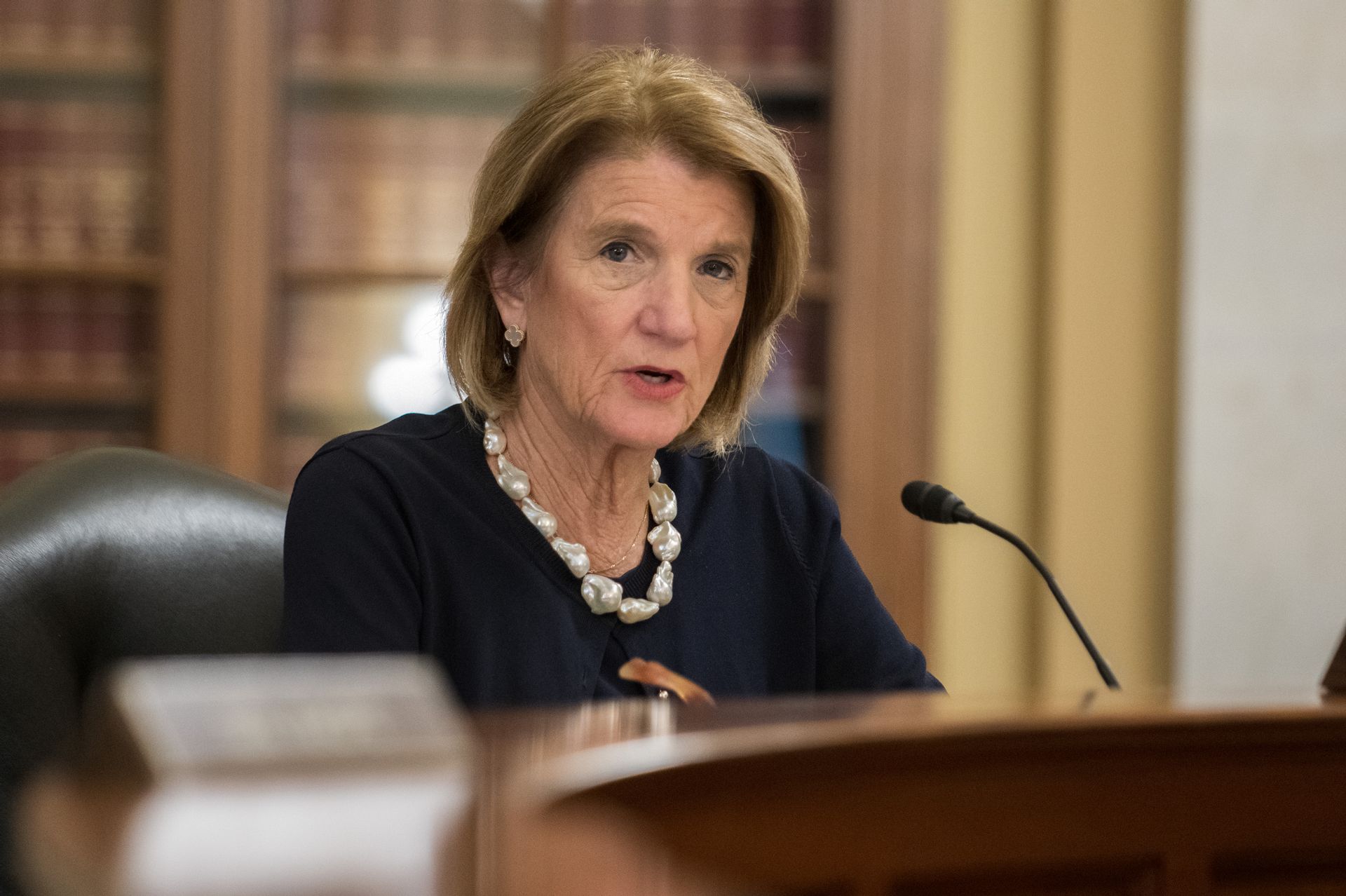
Senator Shelley Moore Capito said she believes current federal financial support for energy and infrastructure projects in West Virginia is not at risk under the new presidential administration, but federal support that was a possibility for the future may be in doubt.
An executive order signed Monday by returning President Donald Trump and called “Unleashing American Energy” orders an immediate pause to the disbursement of federal funds tied to certain components of the Inflation Reduction Act and the bipartisan infrastructure law.
Reporters on a call with Capito, R-W.Va., asked about how that would affect big projects like a long-anticipated Appalachian hydrogen hub or manufacturing developments like Form Energy in Hancock County, Nucor Steel in Mason County or BHE Renewables in Jackson County.

“When the president came forward with his executive orders, he did put a hold on some government spending — but he didn’t put a hold on the money that has already been obligated, which I would put that money in the hydrogen hub category for West Virginia through the Department of Energy,” Capito said.
“So I think that we’re going to be in good shape here as we move forward.”
Capito is chairwoman of the Senate’s Environment and Public Works Committee.
The Appalachian Regional Clean Hydrogen Hub (ARCH2) is a project selected by the federal government to develop clean hydrogen production, transportation, and usage across West Virginia, Ohio, and Pennsylvania, with the goal of using the region’s natural gas reserves to generate hydrogen power.
“I think the administration is going to make sure and the DOGE, as they get involved, are going to make sure that we’re spending money on the right things at the right time,” Capito said, referring to the Department of Government Efficiency, headed by tech billionaire Elon Musk.
“But creating more energy, hydrogen energy, I think is going to be important to this administration. I will go back and double check to make sure that those dollars, because they have been obligated, will be on stream to be moving forward to the Appalachian hydrogen hub.”
Capito provided a similar response about some of the West Virginia manufacturing projects that have flourished with federal dollars.
“My understanding is that if the funds have been obligated, which they have been, to BHE and also to Nucor through the different programs — whether it’s the infrastructure program or the IRA — if the funds have already been obligated or already gone out the door, those funds are safe.
“Where I think the scrutiny is going to come is from this day forward, no new funds, no new obligations will be made. But I believe it is the intention of this administration to fulfill the obligations, whether they like it or not, in terms of the funds that were obligated to certain entities.”
Capito left open that, “I’m going to go back and doublecheck after this and triple check, which I’ve already done this about four times, but as you can imagine at the beginning of an administration things are not quite nailed down, every I is not dotted quite yet.”
She also addressed the hundreds of millions of dollars in federal broadband funding that West Virginia has been in line to receive under an infrastructure law passed during the prior administration.
Trump’s executive order also applies to the infrastructure law.
“If that money’s been obligated to us in the broadband space, the $1.2 billion that’s been obligated to West Virginia, we expect that money to flow,” Capito said.
But she anticipated that projects with funding not yet obligated would be halted through a 90-day pause.
Those cases, she said, “will give the administration a chance to go in and make sure those discretionary funds and the parameters connected with them are fully in line with what the president wants.”