


House Speaker Roger Hanshaw is taking a wait and see approach to West Virginia’s state budget situation.
West Virginia’s new governor, Patrick Morrisey, has projected a $400 million deficit for the coming fiscal year. If that’s so, West Virginia lawmakers will have to roll up their sleeves to patch financial holes starting this week as the annual, 60-day regular session commences.
Morrisey will deliver the outlines of a budget proposal on Wednesday evening during his State of the State address, and then representatives of his administration will fill in the details after that.
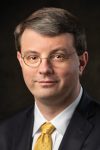
Hanshaw, during the annual Legislative Lookahead preview sponsored by the West Virginia Press Association, said he’s keeping an open mind about state government’s financial situation.
He said state officials have tried to use any extra dollars during recent flush budget times to invest in one-time allocations like infrastructure.
“We’ve done that very consciously. That’s that’s been by design, and as a consequence of that, we don’t share the belief that we’re in quite the same kind of budgetary situation that others have suggested we are,” Hanshaw, R-Clay, said in response to a question by Caity Coyne of West Virginia Watch.
“We think we’re we’re in a much more sound position because of the manner in which we have budgeted rather than looking at the aggregate dollar value spent in each of the last four budgets. If you look at the manner in which it was allocated and the actual structure of the document itself, we think we’re OK.”

Delegate Clay Riley, vice chairman of the House Finance Committee, chimed in to agree.
I think that we’ve been judicious in that as investments from a one time perspective,” said Riley, R-Harrison, “and I think we’ll be okay in the end.”

Morrisey said his administration has identified several drivers of a potential budget deficit for next fiscal year.
The highest figure is a $153 million shortfall on the state’s share of Medicaid spending. Next is $62 million to the state’s share of expenses related to the Public Employees Insurance Agency. And Morrisey has described big expenses for education, corrections, public defenders and tourism.
Morrisey has said $47 million needed right away to fund Division of Corrections and Rehabilitation though June.

Deputy Speaker David Kelly, former chairman of the House committee overseeing jails and prisons, said it’s important to address that expense.
“I think we need to take a look at that and just take a deep dive and see exactly where that shortfall is and what we need to do to make it right,” Kelly, R-Tyler, said last week on MetroNews’ “Talkline.”
“If I understood him right, it had to do with salaries and so we need to make sure we’re funding it adequately.”
Hanshaw, responding to a question by Marshall University student journalist Baylee Parsons at the Legislative Lookahead event, agreed that growing financial pressures will restrict other spending priorities.
“So we know that absent some structural change to our state’s Public Employees Insurance Agency and absent some structural change to our BRIM program and absent some structural change to the way we deal with Medicaid and some of our state health care obligations, we will be be unable to make the kind of investments that I think we all probably want to make in additional K through 12 education and additional higher education opportunities, in additional workforce training and job recruitment opportunities to provide new entry level positions for workers and for college graduates.”
Hanshaw continued by saying, “if we don’t address those things, they’ll continue to chew up a bigger and bigger and bigger portion of our overall state budget, which will make a smaller and smaller and smaller portion of resources available for us to do things to prepare the economy for new graduates.”
Morrisey has described an additional financial pressure, saying additional personal income tax cuts that the state took on this year don’t match with the spending demands. The governor has said he supports tax cuts, but he said the state took on the latest round without identifying a way to cover budget demands.
“The taxes have not been paid for,” Morrisey has said.
The previous governor and legislators established a $400 million personal income tax reserve fund for this kind of situation, but Morrisey has described reluctance to use it — saying that would amount to using one-time dollars for ongoing expenses.
Hanshaw, at the Legislative Lookahead event, said he needs to hear more about what the governor will propose before he can rightfully judge it.
“I just don’t know. We will need to see his budget to know, right? And we hope he’ll introduce it to us, presumably, next Wednesday night at his State of the State address,” Hanshaw said in response to a question by Christopher Millette, editor of The Charleston Gazette-Mail.
“So until we’ve seen his budget, we don’t have anything to respond to. Our budget analysts and the way in which we’ve structured our budget each of the last four years lead us to believe that we’re well positioned for fiscal year 2026, but until we’ve seen the governor’s budget and know the basis of his calculations, we don’t have anything to respond to.”