


A bill defining “men” and “women” has momentum in the Legislature.
House Bill 2006 was advanced today by that chamber’s Judiciary Committee and now advances to consideration by the full House of Delegates.
The same set of definitions and policies, SB456, is on a 3 p.m. Senate Judiciary Committee agenda for today.
It’s not unheard of for the House and Senate to consider parallel bills around the same time, but it’s more common for one chamber to take the lead.
The bill was introduced on behalf of Gov. Patrick Morrisey, a Republican who made an emphasis of it during his State of the State address. Morrisey called the legislation the “Riley Gaines Act,” after the former collegiate swimmer who is now an influencer in politics surrounding transgender issues.
Transgender issues were a hot topic during the competitive West Virginia primary election that Morrisey won last year. Morrisey also spent significant attention during his tenure as attorney general on the issue of transgender athletes competing in sports.
The bill does define terms for state like like “man” or “woman.” It also aims to define and preserve single-sex spaces, particularly in bathrooms and dormitories.
“These are basics, but we’re going to try to define sex-based terms such as woman, man, girl, mother and allow for facilities such as locker rooms, bathrooms and rape crisis centers to be based on biological sex,” Morrisey said earlier this month in his State of the State address.
“West Virginia will lead with common sense.”
The House Judiciary Committee heard discussion of the bill on Monday and then took a vote on Tuesday morning.
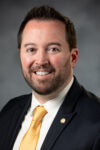
There was not a lot of discussion, but Delegate Shawn Fluharty, D-Ohio, asked some questions of the committee’s attorney about how aspects of the bill might work in practice.
Fluharty asked whether there’s any cost to the state to comply. He also asked if, for example, there could be financial support for domestic violence shelters who would be asked to make reasonable accommodations under the bill in instances of transgender women seeking help.
“Is the state providing any funding whatsoever to domestic violence shelters to provide them with the ability to have reasonable accommodations?” Fluharty asked.
The answer was unclear, counsel indicated because there is no cost estimate associated with the bill.
“So essentially an unfunded mandate?” Fluharty asked.
Then the delegate asked if there’s any mechanism in the bill to enforce compliance.
“Does this add any criminal penalties?” he asked.
No.
“Does it have an enforcement mechanism?” Fluharty asked.
It does not.
“So we don’t have anybody hired, to do some checking?” Fluharty wanted to know.
That is not included in the bill.
“So it doesn’t do a whole lot?” Fluharty asked.
The response was that the bill defines terms like “man” and “women” and aims to preserve single-sex spaces, particularly in bathrooms and dormitories.