


The House Health Committee changed a hot-button bill on school vaccination requirements to focus on exemptions for medical reasons.
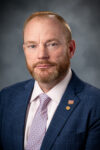
“So, if I reading the amendment correctly, for clarification, it removes philosophical and religious exemptions. Am I correct?” asked Delegate Chris Anders, R-Berkeley.
Yes, he was correct.
A majority of members of the House Health and Human Resources Committee voted to make key changes to a bill that came over from the Senate. And then a majority of the committee members, 18-7, took another vote to advance a bill reflecting those changes to the full House of Delegates.
So now it is a very different bill.
Before the legislative session began, Gov. Patrick Morrisey called for policies allowing for religious exemptions to school vaccination requirements.
Almost all states except California, Mississippi, and West Virginia allow religious or philosophical exemptions for school vaccines, granting parents the ability to opt their children out of vaccinations based on sincerely held beliefs.
Right now, West Virginia students entering school for the first time must show proof of immunization against diphtheria, pertussis, tetanus, polio, measles, mumps, rubella, varicella, and hepatitis B unless properly medically exempted.
The state Senate, nearly a month ago, overwhelmingly passed SB 460, which at that point would have allowed religious or philosophical exemptions if parents or legal guardians object on legal grounds.
The bill got hung up in the House of Delegates as members worked to determine what could actually pass. During that time, the state Department of Health issued an advisory that some West Virginians could have been exposed to measles carried by a traveler at Dulles Airport.
Delegate Anders told members of the committee that he does not like the changes to the bill.
“We are a free people. We are not subjects of the state. Government does not own our bodies or our children’s bodies. This amendment is a direct assault on freedom, parental rights. It is unacceptable if we allow the government to mandate this, we surrender the very essence of liberty itself,” he said.
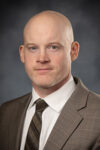
Delegate Ian Masters, R-Berkeley, said he would have preferred religious and philosophical exemptions in the bill. But he spoke in favor of the bill’s emphasis on medical exemptions.
“While I too may have liked this, though, to come out stronger, I think what we’re actually accomplishing here is fixing a medical exemption that essentially doesn’t exist,” Masters said.

Delegate Michael Hite, R-Berkeley, made a similar point.
“Whether or not we wanted religious or philosophical exceptions or not is irrelevant at this point,” Hite said.
“This bill shores up the medical exemptions that we heard testimony in here that that weren’t happening, that were needed and that there were issues with and I think this bill has strengthened those medical exemptions to make sure that those people who testified in this committee will get the exemptions that they need.”
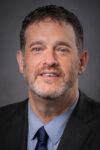
Delegate Mike Pushkin, D-Kanawha, voted in favor of making the changes to the bill and then voted against passing it.
“I think it’s better than it was, but it’s still very dangerous,” Pushkin said.
Pushkin later said West Virginia leads the nation in protections against the spread of infectious disease — and should fight to keep it that way.
“One thing positive that we lead the nation in is some of our public health laws in regards to childhood immunization, and you’re not hearing of these types of outbreaks, whether it’s measles or Rubella or all the things that are starting to make a comeback in other states that have weakened their laws,” he said.
“You’re not hearing about it here. I’d like to keep it that way. I’m a strong no on even this is a better bill than what we have, but it’s still, why are we messing with something that’s working?”