

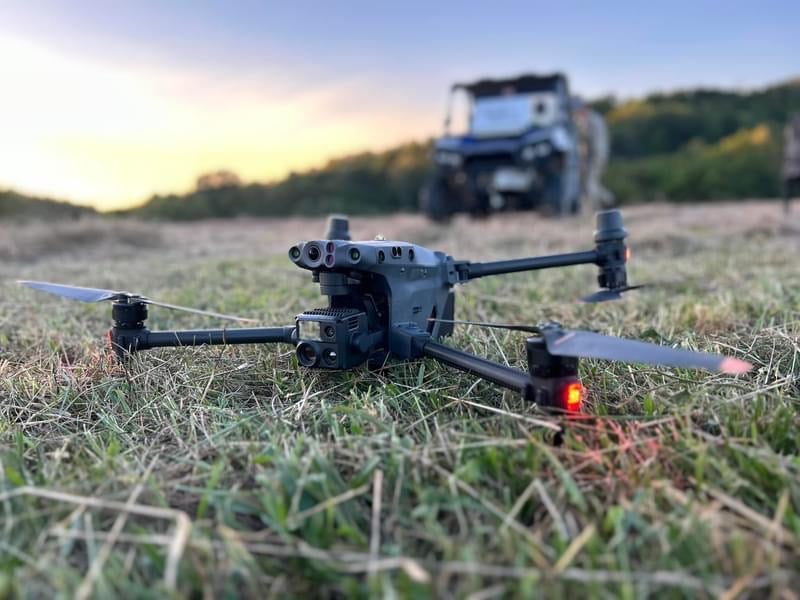
CHARLESTON, W.Va. — Legislation approved at the state house will enable the use of thermal drone technology for the recovery of mortally wounded game in West Virginia. The state Senate approved House Bill 2043 Tuesday and sent the legislation to Governor Patrick Morrisey’s desk.
The bill is the next evolution of a law approved five years ago which enabled the use of blood tracking dogs to find deer or other game hunters may have shot but were unable to find. Ironically the legislation loosens restrictions which were approved many years ago in response to a large landowner’s use of a helicopter to document and pinpoint the location of large deer on coal company property in southern West Virginia. The Legislature made a sweeping ban on any aerial pursuit of game at the time in the interest of fair chase rules.
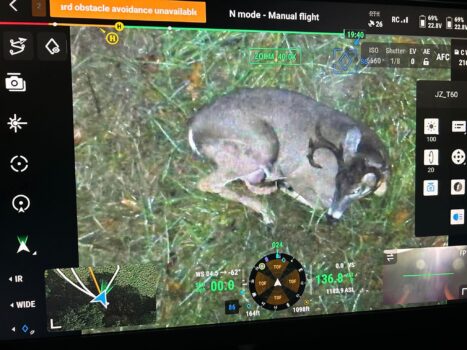
“They outlawed drones, they outlawed helicopters and planes, but of course at that time they didn’t realize the thermal drone could become a useful tool when used in a controlled environment,” said Shon Butler, founder and owner of Long Spur Tracking.
Rules for the use of drones or “unmanned aerial vehicles” (UAV’s) would require operators to have a valid West Virginia hunting license, a valid West Virginia outfitter’s license, and be a licensed drone operator through the Federal Aviation Administration.
“We were getting inundated on our borders from guides coming over from Ohio, Maryland, Kentucky, and Virginia where it’s legal to use a drone, they were coming on over to West Virginia anyway to recover animals. This just provides a license for it,” he added.
Natural Resources Police made several contacts with drones operating illegally in the state recovering game and issued warning citations. Now the operators would be required to have a West Virginia license.
Butler helped craft the legislation and took the opportunity to also clean up what had been considered a potential pitfall of the original law. The legislation amended the current law which allows for the use of tracking dogs and makes the term singular to “tracking dog.”
“We got the plural taken out and the language in that says a handler may only have one dog per handler,” Butler explained.
The change in the language was to prevent the potential for pushing deer using multiple dogs. An amendment offered on the House floor during debate along similar lines was defeated. The measure would have removed the restriction for the tracking dog to be on a leash. Butler said there is precedent and value in some cases for untethered dogs, but the bill as amended would have been too open ended and could have created a situation the majority of West Virginia hunters have indicated they wouldn’t support.
Use of a drone for deer or other game recovery is effective, but also an alternative when the use of a dog is a less desirable circumstance.
“They call all of their buddies on a lease and they don’t want a dog out there while their hunting, that’s where a drone could be useful. Another situation is where the deer crosses property lines and a landowner doesn’t want dogs on their property, but would allow a thermal drone flyover,” said Butler.
The bill needs Governor Patrick Morrisey’s signature to become law.