

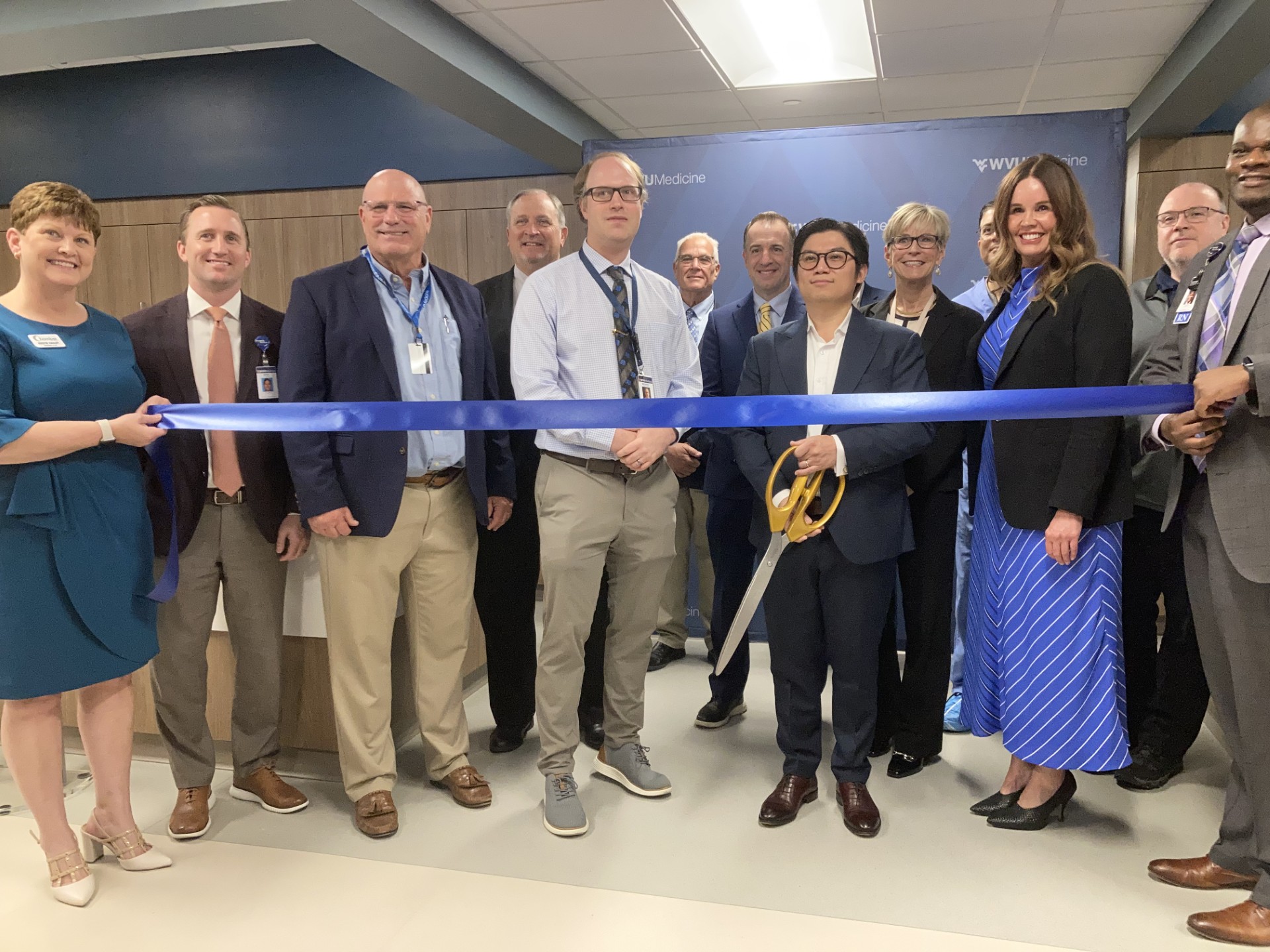
MARTINSBURG, W.Va. — “Time is Brain” when it comes to medical emergencies involving the brain. That’s why doctors, radiologists, and healthcare administrators were on hand in Martinsburg Tuesday for the ribbon cutting on a state-of-the art radiology suite specifically designed to bring cutting edge technology to both diagnose and treat complicated conditions involving the brain, spine and blood vessels.
Interventional Neurologist Phong Vu said the idea is to bring timely treatment close to home.
“Patients who present with strokes, inter-rhythm rupture and other neuro-vascular diseases, can get the care here locally instead of being shipped out to the other, bigger hospitals such as Morgantown,” Vu said.
He talked about the importance of finding and treating clots and other neurological conditions quickly.
“Time is a big deal. For every minute that the brain goes without oxygen, the brain loses millions of brain cells,” Vu said. “We call it ‘Time is Brain.’”
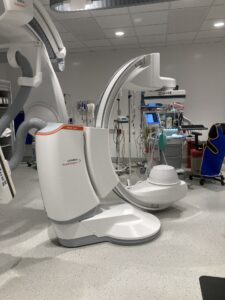
The suite has been in operation since January and features diagnostic tools that can guide minimally invasive surgical interventions, according to Radiology Manager Craig Wolfe, who said the technology allows specialists to locate and remove clots in the brain that could cause stroke. The equipment may help find and remove aneurysms.
The neurointerventional radiology suite “helps to keep our patients’ treatments here in the Eastern Panhandle,” Wolfe said. “They don’t need to be transferred to another facility.”
“Time is brain. So the quicker we can treat, the better outcomes for the patients.”
WVU Hospitals East President and CEO Mark O’Hern said Tuesday’s ribbon cutting marked a string of positive developments for care in the Eastern Panhandle that started with the announcement earlier this year of more than $260 million in investment to expand services and the footprint at both Berkeley and Jefferson Medical Centers.
“Two weeks ago, we announced a $260 million investment into the Panhandle with a new bed tower at Berkeley and a new outpatient center at Jefferson,” he said. “Today, we get to cut the ribbon on a brand new neurointerventional radiology suite and are able to take care of very complex stroke and aneurysm patients that historically would have to leave the Panhandle.”
Neurointerventional surgery is a specialized field of medicine that uses minimally invasive techniques to diagnose and treat complex conditions affecting the brain, spine, and blood vessels. Guided by advanced imaging technologies, interventional neurologists perform procedures through small incisions, often using catheters to reach and treat affected areas. This approach reduces the need for traditional open surgeries, resulting in shorter recovery times, lower risks of complications, and improved outcomes for patients, according to information from WVU Medicine.
Construction began in April of last year and was completed in phases to allow for operations to continue throughout the project.
O’Hern said the interventionalists partner closely with doctors at Ruby Memorial and specialists at the Rockefeller Neuroscience Institute there.