

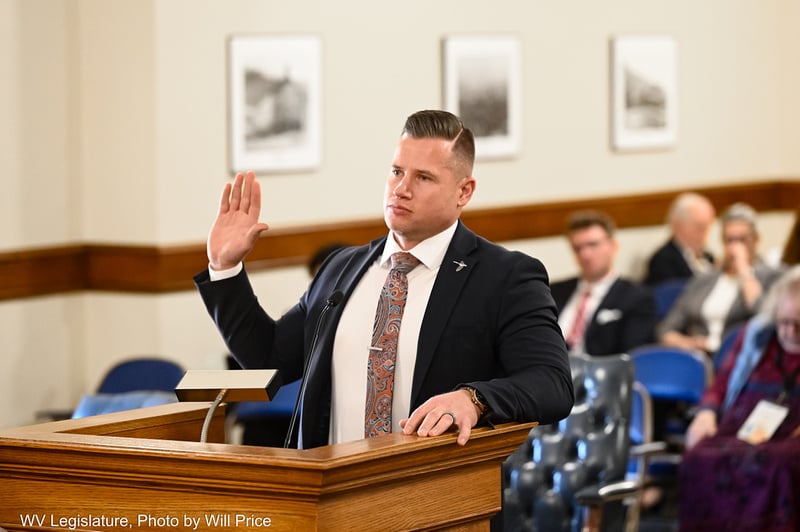
CHARLESTON, W.Va. — In March, Department of Human Services Secretary Alex Mayer stood in front of senators and said that no outside study of the state’s child welfare system would be necessary on his watch.
A proposed piece of legislation, S.B. 727, would have mandated the DoHS to hire an external third party to conduct a study of the system and identify its shortcomings in current laws and processes, all in hopes of improving.
Instead, Mayer declined the study. Bill sponsor and Kanawha County Senator Mike Stuart was adamant about going forward with the study, given the fact that north of 6,000 children are currently in state custody. Stuart told Mayer accountability would be on his shoulders once he declined to move forward with the study.
Mayer says the solutions can be found in West Virginia.
“I’ve always been a collaborative person, and I was confident that the people of West Virginia would help me work together to solve the problem,” Mayer said on MetroNews Midday last week. “To have a group come from outside and access the system, I didn’t think was the right answer. I thought the answers are here. The answers are in West Virginia, and they’re held by the people that are in the system, working with the system, and engaged in the system.”
Mayer’s first step in trying to improve the system has been the introduction of listening sessions, where foster parents, biological parents, and others on the front lines are invited to come and share their experiences and ideas.
The DoHS hosted its first four listening sessions last week. Mayer says the sessions are all about talking and sharing perspective.
“We kick off the session with just a focused conversation. Understanding where people are coming from, what perspective they can lend, what their experience has been, and then from there, we dive into a little bit more detail around those experiences. We ask them to describe the system today, but then after that, we really lean into them to say, ‘Based on all we discussed to this point, what are the solutions? What are those things that you think would help us fix the system?” Mayer said.
From there, Mayer says some ideas get put up in front of the whole room for comment.
“Folks work at their small group table and collaborate with one another and come up with these ideas and then we put them up on a board and discuss those ideas,” Mayer said.
The listening sessions pick back up today and will span throughout the week. The dates and locations are as follows:
May 19- Burlington, BUMFS Gymnasium; 120 Hope Ln., Burlington, WV, 26710
May 20- Philippi, Battler’s Knob; 101 College Hill Rd., Philippi, WV, 26416
May 21- Martinsburg, Martinsburg Armory; 800 Foxcroft Ave, Ste 420, Martinsburg, WV, 25405
May 22- Morgantown, WVU County Extension Center; 270 Mylan Park Ln., Morgantown, WV, 26501
Each of the four meetings will run from 6 p.m. to 8 p.m.
Mayer says that fixing the issues will not be done with the snap of a finger but getting better acquainted with those engaged with the system is a good place to start.
“It’s a very complex system and I think this is just that first step in that collaborative work going forward, and that will continue going forward,” Mayer said. “It’s not going to be something that changes overnight. It’s not going to be something that’s only fixed from the department. It’s going to take communities, it’s going to take all sorts of organizations coming together to solve this critical issue, and that’s what I wanted this listening session to kick off.”