

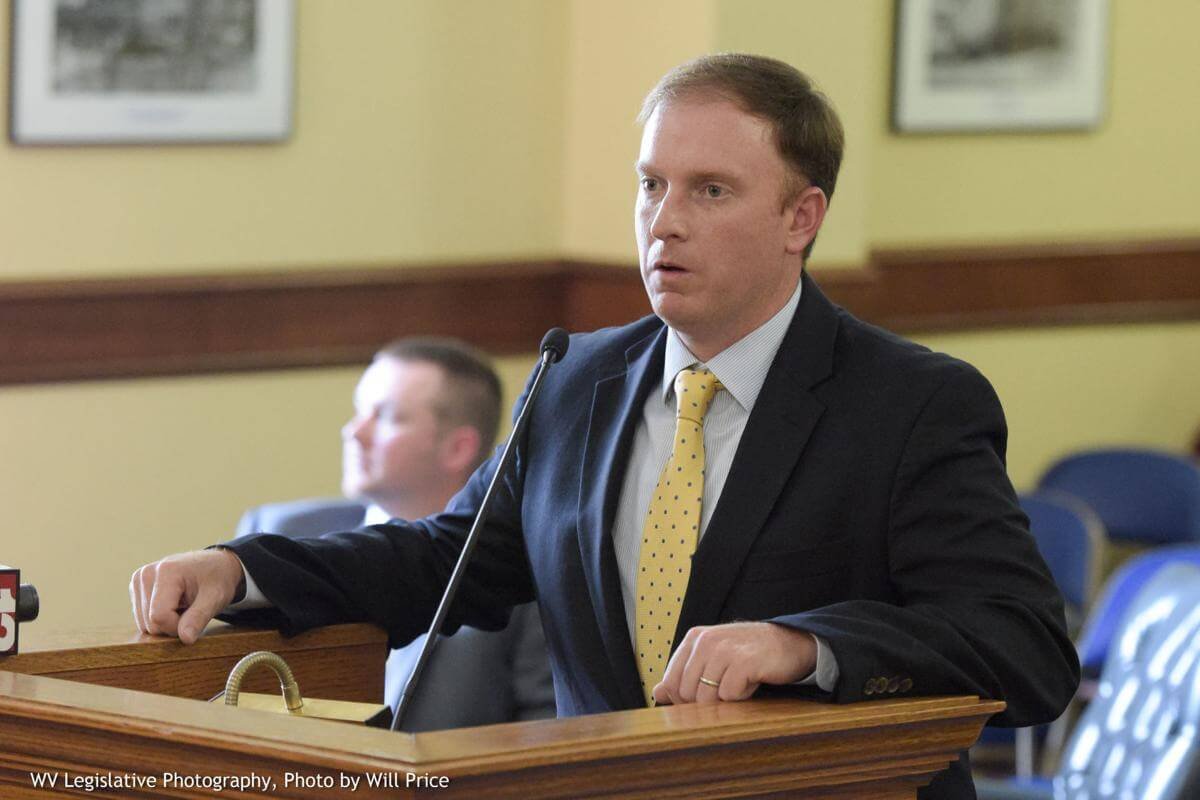
CHARLESTON, W.Va. — Attorney General J.B. McCuskey is asking the U.S. Supreme Court to hear and uphold the State of West Virginia v. B.P.J.

McCuskey wants the Supreme Court to reverse the injunction from 4th circuit after they issued a landmark decision in United States v. Skrmetti last week, which upheld Tennessee’s law restricting gender-transition interventions for minors. It affirmed the State’s authority to protect youth from “risky and unproven medical practices.”
McCuskey appeared on MetroNews “Talkline” Tuesday to speak further on the issue. He says there is an unfair advantage when biological boys play in girls’ sports.
“Title IX in this country has a stated purpose of ensuring women and girls have access to fairness, and in this instance, it’s the playing field,” McCuskey said. “What we know is there are biological differences between men and women that make it unfair to allow boys to play against girls.”
McCuskey continued by saying that once athletes are beyond grade school, the physical differences make the competition unbalanced.
“Women’s tennis is a different game than men’s tennis. Women’s soccer, while played on the same field with the same rules, and women’s basketball with the same court and same rules, it’s very, very different when grown men are playing than when grown women are playing,” McCuskey said.
West Virginia has a law that prohibits biological boys from competing with girls in sports but has stalled because of a federal court injunction that was entered at the direct of the Fourth Circuit Court of Appeals. Because of this, Becky Pepper-Jackson, a transgender high school student athlete in Harrison County, was able to compete in the High School State Track & Field Championships this past May.
Pepper-Jackson has identified as a girl since third grade and has taken puberty-blocking medication.
As postseason events were starting, multiple other competing athletes spoke out against Pepper-Jackson competing against them. Governor Patrick Morrisey released a statement after this, saying he had heard that high school track coaches in the state were “threatening to force girl track and field athletes to compete against a boy or face suspension.”
Morrisey continued by saying, “Whether they participate or not, they shouldn’t be punished for calling out their opposition to what’s happening in north central West Virginia.”
McCuskey says these athletes spoke up about a law they felt protected them.
“These girls decided on their own. My goodness, they are dogmatic, they are brave, and they are probably the best advocates for this law that I’ve ever seen,” McCuskey said.
With the result from Tennessee, McCuskey says the same approach should be used by the Supreme Court for this case.
“The analysis that they used in the Skrmetti case should also be used in the Save Women’s Sports case here in West Virginia,” McCuskey said. “This law should be found to have a rational basis, and this law should be applicable throughout the state of West Virginia as our legislature intended.”