


MORGANTOWN, W.Va. — This week, West Virginia University President Gordon Gee will begin his final two weeks as the top executive of the R-1 flagship Division I school in the state, wrapping up a four-decade career in higher education leadership.
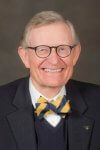
Gee steps down July 14 when his contract ends, and former Coastal Carolina President Dr. Michael T. Benson will become the next WVU president.
On WAJR’s “Talk of the Town,” he said in 1980 he estimated state funding made up about 60 percent of their annual budget, and that number has dropped to 12 to 13 percent. That resulted in a sharper focus on financial and bond performance numbers that ultimately resulted in Academic Transformation that nixed more than 150 faculty positions and several programs.
Today, he said there are still Division I institutions that have not evolved with the changing financial landscape and now have to make even more drastic cuts to stay out of the red.
“We’re an institution that has been brave about that, I think,” Gee said. “Dr. Benson inherits an institution that, really, I think in many ways can lead to change and opportunity.”
Under his leadership, the annual tour of all 55 counties in the state began. Gee said one of his most favorite things to do is to tell the West Virginia University story and over time Gee became a welcome sight each year.
“You can imagine an Ivy League lawyer showing up with a bow tie the first time; they thought I was from Mars,” Gee said. “But, after seven, eight, or nine times showing up, I started getting notes asking me, ‘When are you going to show up? When are you coming back?'”
During the first tour, during a stop in McDowell County, he asked the county commission what he could do to help that struggling community. When the commission asked to bring the Pride of West Virginia, Gee loaded up the equipment and students in 10 buses and made the trip for a performance that will stick with him for a lifetime.
“Every single person in that county was there and the tears flowed,” Gee said. “Experiences like that will be ones I can never forget.”
Gee is very concerned about the mental health challenges the current generation of students faces compared to students four decades ago. The proliferation of technology and cell phones has pushed us into silos that don’t promote social interaction, which was a hallmark of the college experience of the past.
“This disconnect from the human condition and from each other is a very serious problem with these students,” Gee said. “But, they are really very curious and very interested in the world around them, unlike students I encountered when I first became a university president.”
One of the highest accomplishments in Morgantown has been the growth of WVU Medicine to 26 hospitals serving 90 percent of the population.
The system, built with the help of WVU Medicine President and CEO Albert Wright and Chancellor and Executive Dean of West Virginia University Health Sciences Dr. Clay Marsh, has grown across the state, eliminating the need for West Virginians of all ages to leave the state for treatment and transplants. The worldwide recognition received through research and the Rockefeller Neuroscience Institute has propelled them into the stratosphere of what is possible.
When it comes to athletics and Name, Image, and Likeness, Gee isn’t as optimistic. He does hope recent court cases and legislative action will create some stability that can be built on.
“College athletics is a whole different story; it is in a major crisis right now,” Gee said. “Hopefully, we’re going to get some control of it with the house settlement that’s been made and congressional action that we look at forthcoming.”