

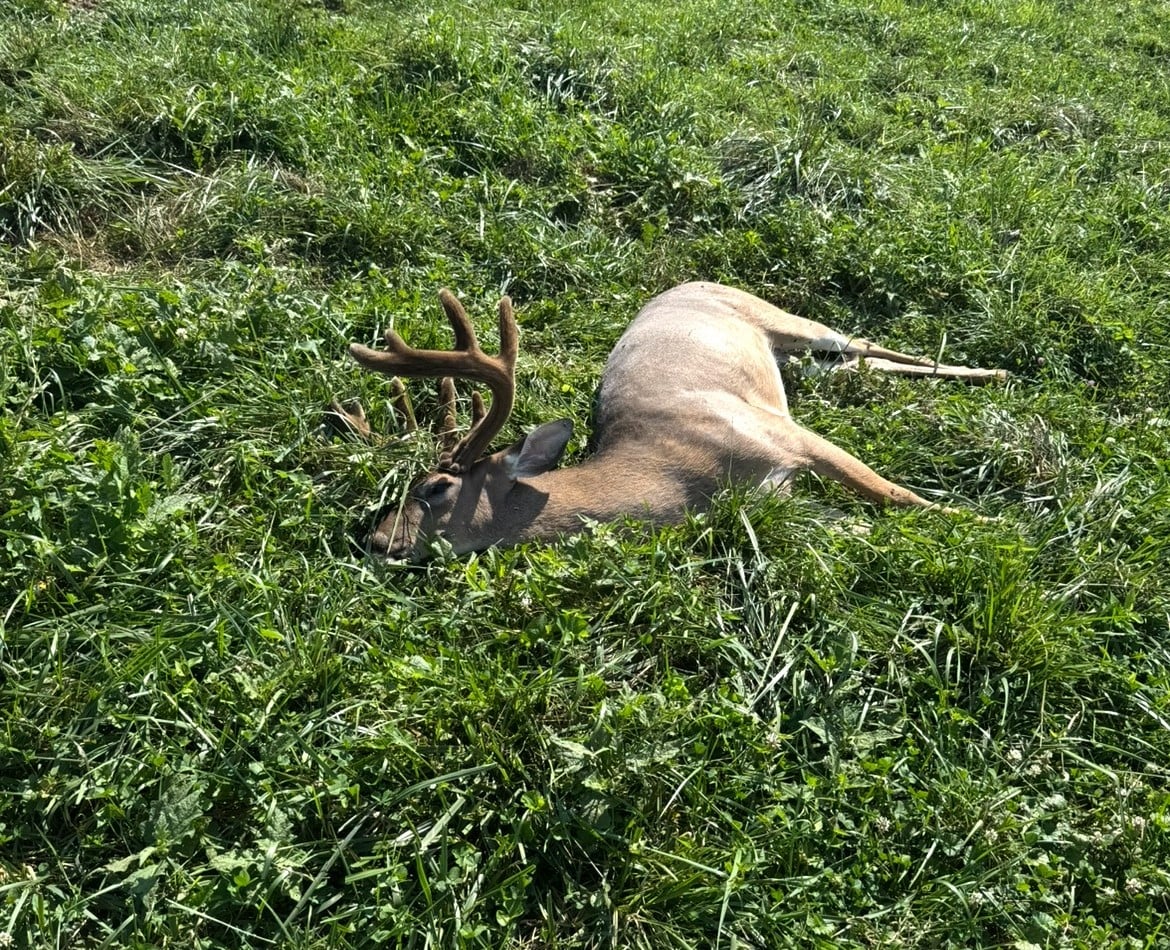
PARKERSBURG, W.Va. — Land owners across several counties of West Virginia’s Mid-Ohio Valley started to make grim discoveries in the past couple of weeks. Largely in the Parkersburg area people were finding large numbers of dead deer in small groups on their property. The carnage was also reported on the other side of the Ohio River to the Ohio Division of Natural Resources.
West Virginia Division of Natural Resources wildlife disease specialist Ethan Barton confirmed the culprit was Epizootic Hemorrhagic Disease or EHD.
“Thus far the disease is confirmed in deer in Ritchie County along with Wood, Jackson, and Pleasants County. We do have a few samples pending in a few other areas too. Across the river, the Ohio Division of Natural Resources has also confirmed cases just on the other side of the river in Washington, Athens, and Meigs County,” said Barton.
The disease is not uncommon and is spread by an infected midge. The tiny insect, often called a “noseeum” can quickly infect an entire herd of deer. However, the virus isn’t necessarily a death sentence for the animal.
“They’re very, very small biting flies and essentially it’s a bug virus which causes problems for ruminants of which the whitetail deer is the most susceptible to mortality,” explained Barton. “But some deer will survive infection. It’s a vector borne disease and a deer has to be bitten to contract it and there needs to be sufficient virus in the bite. There are a lot of variables and those who survive are going to be immune to future infection with that same virus.”
The discovery of an outbreak can be disturbing. Multiple deer can be dead only yards apart making the damage look quite dramatic. Parkersburg Mayor Tom Joyce noted the city’s crews have removed nine dead deer from yards in the city this week.
The first reports started around the beginning of August when the regular rain the state had been experiencing in the spring and through much of the summer gave way to dry conditions. According to Barton, that’s the typical pattern which can lead to an outbreak.
“Typical conditions you would expect an HD outbreak would be a very wet spring and summer followed by an August that dries out,” said Barton. “If you’ve got a lot of midges then the stage is kind of set,.”
The end of the outbreak will be certain when the first frost arrives and kills all of the infected midges which had been spreading the virus.