

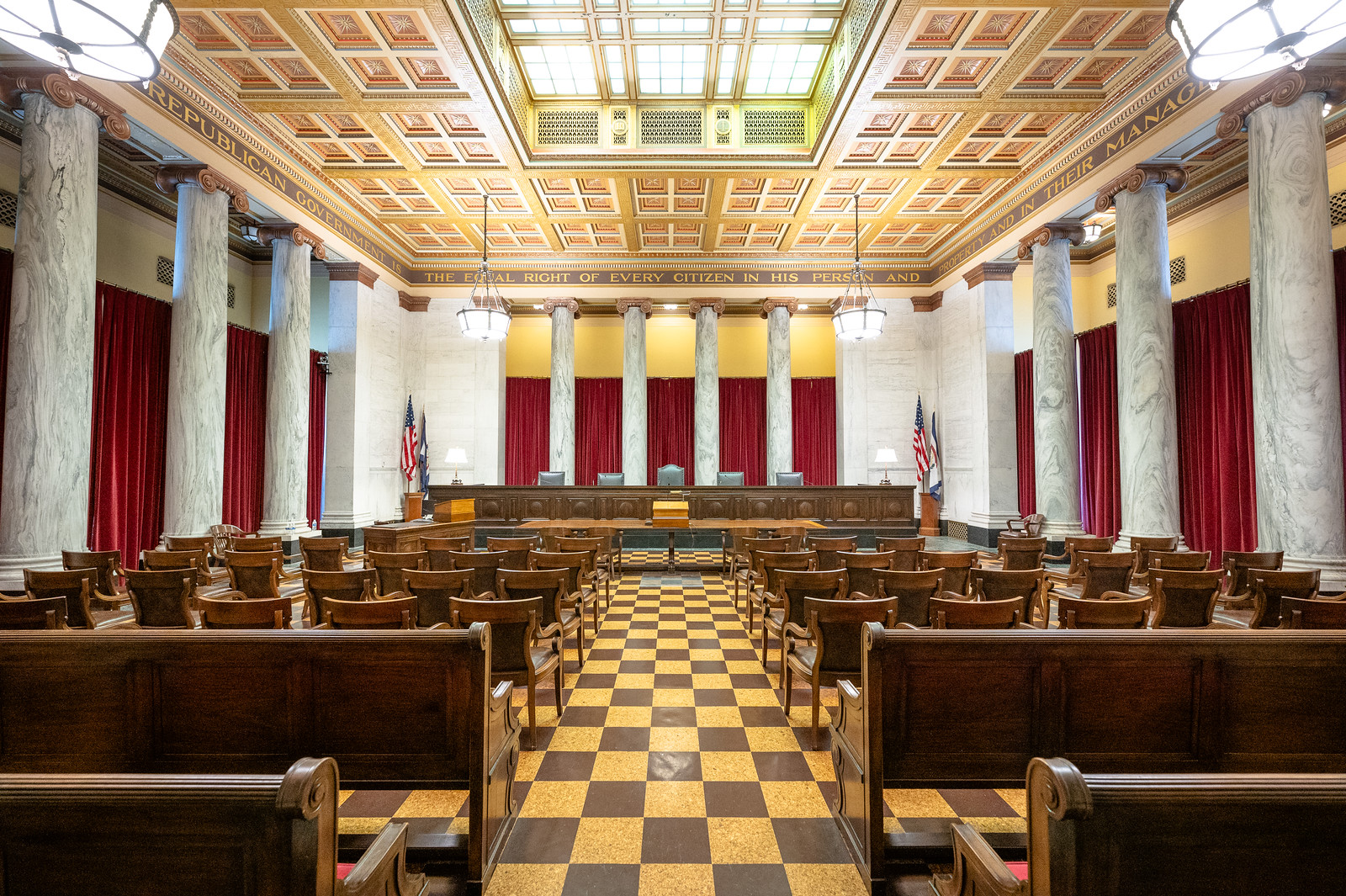
Lawyers for the state school board and superintendent have launched a state Supreme Court challenge in a power struggle over who has the final authority over education regulations, saying the Legislature has repeated an attempt at a “Constitutional coup.”
The lawsuit, which has been anticipated for months, was filed straight to West Virginia’s top court of review. The attorneys for the state board contend the precedent is clear and that oral argument is not necessary.
At the center of the conflict is a bill passed during the most recent regular legislative session, House Bill 2755, which makes a case that the Legislature exercises authority over the state Board of Education and thus has ultimate say-so on the rules governing the state education system.
That runs counter to the way the board has operated until now. The state board has had the final say on the policies that fill in the details on how to carry out education laws passed by the Legislature.
Lawyers for the state board contend the new law is unconstitutional.
The West Virginia Constitution says, “The general supervision of the free schools of the State shall be vested in the West Virginia board of education which shall perform such duties as may be prescribed by law.”
There is some duality of the responsibilities because the Constitution also says, “The Legislature shall provide, by general law, for a thorough and efficient system of free schools.”
The way the balance has typically been struck in practice is that the Legislature passes laws about education and the superintendent and state board are responsible for filling out the details through specific rules.
In the new filing, Secretary of State Kris Warner is named as a defendant because in the past the board would finalize a policy and then submit it directly to the Secretary of State’s Office.
But the new law requires a different route: that all legislative rules enacted by the state board first be authorized by the Legislative Oversight Commission on Education Accountability, which lawmakers call LOCEA. The proposed rules would then be submitted to the full Legislature for review.
In July, board members voted 9-0 to file a fairly ordinary policy about standards for school transportation equipment with the Secretary of State’s Office.
The Secretary of State’s Office, in turn, concluded it was obligated to reject that filing because of the newly passed law.
Now, the lawyers for the state board are asking the Supreme Court to issue an order compeling the Secretary of State to publish the board’s rules and declaring the laws enacted by House Bill 2755 unconstitutional.
This all has history, both recent and longstanding.
Three years ago, West Virginians rejected a constitutional amendment that would have given the legislature authority to review and approve the state Board of Education’s rules and policies, leaving the board’s current constitutional authority intact.
Years before that, the issue was considered in 1988’s West Virginia Board of Education vs. Hechler, referring to then-Secretary of State Ken Hechler, whose office was being asked to file rules approved by the board.
The state Supreme Court, reviewing the situation then, concluded that the Board of Education has “general supervision” of state schools under the Constitution and that any statutory provision that interferes with such rule-making is unconstitutional.
Lawyers for the state board underscored that the facts of this case are identical to those in the one with Hechler,
including the Secretary of State in both cases refusing to file the exact same rule about school bus design and equipment.
In the new filing, lawyers for the state board wrote to justices, “The question presented is: Do the laws enacted by House Bill 2755 violate the West Virginia Constitution and this Court’s binding precedent in Hechler?”
The lawyers for the board wrote that the law passed this year “is as unconstitutional today as it was forty years ago, and this Court should declare this iteration unconstitutional again.
“After all, the Legislature cannot render unconstitutional laws constitutional by merely passing them again after this Court strikes them down.”