

CHARLESTON, W.Va. — Amid the loss of federal SNAP benefits and the federal government shutdown, the always important Hunters Helping the Hungry program in West Virginia may be into its most important year in history.
Food banks across West Virginia are bracing for what they anticipate will be a huge influx of new customers in need of food to feed their families. Each year, the donated venison of West Virginia hunters becomes the largest red meat contribution of the year for the food banks and is a highly sought after product among those in need. Hunters can drop off their deer after it is checked-in at a participating meat processor where it’s butchered and the entire deer is ground and parsed in two-pound packages. The meat is picked up by the Mountaineer Food Bank in Gassaway or the Facing Hunger Food Bank in Huntington and distributed to multiple food pantries and soup kitchens all across West Virginia.
“They are the only certified members of Feeding America in West Virginia,” said Kim Linger who helps administer the program for the West Virginia Division of Natural Resources in the French Creek offices.
The program fits a number of needs in West Virginia. Hunters may have tags left to fill, but may not want to kill another deer since they have enough for themselves and their family. The HHH program enables them to keep hunting with a proper place for the meat to do some good. The program also helps lower the number of deer on the landscape and work toward game management objectives, especially when a hunter donates a doe for the program.
According to West Virginia DNR data, since the program started in 1992, hunters in West Virginia have donated 29,850 deer to Hunters Helping the Hungry. Those deer have yielded 1,133,225 pounds of meat for food pantries and soup kitchens in West Virginia. They have also put 1,523,016 meals on the plates of the less fortunate in the Mountain State. As good as that sounds, this year the need will probably be exponentially greater with so many facing food insecurity with the federal government shutdown and SNAP benefits frozen.
The program doesn’t come free. The deer are donated, but the processors who cut them up must be reimbursed. The rate is $3 a pound. The DNR reports from 1992 to 2024, the cost of the processing was $1,737,737. By law hunting and fishing license dollars cannot be used for the processing costs and it must be funded through private donations. Through the years some strong annual fundraisers have come through.
The West Virginia Council of Churches designates the first Sunday in November, this Sunday, as Share the Harvest Sunday.
“This year, that’s November 2nd. Church congregations are asked to donate money to help fund the program because it relies on these donations to run it because state law prohibits us from using license fees for processing and distribution costs,” Linger explained.
The program seeks to get every person in a West Virginia church on Sunday morning to donate $1 to HHH in a special collection.
Another annual fundraiser which has had great success is the Governor’s One Shot. Glenn Adrian of Morgantown oversees the program which is held in conjunction with the first antlerless deer hunting season each fall.
“It’s a really cool event and we’ve been doing it for 19 years. It was started in 2006 with then Governor Joe Manchin and then DNR Director Frank Jezioro who got the idea after being invited to an antelope hunt in Wyoming which was also designed to help food banks and they decided to bring it back here,” Adrian explained.
The event creates two-member teams who are hosted by a generous landowner to serve as their guide and allow the team to hunt antlerless deer on their property. The deer which are killed are immediately donated to the Hunters Helping the Hungry program. Each team has a donor or sponsor backing them for the hunting trip and their monetary donation goes to Hunters Helping the Hungry.
“The event raises money to support the Hunters Helping the Hungry program through the Mountaineer Food bank and I’m very proud to announce we have now raised in excess of a Million dollars that has been given to the food bank in support of the processing of the Hunters Helping the Hungry program. We’re really proud of that,” said Adrian in a recent edition of West Virginia Outdoors.
This year there are 17 processors in West Virginia who will accept donated venison for the program. Under emergency restrictions, deer killed in a CWD county are now allowed to be donated to the program.
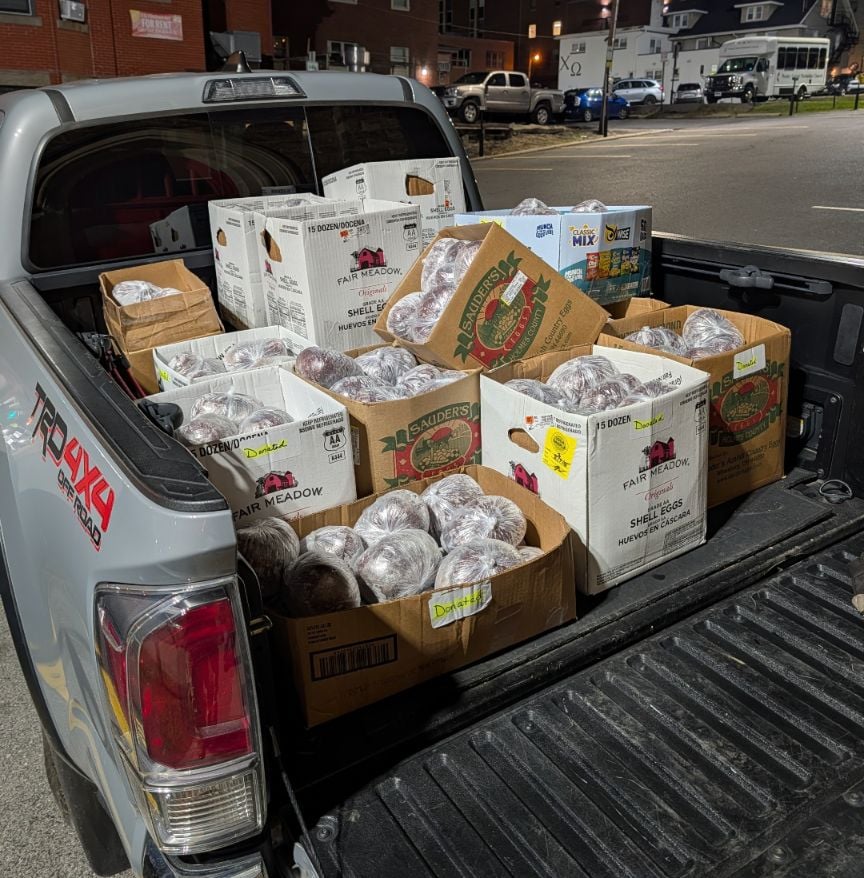
Although not a part of the Hunters Helping the Hungry program, the Morgantown Urban Hunt organization has made a significant contribution to fighting food insecurity in their part of the state. Hunters in the Morgantown Uban Hunt are required to pass an archery proficiency test and are assigned hunting areas. During only the first few weeks of the Morgantown Urban hunt in 2025, hunters have donated 776 pounds of ground venison which was delivered to food pantries in the Morgantown area for distribution. Over the course of the urban hunt’s 15-year existence, participants have donated more than 15,313 pounds of venison to those same pantries.