


CHARLESTON, W.Va. — A few hundred thousand hunters will take to the woods of West Virginia this week to renew an old tradition. Although there continue to be significantly fewer hunters than there were three decades ago, the tradition of the opening week of buck season during Thanksgiving week remains one of the most time honored and cherished rituals in the Mountain State.
Coal mines shut down, factories idle, schools are closed, and for those businesses which choose to remain open may be short handed when workers take vacation, call in sick, or just play hooky for at least the first few days of this week. Those individuals will be clad in orange, steam coming from their breath, and making their way into a stand they have hunted for years. Many started hunting that spot with their dad or grandad. Other hunters will spend hours scouting woodlands and months trying to pattern the movement of a certain buck with the use of trail cameras to know exactly where they should be to start the week in hopes of taking a big buck.
This year there are a couple of factors hunters will be considering. The first consideration is mast. The 2025 Mast Survey published by the West Virginia Division of Natural Resources found the production of hard mast, acorns in particular, was at a near all-time high. Production was well above the season averages in the past decade. White oak acorns are the most sought by whitetail deer. They’ll walk past all other food sources to munch on white oak. This year, they won’t have to walk far and because of that Steve Rauch, Assistant Chief for Game at the West Virginia Division of Natural Resources believes the harvest will be lower for 2025.
“We are anticipating lower harvest this year compared to last year and the biggest impact on that is the acorn production. The deer are more spread out this year because of all the acorns. That will impact harvest numbers,” said Rauch in a recent edition of West Virginia Outdoors.
The other factor some folks will consider is a sizeable outbreak of Epizootic hemorrhagic disease, commonly called EHD. The virus, which is spread by a small biting midge, started in the early days of September and late August and began to take down deer throughout West Virginia’s mid-Ohio valley and central counties. Hundreds of deer died from the disease which finally ended with a killing frost. Rauch said the mortality will likely have a negative impact on the harvest.
“Where we did have the EHD in the heavier counties, that will have some impact. A lot of that probably is due to hunters saying I’m not going to hunt there,” said Rauch.
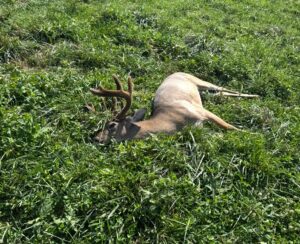
Rauch anticipated a lot of hunters who have been tuned into the non-stop internet and social media discussions about HD, not all of which were completely accurate, will made the conscious decision to not hunt fearing there is less of an opportunity in those counties. He expected however, the population would rebound quickly. Across the river in Ohio, the ODNR went through the cumbersome process of actually lowering their bag limits for the hunting season in the middle of the fall. West Virginia’s DNR leadership did not believe that was necessary.
“Deer numbers are healthy and they’ll bounce back very quickly as deer populations do. So there really isn’t a reason to change season bag limits because of other circumstances,” Rauch said.
Brett Skelley is the Deer Project Leader for the West Virginia DNR. He agreed EHD certainly looked bad and presented a setback, but also did not think it reached calamity status.
“We had a pretty good HD outbreak this year. That doesn’t mean all the deer are dead in those areas, but certainly local areas are going to have fewer deer on the landscape than people have traditionally seen.” said Skelley.
He also expected across the state, hunters would probably find better success in hunting wood lots instead of an over watch on an open field.
“It’s going to be a little tough this year. As long as they’ve gotten some scouting done and have an idea where some food is, if they sit there long enough they ought to have something come cruising through, especially hunting those pinch points, low gaps, or other terrain features that might funnel deer. Hunting the food and hunting those areas will probably pay off,” Skelley said.
The season runs through December 7th. As always a number of West Virginia counties also feature a concurrent antlerless hunting season in which hunters who have the proper Class N stamp can kill either a buck or a doe. Traditionally, 80 percent of the bucks killed in the two week season are taken in the first three days.