


A circuit judge sent lawmakers a message that boils down to this: pass legislation to give local citizens a vote when charter schools are established or risk losing the entire West Virginia charter schools system.

The chairwoman of the House Educational Choice subcommittee, Delegate Kathie Hess Crouse, said it’s “too soon to say at this point” whether such legislation would be considered during the regular session that begins Jan. 14.
But Crouse, R-Putnam, offered criticism of last week’s permanent injunction order on charter schools.
“I did review the injunction, and while I’m not surprised to see continued legal challenges, I am disappointed by yet another attack on school choice in West Virginia,” she said.
“Our charter schools are providing families with options that improve student outcomes and give parents the ability to choose what is best for their children. The resistance we continue to see stems from a mindset that children somehow ‘belong’ to the public school system — that only one system — is capable of educating them. That simply isn’t true, and our families have proven it.”
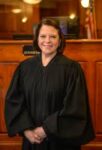
Last week’s order by Kanawha Circuit Judge Jennifer Bailey focused on constitutional issues of voter approval for establishing new schools. The order halts the authorization of new charter schools in West Virginia without voter consent. But it provides some latitude.
Bailey’s filing granted a 60-day stay, maintaining the status quo during any appeal process.
And the order phases in the permanent injunction.
First, the judge enjoined the West Virginia Professional Charter Schools Board from authorizing any new schools without the consent of affected county voters. But this first step would not affect the operations of the eight charter schools already approved by the state oversight board, avoiding disruption to current students, families and educators.
Second, the order provides time for the Legislature and governor to respond by having special elections to get the consent of voters with charter schools proposed for their communities.
The order envisions “allowing a reasonable time for the Legislature and Governor to respond to the permanent injunction through either legislative-authorized or governor-called special elections to obtain the consent of affected county voters” in compliance with the state Constitution.
“If those special elections occur, this matter will be resolved, no second stage of relief will be needed,” Bailey wrote.
Third, if the Legislature and governor don’t act, then the judge would consider yet another permanent injunction to enjoin the West Virginia Professional Charter Schools Board from permitting continued operations of the eight charter schools already authorized without voter consent.
The court challenge was based on a section of the state Constitution that says “no independent free school district, or organization shall hereafter be created, except with the consent of the school district or districts out of which the same is to be created, expressed by a majority of the voters voting on the question.”
The plaintiffs contended that the state’s Professional Charter Schools Board created charter schools without the constitutionally required voter consent.
The Mountaineer Charter School Alliance, an organization formed this year to promote charter schools in West Virginia, issued a statement pushing back on the judge’s opinion, saying “we believe that the law and the facts strongly support our position.”

“While we’re disappointed in the court’s ruling, our commitment to students, families and innovative workforce development solutions has not wavered,” said Casey Sacks, president of BridgeValley Community and Technical College and founder of WIN Academy, which accepts high school juniors and seniors to get a jump on nursing or manufacturing programs.
“Our school was founded to provide high-quality, public education, and we will continue to champion that mission, both in the courtroom and in our classrooms.”
West Virginia passed a law allowing charter schools for the first time in 2019. Charter schools would receive financial support from the state’s public education system and would be given greater operational latitude in exchange for the possibility of losing their right to operate if they fail.
Initially, authorization for charter schools went only through county boards — or the state school board in a few instances. The first applicant was rejected in 2020 by the Monongalia and Preston county boards.
So the Legislature established a new pathway to approval, adding a West Virginia Professional Charter School Board as an authorizer. Board members are appointed by the governor and then go through confirmation by the state Senate.
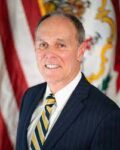
Former state Senate President Mitch Carmichael said the charter schools system was meant to give families and students additional options.
“I think competition is good for an education system — for any system, frankly,” Carmichael, a Republican, said on MetroNews Midday. He added, “One needed to shake up the system and provide alternatives for a world class education.”
He acknowledged that the first incarnation of charter schools in West Virginia called for authorization by local boards of education. Carmichael’s view is that the West Virginia Professional Charter School Board is a legitimate entity to authorize the schools.
“I’m convinced from my reading that is a legal mechanism to perform that operation,” Carmichael said, “but it’s something that does need to be adjudicated. We knew it when I was originally championing charter schools, which is the reason we kept it with the local school board.”