

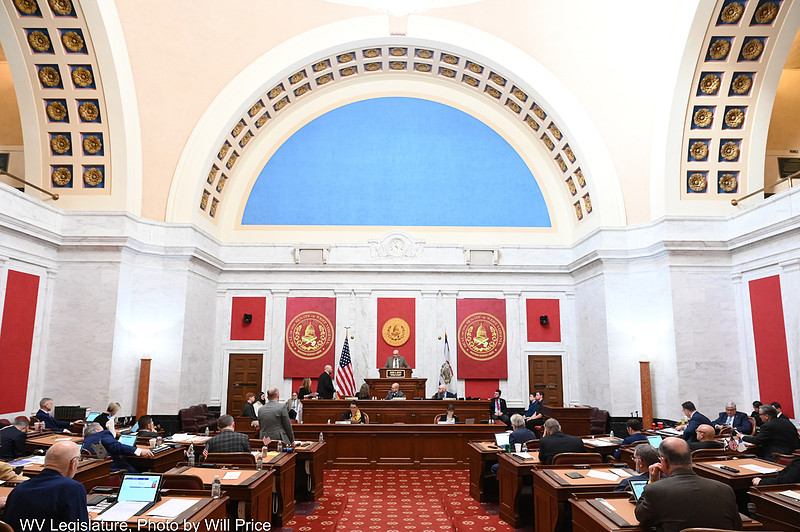
CHARLESTON, W.Va. — The Senate has passed a bill that would add five years to the minimum sentence for someone convicted of second-degree murder and second-degree manslaughter in West Virginia.
SB 137 increases the minimum sentence for second-degree murder from 10 years to 15 years and the maximum from 40 years to 60 years and raises the penalty for voluntary manslaughter from a range of three to 15 years to a range of five to 25 years.
The bill passed through the Senate Judiciary Committee and passed the full Senate on Friday with a vote of 30-2 (one absence).
“I think that is more appropriate under the circumstances and also in keeping with surrounding states and their laws,” said Putnam County Prosecutor Kris Raynes. “I think it’s really hard to explain to surviving victims of a death case that there’s a chance that they could get out of prison in 15 years.”

“One of the major reasons I stand in support of the bill is it increases parole eligibility from 10 years to 15 years for second-degree murder, which means that families and loved ones won’t have to face the person that killed their loved one after only 10 years,” said Senator Tom Willis, R-Berkeley.
Willis continued by saying that he has lived in several different countries, and he says he’s been in nearly crime-free societies where he walked the streets in the middle of the night with zero concern.
“Humans act based on incentives. They understand that in those countries, that there’s a strong incentive not to commit a crime because of government policy. They understand that the penalties of committing a crime are very severe,” Willis said.
“So when we pass legislation out of this body, we need to keep in mind that we are creating incentives for human behavior,” he continued.
Once a convicted second-degree murder serves 15 years, they then stand before a parole board. Most are not granted release right away.
Upon being denied, the inmate gets a parole hearing every three years after, which Raynes says is a brutal process of the families of the victims.

“It’s almost every three years that these people are re-living this experience. It’s torture for some families,” she said.
A similar bill was brought up during the 2024 legislative session but failed to pass. Raynes says getting the bill in front of eyes early in the 60-day session is a big step.
“It’s a very smart call for these prosecutors to get this in front of the Senate Judiciary Committee early on in the session,” Raynes said. “I think that why it failed last session was because of bill fatigue. I think that the legislature had seen a number of bills in sentencing reform last session and it just didn’t get to the people that it needed to get to.”
“I’m glad they got a jump on this,” she said.
The bill will now go to the House for consideration.