


CHARLESTON, W.Va. — Both WVU and Marshall University officials told state lawmakers Wednesday they still have millions of dollars of deferred maintenance on their campuses.
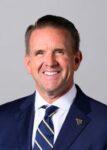
WVU President Michael T. Benson and Marshall President Brad Smith were in the same room for budget hearings before the House Finance Committee.
Benson talked about record-setting student retention rates along with ongoing reviews of spending while Smith focused on increasing student enrollment spending cuts.
Both focused on campus maintenance projects.
One of those is the Hope Coliseum.
“That building does not have HVAC and in the shoulder season (off-peak times) we cannot use it for anything,” Benson said. “So whether it’s a high school tournament, or a concert or a lecture, that building because of the heat basically sits unused. We would love some support for that.”
Benson said the project could cost as much as $23 million.

“We have others ways we can hopefully address this really acute challenge for us right now but it’s one of the unique buildings in the state and one of the largest venues and we want to be able to use it throughout the year,” Benson said.
He also told committee members about work needed at Stewart Hall, WVU’s administration building on the downtown campus in Morgantown.
“In bad weather when you have a leaky roof it impacts everything inside that building and so we’re very appreciative of any assistance you can give,” Benson said.
Smith said Marshall would welcome legislative support for a stand-alone facility for the Joan C. Edwards School of Medicine.
“There are 176 schools of medicine in the United States of America and Marshall University is the only one that does not have its own physical building,” Smith said. “We actually shared an administrative wing with a hospital. We started out in trailers. We are now in six locations and in Cabell-Huntington Hospital.”
Smith said MU has secured federal matches and it’s looking for state support, “so we can build a school of medicine with a community health center that will enable us to accomodate larger class size but also, finally, have a school of medicine 50 years in the making at Marshall University.”

The Marshall Science Building also needs work, Smith said.
“In the spring when it gets hot, the hooding and ventilation system in our chemistry labs are inefficient for today’s code and so we many times have to cancel classes.”
Smith said it can get up to 116 degrees in the labs.
Smith, Benson and top financial officers fielded about 50 minutes of questions from finance committee members on a wide-range of financial topics.
Marshall Chief Financial Officer Matt Tidd said a variety of initiatives has resulted in a $28 million debt at Marshall three years ago to be down to $10 today with the end in sight.

“We can achieve a structural break-even late in 2027 and we will be able to have an upward trajectory of our net position in FY28 and beyond,” Tidd predicted.
WVU Association Provost Mark Gavin told committee WVU was agressively working on hundred of millions of dollars in construction bond debt.
“We do not have a lot of plans to request to issue debt in the coming years and I think you’ll see us aggressively positioned to reduce that debt load and retire it,” Gavin said.
The bond rating agencies have given WVU a solid rating.
House Education Committee Chairman Joe Statler, R-Monongalia, praised WVU and Marshall officials for appearing together.
“I think it’s historical to see today that we have these two great universities before us at the same time, pulling on the rope together, to make things better for the state of West Virginia.