

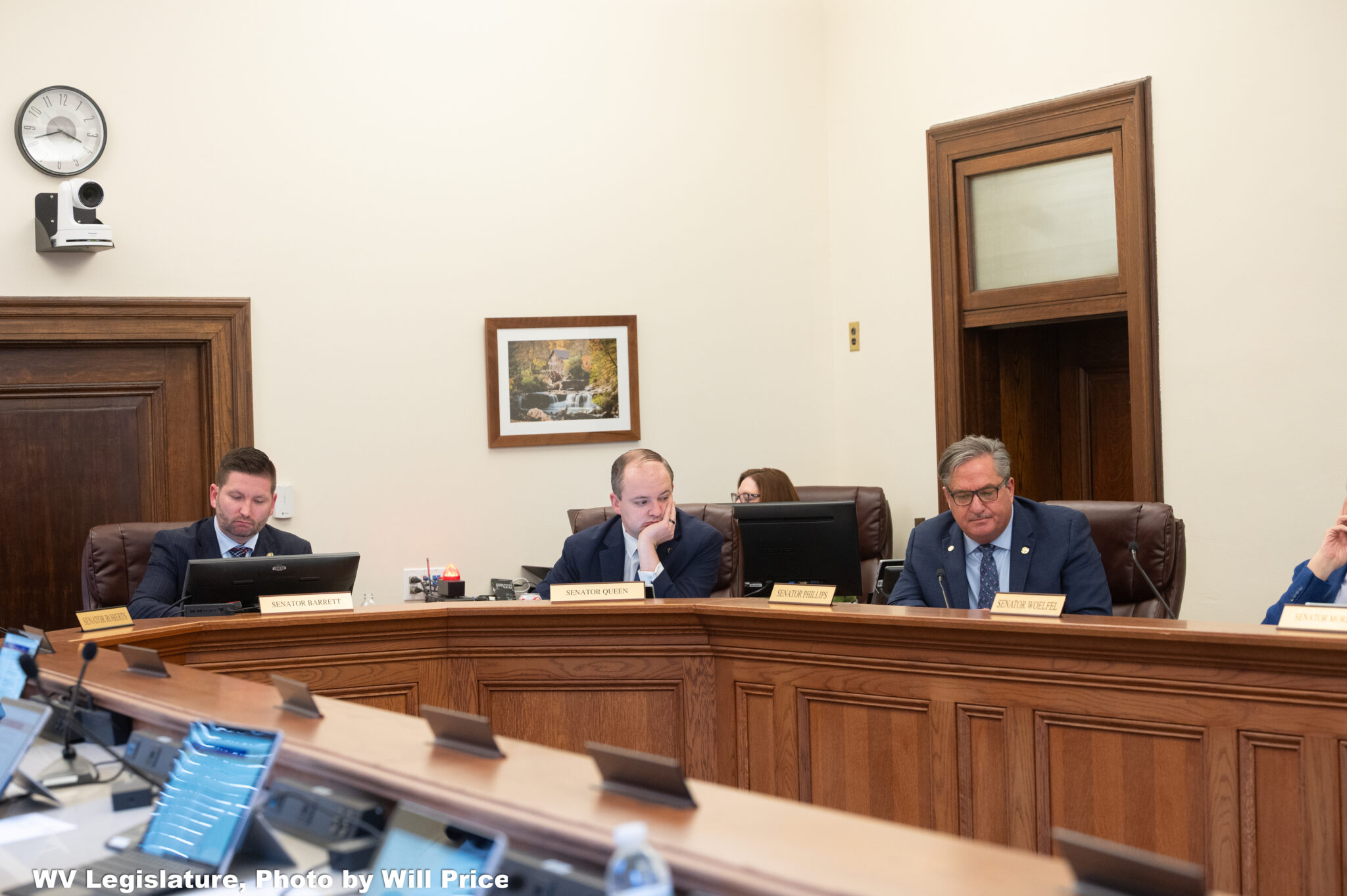
CHARLESTON, W.Va. –Teachers may receive an additional pay bump after the Senate Finance Committee voted Tuesday to amend a bill allowing locality pay.
House Bill 4675, which passed the House unanimously, aims to give a 3% pay raise to teachers, school personnel and state police. If approved, the pay raise would take effect July 1, 2026.
However, a committee amendment to the bill allows for a market pay enhancement. The potential raise would be calculated by considering local and regional median incomes.
Committee members were told the salary supplement would go to areas with the highest cost of living as a way to help keep teachers in West Virginia.
The pay raise would be based on calculations by the West Virginia Department of Education, and only 25 counties would be eligible for the potential increase.
Counties that would be ineligible include Boone, Braxton, Cabell, Calhoun, Clay, Doddridge, Fayette, Gilmer, Greenbrier, Lewis, Lincoln, Logan, McDowell, Mercer, Mingo, Monroe, Nicholas, Pocahontas, Raleigh, Randolph, Ritchie, Roane, Summers, Tucker, Upshur, Webster, Wirt, Wood, and Wyoming.
The committee passed the bill, with the amendment, 10-4.
Logan County Sen. Rupie Phillips said he liked the intent behind the bill; however, it was difficult to support because only one of the four counties he represents would be eligible for the raise.
“I’ve got schools shutting down in my county, 130 teachers got RIF (reduction in force) letters last week, it’s hard for me to sit here, if it was left up to me I would give everybody that’s in this bill, I’d give them a $20,000 dollar pay raise, I really want to vote for the pay raise, but it’s hard when the bulk of my district is getting nothing,” Phillips said.
Wayne County Sen. Mark R. Maynard shared the same sentiments as Phillips.
He said three of the four counties he represents would not benefit from the pay raise.
“I would agree that there is something separate that we could look at this through,” Maynard said. “I realize that three percent across the board is happening this year, but it would be hard for me to vote for this considering my district’s not going to get much out of it.”
The bill is on second reading in the full Senate Thursday.
If the bill passes, the first market-based pay raise would not take effect until July 1, 2027.