

Senators overwhelmingly passed legislation adjusting the pay scales for educators and State Police in state code so that they’re in line for pay raises — but they debated a provision to mix in higher pay rates for some areas of the state.
House Bill 4765 —Teacher, School Personnel, and State Police Pay Raise — passed 34-0 on Friday afternoon.
State law requires lawmakers to pass bills for pay raises for those three groups of workers because their salary schedules are in state code. Other state workers are in line to receive average 3% pay raises through the general revenue budget.
On the final day of the legislative session, the bill will still have to go to the House of Delegates to concur because it was amended to include locality pay.
Locality pay adjusts base pay based on the cost of living in certain areas. That has often been a dividing line among delegates who are from communities all around the state and on the ballot every two years.
As the bill stands now, it keeps the across‑the‑board pay raise but adds a “market pay enhancement” that varies by county based on cost of living.
The latest Senate bill keeps a uniform 3% raise statewide but layers on a new market pay system that can add up to 20% more in high‑cost counties, broadening regional pay differences in the name of cost‑of‑living fairness.
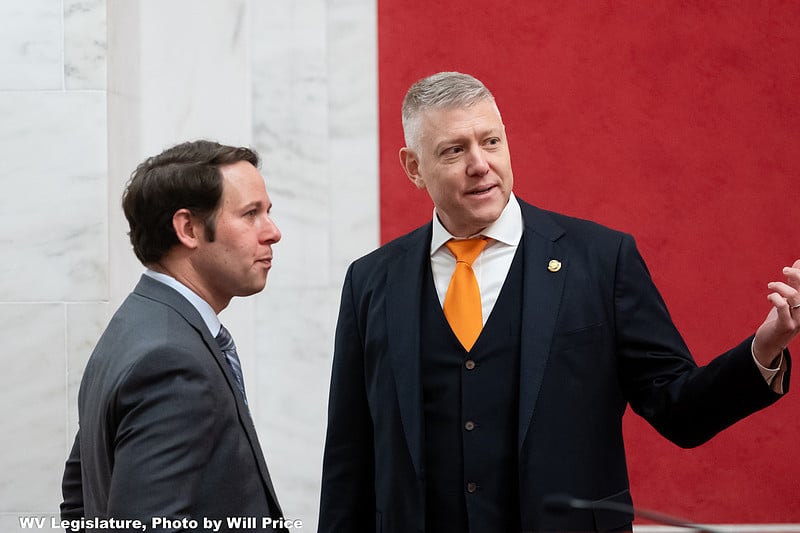
In the Senate, debate erupted between Senator Mike Woelfel of Cabell County and Senator Tom Willis of Berkeley County.

Woelfel, a Democrat, argued that locality pay creates “first‑ and second‑class” counties and breaks with the history of coal counties supporting the rest of the state: “This sets a dangerous precedent for counties around the state. Some are more equal than others.”
“I remember when those folks up in the Eastern Panhandle were selling apples on the side of the road, and their budgets were full of money from Logan County and McDowell County, Mingo County, Wyoming County, Wayne County, the counties that were pouring that coal severance tax into the budget of this state and spread among the counties,” he said.
“And now we’re going to go and treat those counties that carried the economy of this state for really decades, and we’re going to treat them as second‑hand.”

Willis, the Republican chairman of the judiciary committee, countered that equal pay bumps are unfair when costs of living are inherently different. He said this will help correct that imbalance.
“His argument ignores basic reality, basic economic reality. His argument is premised on the fact that the economic circumstances around the state are equal,” Willis said. “They’re far from equal.”
Willis urged his fellow senators to “not pretend like there’s a zero sum where everybody’s living in the same cost of living area.
“I think one of the things that’s holding back our state,” he said, “is this poverty mentality that says ‘I can’t let anybody else get ahead, even if it doesn’t affect me negatively, I still can’t just let I can’t let my brother succeed and prosper.’ Well, I think we need to take a big tent picture here.”