


CHARLESTON, W.Va. — While concerns over gas prices continue to grow nationwide, one of West Virginia’s largest public transportation systems says it is holding steady.
The Kanawha Regional Transportation Authority (KRT) held its monthly meeting Thursday morning and received positive news about its service in Kanawha County.
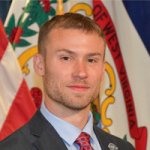
Executive director Sean Hill said that more people are choosing to use KRT’s bus service during this fuel crisis.
“We looked at the fixed-route ridership, and this was the first months on a little while that our ridership went up,” Hill said. “I think you could directly attribute that to folks looking around and they’re seeing these $4 a gallon for fuel. They’re saying, ‘hey, I can ride the bus for a dollar-fifty, maybe that’s a better option for me and my family.’ We’re excited, and hopefully we have some new riders through that.”
The resurgence in KRT bus usage departed from recent trends.
KRT launched its on-demand service, KRTplus, in 2024 to give riders the ability to go online or call the KRT office and schedule a ride in a micro transit vehicle. This Uber-like ride share service offered more freedom than fixed-route buses provided.
KRT expanded its KRTplus coverage to six zones last November, adding Southridge, Kanawha City, and South Charleston to its compliment of West Charleston, East Charleston, and South Hills.
Hill reported that the move was quite successful.
“We had almost a year of feedback with three zones, and now we’ve increased that up to six,” Hill said. “The ridership is going really well, it’s been adopted by our passengers. It costs the same exact [amount] as riding the bus, and will actually help individuals door-to-door be picked up with a smaller KRT vehicle and then taken to either the bus stop, so they can get on the line and transfer that way, or if it’s inside their actual zone, they can be dropped off door-to-door.”
“That’s really helpful for us,” Hill continued. “Especially in some of those areas where we had what I would call oversubsidized bus routes, so buses that were driving around all day long, and we didn’t see the ridership to support them. We thought, hey, what can we do to get a little bang for our buck when it comes to smaller vehicles that are only going to those areas when there is an actual ride requested. We’ve seen positive feedback with that program.”
KRTplus services run weekly from 6 a.m. to 6 p.m. Monday through Saturday, and cost $1.50 per ride.
Hill reported that the service can also help people who need to get to the airport.
“There’s a $12 fee if you want to go to the airport or back, and that’s regardless of what zone you are in,” Hill said. “Our idea there was, if you and your family are getting up and are going to go the airport, why not take a KRTplus? We’ll come pick you up, drive you up to the airport for that fixed $12, it doesn’t matter if there is one of you or six of you in the vehicle.”
“We’ve seen people adopt that and use that,” Hill added. “They don’t have to worry about parking, they don’t have to worry about driving their vehicle, and they can just pick up another KRTplus when they come back.”
The KRT monthly meeting also included discussion about the Kanawha County Fuel Consortium, KRT’s contract agreed upon in November 2025 with local agencies such as law enforcement and emergency services to help provide them with fixed costs for gas.
The contract serves around 100 different Kanawha County and city agencies, and Hill said it has proven to be very important over the last two months.
“Today, we ran the numbers,” Hill said. “If you compare the prices since the end of February, when obviously we’ve had some issues across the planet with fuel costs, if you compare the market costs versus what individuals are paying with the contract that we established in November of 2025, it’s almost $400,000 worth of savings for Kanawha County agencies. We are really proud that we made those moves last November to be ready for any changes like this, and to save taxpayers’ money.”
Hill said this contract is beneficial for all involved.
“We are making sure that the sheriff’s department, the ambulance authority, fire departments, they are able to purchase their fuel at that lower price than if they had to go to the pumps, which at the end of the day, is saving us all a bunch of money.”