

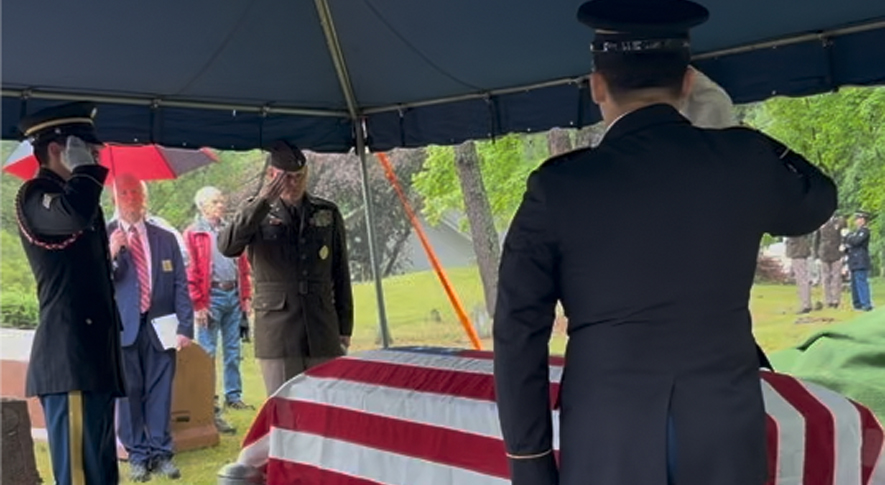
SETH, W.Va. — Eighty-five years after Ira Warren of Boone County left the hills of West Virginia for war, he has finally returned. A burial ceremony with full military honors was held Wednesday morning at a small cemetery on Tony’s Branch in Boone County for Warren who died in a Japanese POW camp in the Philippines in 1943.
“He was on the island when he marched in the Bataan Death March. He survived the death march, but he got malaria and died while they were in the prison camp,” said Jake Warren, a nephew of Ira.
Jake was born a year after Ira left for the service and never met his uncle. Throughout his life, his story was incomplete because nobody ever knew what happened to him. He said it was especially hard on Ira’s mother.
“Oh absolutely, there was no closure for her until the day she died. But she would have been pleased with what happened today,” he said.
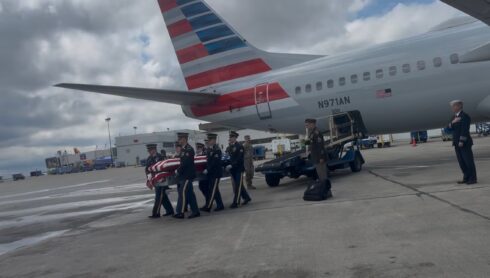
Soon after the end of the war, the military dug up and transferred the remains of all mass graves to a military cemetery in Hawaii. In recent years, a division of the military has been tasked with using DNA to identify remains of those unidentified soldiers buried at the cemetery called “The Punchbowl” in Hawaii. A year ago, Warren’s brother received a call from the military asking for a DNA sample, which they provided and about a year later, they were contacted by the military to learn their uncle’s remains had been positively identified.
“They wanted to know what we would like to do and they offered to bring him here and bury him with no expense to us whatsoever. That’s what we wanted and that’s exactly what they did,” said Jake.
As a slow rain fell on the hill top cemetery in Boone County, the cracks of rifles provided a 21 gun salute and the haunting sound of Taps echoed off the hills and through the hollow Pfc. Warren called home. He was now in his final resting place.
“It was just awesome. After all these years, I can’t believe they managed to find his remains but they did,” said Jake.
Jake said the family rarely talked about Ira’s disappearance. He would occasionally ask about his uncle when he would see a picture and would be told only he was in the war and never came home. It was all anybody really knew for many years. But in 2026, much of the mystery was solved.
“The biggest thing that went through my mind today was that he was back and buried right where he grew up,” said Jake. “But the other big thing to me is that it showed me when the government and the military says nobody is left behind, it just reiterated that for me.”