

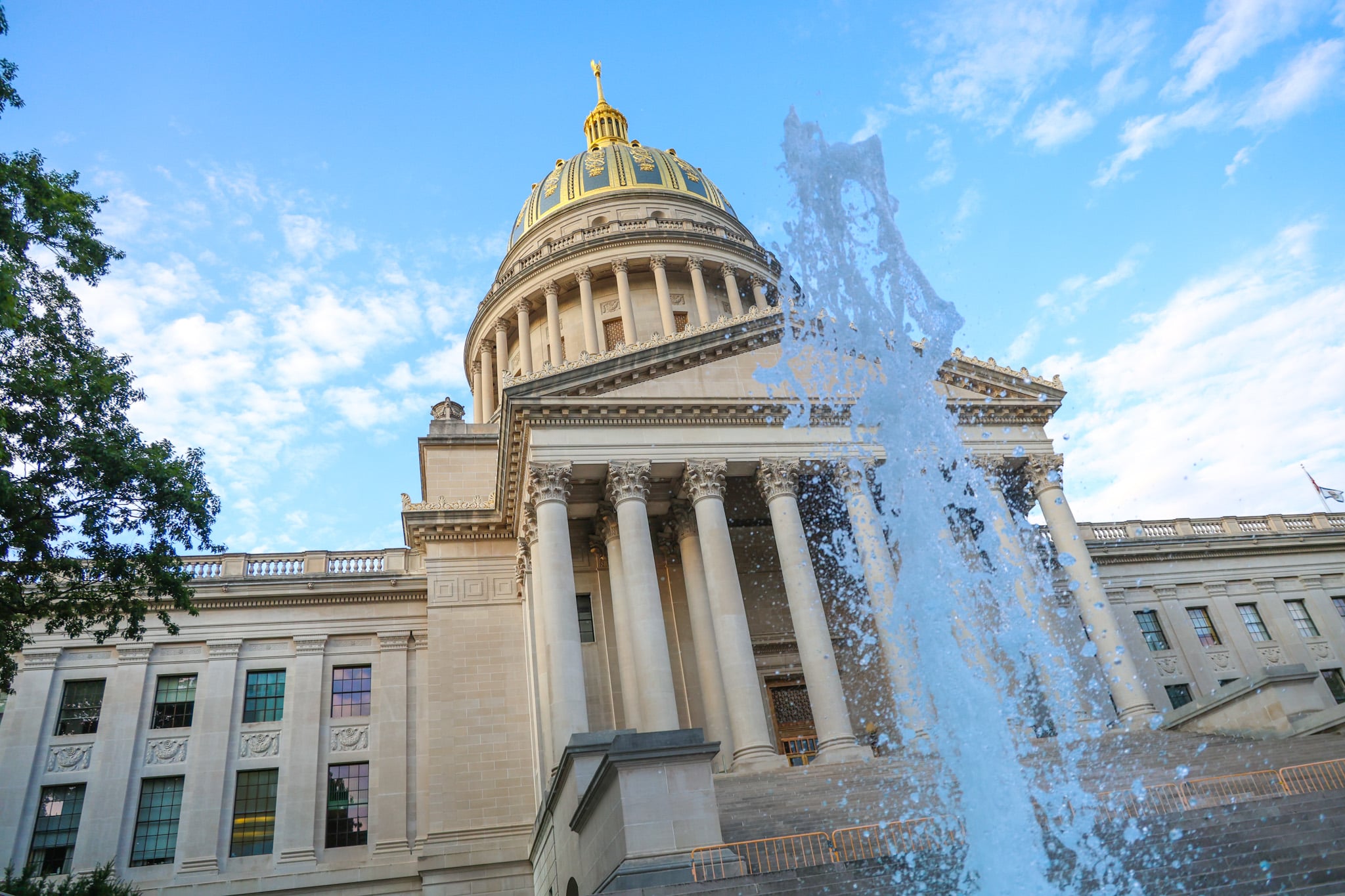
CHARLESTON, W.Va. — Less than one week out from the May 12 primary elections, the race for the Republican nomination in the 14th senatorial district remains competitive as three experienced lawmakers battle to represent a diverse section of the state.

Incumbent Jay Taylor won the seat in 2022, but both of his opponents bring extensive experience under the Capitol dome into the competition. Mike Manypenny and Marc Harman each spent multiple terms in the House of Delegates, but neither has served in the legislature for more than a decade.
Harman faced a challenge this week to his residency, with Kanawha County Circuit Judge Richard Lindsay ruling that he met the requirements to run in the 14th district after living in Charleston for an extended period. The 14th district consists of Grant, Hardy, Mineral, Preston, Tucker, and part of Taylor County.
“When I first started even considering the possibility of running for the Senate, I realized that my very first chore would be that I could reestablish my residency in my home county of Grant County,” he said.
As factions within the Republican Party grapple for control of the state senate through these primaries, Harman counts the residency challenge as another shot during an increasingly ugly campaign season. He points the finger at out-of-state interest groups for attempting to tip the scales in the race.

“This is just another whack in what has been an extremely campaign by people supporting my opponent, by people using the out-of-state dollars that they’ve been raising, and I have run from day one and will continue running until the polls close a positive campaign,” he said.
Taylor, a close ally of Senate President and fellow 14th District Sen. Randy Smith, does not support the kind of negative campaigning seen around the state in the lead-up to Tuesday’s elections. He said his focus has been on the issues, and any attacks on his opponents are coming from somewhere else.
“I’ve been trying to run my own campaign. I’ve been positive on things and getting out and talking to people—doing some door knocking here and there and staying involved in the community. I’m still coaching youth sports. I love spending campaign money on things like the FFA when they have their livestock sales,” he said.
Manypenny, meanwhile, isn’t new to West Virginia politics, but he is new to the Republican Party. He ran and was elected to the House as a Democrat, serving three terms and later winning the Democratic nomination in the 1st congressional district before losing to David McKinley in the general election.
He said he has watched as legislation he proposed in the House has been turned into law by Republicans and found himself more in line with the GOP.

“Some of those bills have been introduced and passed by the Republican supermajority, and so that’s one of the reasons why I kind of switched parties because I believe that I may be more in line with the Republicans now than the Democrats,” he said.
Public education is one of the issues that Manypenny is turning his focus to during the primary, a topic he breaks with Taylor on significantly. Manypenny favors stronger public funding, as well as a cap on the Hope Scholarship, which Taylor fought hard against during the legislative session earlier this year.
“One of the most important things right now is fully funding out public education system and putting a cap on the Hope Scholarship program because it is draining the funds from public education,” he said.
Taylor touts a voting record in the Senate in line with the particular brand of conservatism supported by both Smith and, in many cases, Governor Patrick Morrisey. He wants to continue pushing that trend if reelected.
“My top priorities are certainly growing West Virginia’s economy, protecting our conservative values, and improving infrastructure. I’m certainly going to continue working to cut taxes and support small businesses and keep government out of the way,” he said.
With that focus on business growth, Taylor is hoping for more opportunities to drive development and needs to win his bid for reelection to do so. He is aiming to strike a balance between attracting large companies and continuing to support what the state already has.
“We concentrated this session on small businesses and made sure that was our priority. For all the successes, it’s great that we got Nucor, but there’s been so many of those $100 million and over deals that have fallen through,” he said.
Manypenny takes a different approach to development and plans to pursue an agenda of turning West Virginia’s natural beauty into jobs and revenue. With examples in hand, he views tourism expansion as an untapped market.
“We have a similar economy and a similar geography as Vermont. Vermont just takes the cake with profiting from their recreation industry,” he said.
Despite the challenges he’s faced during the campaign, Harman says he remains focused on doing the best he can for his constituents. Much like his opponents, that includes growth through new business.
“I want people to understand that I want West Virginia to grow, to develop. I want jobs for people, and I think that the negative campaigning hurts everyone,” he said.
West Virginia’s primary elections are set for May 12.