

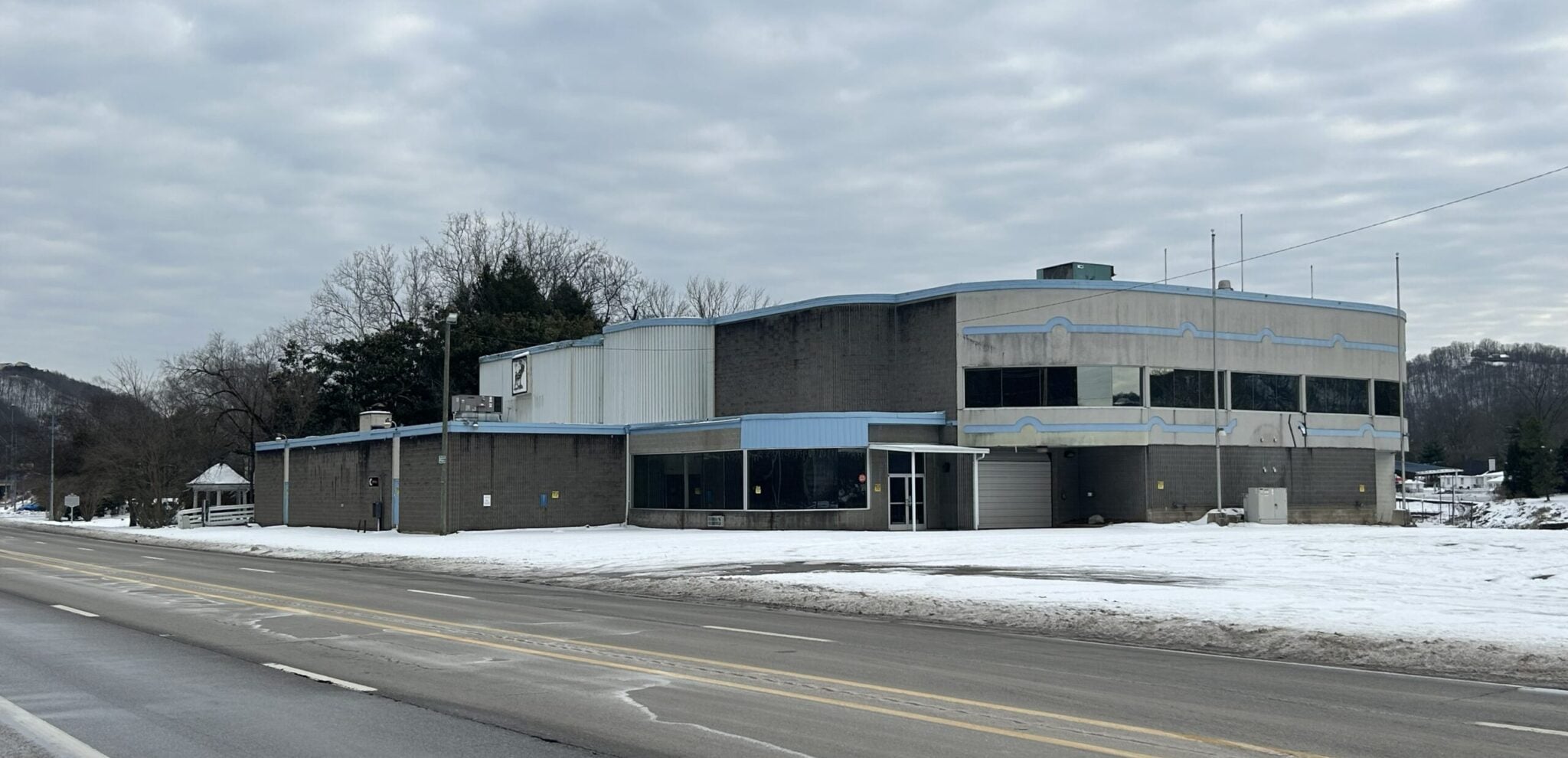
CHARLESTON, W.Va. — West Virginia Parkways Authority Executive Director Chuck Smith said the authority has hired an architectural engineering firm to help design its new headquarters at the former Charleston Moose Lodge on Kanawha Boulevard.

Smith told MetroNews the authority approved the hiring of ZMM Architects and Engineers during its meeting held Tuesday at Tamarack in Beckley.
“They’ll start immediately on the looking at the building, seeing what it’s pluses and minuses are, trying to create a design concept, they’ll go through the whole design process with interviewing staff members, interviewing myself and other key people in the organization to find out the spatial needs, the requirements we have, how we use the building, what all we intend on doing,” Smith said.
The authority, which oversees the 88-mile West Virginia Turnpike, purchased the building for $700,000 last December with renovations estimated at $8 million.
Smith told lawmakers in February the current headquarters on Piedmont Road in Charleston has several limitations, including difficulty locating the building and a lack of ADA accessibility.
Smith told MetroNews the authority wants to address those issues while also consolidating their customer service operations.
“Right now those operations are housed in four different facilities between here (Charleston) to Beckley, and continuity of services that we’re providing the public is just now what it needs to be, so in order to get that we need to bring people together where we’re all on the same page, all speaking the same language, and doing the same things correctly,” Smith said.
He said the eventual goal is to have everyone in the same building.
Toll study
Smith said the authority is conducting a toll study to determine whether eliminating toll booths and transitioning to electronic tolling would be beneficial.
He said that if the study, which is expected to be completed by the end of June, supports eliminating toll booths, toll workers would be combined with back-office staff, such as customer service employees.
“Because there’s nobody there collecting the money, nobody doing that sort of thing, it’s a much more complicated process and involved as far as being able to properly being able to do the billings correctly and make sure that everybody getting invoiced and paid for what they use and nothing more, that’s the main thing,” Smith said.
He also said that if toll booths are eliminated, the transition would be a lengthy process.
“We need to make sure that we have resources to do that number one, and number two the process of taking down the tolls and putting the new electronic tolling equipment up is a lengthy process,” Smith said. “It’s a two to three-year process at best, realistically I would estimate five to seven years to make that happen.”
Smith said that once ZMM Architects and Engineers completes the overall design the project will go out for public bid for construction.