

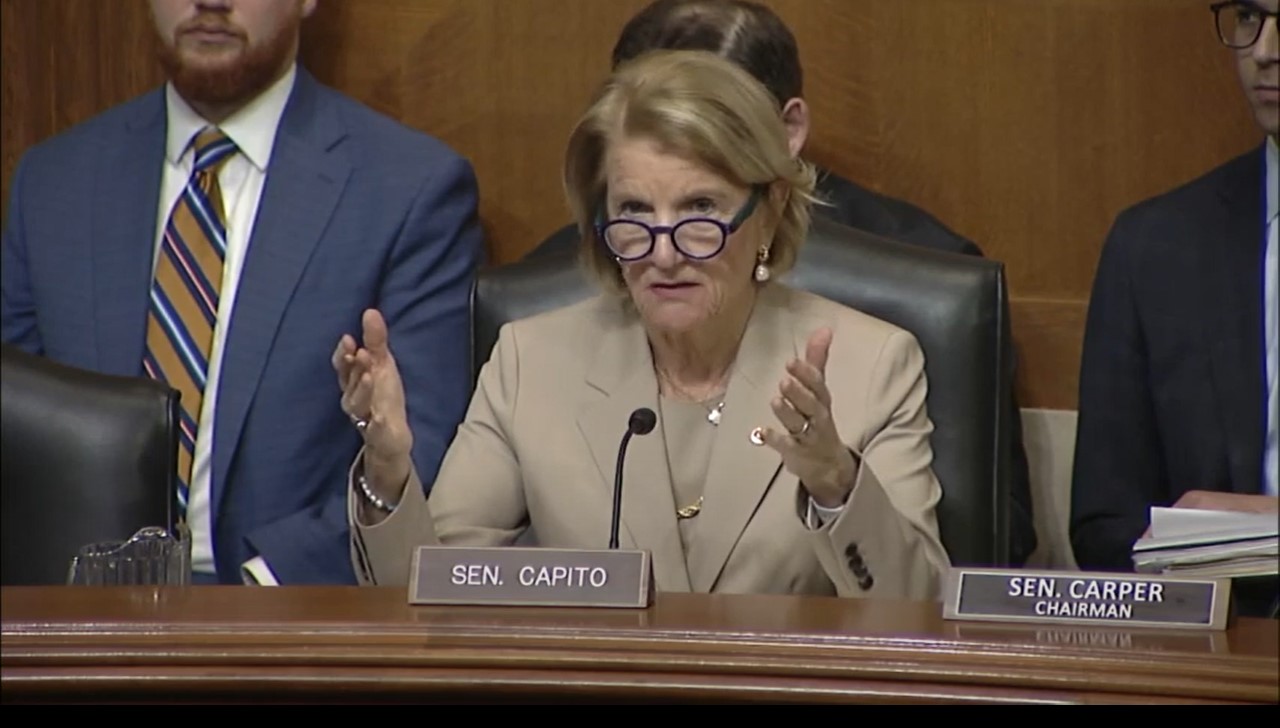
Senator Shelley Moore Capito is still assessing a memorandum of understanding signed by President Trump this week, saying it offers a potentially peaceful resolution to the conflict but with continuing uncertainties.
Congress should continue to have oversight of how the deal proceeds, Capito said during a call with West Virginia reporters.
“Right now, I think we need more details, we need to fill in the blank and fuzzy areas that have been left unseen, and they may be still negotiating part of these, but we need to be a part of that,” Capito said in response to a MetroNews question.
“We’ve been left in the dark really this week, giving the president some, you know, some leeway to finish this up. But now that this has been signed, we need to have those details. So we need to have the oversight. If in fact the president does sign a full agreement with the Iranians. I believe it needs to come before the Senate for us to debate and for us to weigh in on.”
After 108 days of armed conflict with Iran, President Trump this week signed a 14-point memorandum of understanding, laying out a framework to end the war.
The memorandum shows that Iran “reaffirms that it shall not procure or develop nuclear weapons.” And it says the United States and the Islamic Republic of Iran have agreed to resolve the disposition of stockpile enriched material, with details to be worked out over time.
It also includes provisions for a $300 billion reconstruction and economic development fund for Iran backed by regional partners.
The agreement commits to reopening the Strait of Hormuz, a crucial global trading route. The blocking of the strait has resulted in higher fuel prices and inflationary pressures on other goods worldwide.
The memorandum established a 60-day period of direct negotiations to reach a final, binding peace deal.
“I haven’t seen the full details of the Iranian memorandum of understanding that the president signed yesterday,” Capito said in response to a question from reporter Steven Allen Adams of the Ogden Newspapers.
The senator assessed that significant military goals had been accomplished during the war: “What I do know is that the ability for Iran to launch missiles and manufacture missiles used in their terrorist attacks has been severely diminished, along with their navy.”
But ending it, she said, could be a relief to the global economy. “I understand that this memorandum of understanding will open up the Strait of Hormuz. This should ease the gasoline issue of price that we’ve seen. I mean, they never come down as quick as they go up.
“Understanding that, I also think that it’s to be to be determined how effective this is going to be in terms of fully denuclearizing the Iranian Republic, and those negotiations will continue,” Capito said. “But I think it’s good news, and it’s a peaceful solution. It brings an end to the conflict.”
Some of Capito’s Republican counterparts have questioned whether it compromises U.S. and Israeli security while rewarding the Iranian regime. President Trump today called them skeptics “fools.”
The Republican lawmakers who are critical of the deal argue that it does not sufficiently dismantle Iran’s nuclear infrastructure or properly hamper the regime’s ability to enrich uranium.
Iran’s continued influence in the region, particularly at the Strait of Hormuz, is at the center of concerns with critics maintaining the deal allows Iran to charge tolls or dictate terms, effectively rewarding hostile behavior.
Senator Bill Cassidy, R-La., called it a “lousy deal” and said, “This will go down as a tremendous foreign policy blunder.”
Senator Thom Tillis, R-N.C., called the memorandum “inadequate.”
Critics strongly oppose the unfreezing of billions of dollars in Iranian funds and the lifting of economic sanctions. They argue that will allow direct financial support for Iran’s nuclear ambitions and its network of terrorist proxies.
Sen. Ted Cruz, R-Texas, on a podcast, said it’s “incredibly foolish idea” and “utterly indefensible” to give Iran access to $300 billion.
Capito acknowledged the concern over how the $300 billion might be used.
“My understanding is that these are frozen assets that are actually Iranian assets that would then be unlocked if they stick to the agreement. I still think this is a big sticking point. We haven’t been able to trust the Iranians to negotiate fully in truth,” she said.
Republican lawmakers are demanding full congressional briefings and oversight to review how the agreement will be enforced.
Capito strongly opposed the Obama administration’s Iran Nuclear Agreement (JCPOA) of a decade ago, arguing it was a “bad deal” that failed to eliminate Iran’s path to a nuclear weapon. She voted in favor of the Iran Nuclear Agreement Review Act in May 2015, ensuring Congress had the authority to review and vote to either accept or reject the deal.
Today, Capito said she wants Congress to pursue continued oversight of the deal that Trump signed.
“We demanded, I demanded that when President Obama did JCPOA in 2015” she said. “I think that President Trump should probably go in that direction, so that we can have advice and consent of the Senate.
“So, we look forward to that as is this evolves: more information, more transparency, what effects this might have on the future, and how do we trust the Iranians? But also give us a chance to weigh in.”