


CHARLESTON, W.Va. — The state’s largest public transportation system is dealing with million-dollar budget deficits as it battles for long-term sustainability.
The Kanawha Valley Regional Transportation Authority (KRT) held its monthly meeting Thursday in Charleston. Executive director Sean Hill said the board approved a budget last month that was $1.9 million in the “red” — dipping into the authority’s reserve account of $11.3 million.
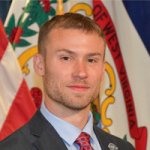
Hill said conversations about budget deficits have been ongoing over the past couple of years. He said KRT has held public hearings on the matter, in addition to adjusting routes to maximize taxpayer money.
“You start doing the math, and you start going forward in the years, and essentially, if you’re paying your bills with your savings account, that begins to be a problem when you don’t put money back in the savings,” Hill said.
The Kanawha County Public Safety Levy passed with 75 percent voter approval in May election. Hill said the levy provides 60 percent of KRT’s funding, and “creates stability” for the authority going forward. He credited the Charleston Area Alliance, Kanawha County Commission, Kanawha County Sheriff’s Office, Kanawha County Emergency Ambulance Authority (KCEAA), and firefighters for their outspoken support of the levy leading up to the election.
Hill said the levy takes effect in Fiscal Year 2030. By virtue of that, he said KRT knows what its local share of revenue will be for the next seven years. However, Hill said the KRT will receive a slightly lower percentage of the levy when it begins.
Because of that dip in money coming in, Hill said the budget deficit may increase from $1.9 million to $2.7 million. Hill said the board will face “tough decisions” with this, and they need to formulate a plan to address it.
Hill said under its current trajectory, the reserve account would be completely depleted by the middle of 2031.
KRT wants to continue serving the people of the county, Hill said, but it also must remain responsible with its finances.
“To get people to work, to get them to their grocery store, get them to medical appointments, and we want to make sure we can do that,” Hill said. “But we also have a responsibility to taxpayers to live within our means. What we’re going to do, here in the coming weeks — and we’ll put this information out — is to hold another series of public hearings, where we go over several different scenarios.”
Hill reported that past public hearings have been beneficial for the authority. He said KRT riders will get an opportunity to weigh in on the scenarios the board develops for potential next steps. Hill said the board will be able to make the “most informed decision” once it hears from passengers during the hearings.
No dates have been publicly announced for those hearings. Hill promised KRT would promote those hearings once they’re determined, to ensure passengers can attend if they so choose.
Hill said the authority continues to promote its KRTplus Uber-like ride share service. The cost of a KRTplus vehicle ride is $1.50.
KRTplus expanded to six zones in October 2025, adding Southridge, Kanawha City, and South Charleston to the original three zones in West Charleston, East Charleston, and South Hills.
Hill said it’s been eight months since they added the new zones. Now, KRT is set to eliminate several underperforming fixed-route bus lines — moving toward the KRTplus offering instead.
“We’re mirroring what we did with our first round of KRTplus zones, which is, we let those two services overlap for a certain period of time to let our passengers get used to that new service to KRTplus, and what we’re looking at doing now, here after an educational campaign, we’re going to then replace the fixed routes — Routes 11 (Wertz Avenue), 16 (South Park), 18 (Fort Hill/Montrose) and parts of Route 10 (City Park/Hillcrest) — with the KRTplus zone alone.”
Hill said residents of the area who use the fixed-line routes will be educated in the coming weeks about how to use the KRTplus app and utilize its service. The change is a cost-saving measure, Hill said, while also maintaining service for people.
“It’s social media, it’s making sure that we educate individuals on those particular routes,” Hill said. “We have operation supervisors who will do ride-alongs; they’ll be on the bus in the days and weeks leading up to that change, to let individuals know, to explain to them how the new app works, how the KRTplus app works, and to answer any questions and concerns they may have.”
Hill said KRT set up an information booth at the Charleston City Center a week before the October 2025 change. Screens on KRT vehicles and at the City Center will update to alert passengers of the shift, he said.
Hill pointed out that ridership of some fixed-line buses has fallen as low as 12 to 20 people daily in underperforming areas. Therefore, the pivot to KRTplus made sense for both the authority and customers.
“The idea is, instead of sending the bus to drive essentially on a fixed route around all day in circles, and using the fuel,” Hill said. “It’s that, ‘hey, we’ll come out with a smaller van,’ which saves us money there as far as fuel prices.”
Hill said the KRTplus vehicle will pick up individuals on an “as needed” basis, allowing the ride to revolve around the passenger’s schedule. He said this change will produce savings in fuel primarily, along with reducing wear and tear on KRT vehicles.
The KRT board discussed the change during its meeting Thursday, Hill said. The earliest that it could take effect would be in four weeks, but Hill said that timeline is still under review.
Going forward, Hill said, the decisions will center around how to budget better and get ahead of potential issues. It’s all about figuring out ways for KRT to live within its budget, he explained, and sustainably serve Kanawha County.
Learn more about KRTplus online at https://rideonkrt.com/krtplus/