

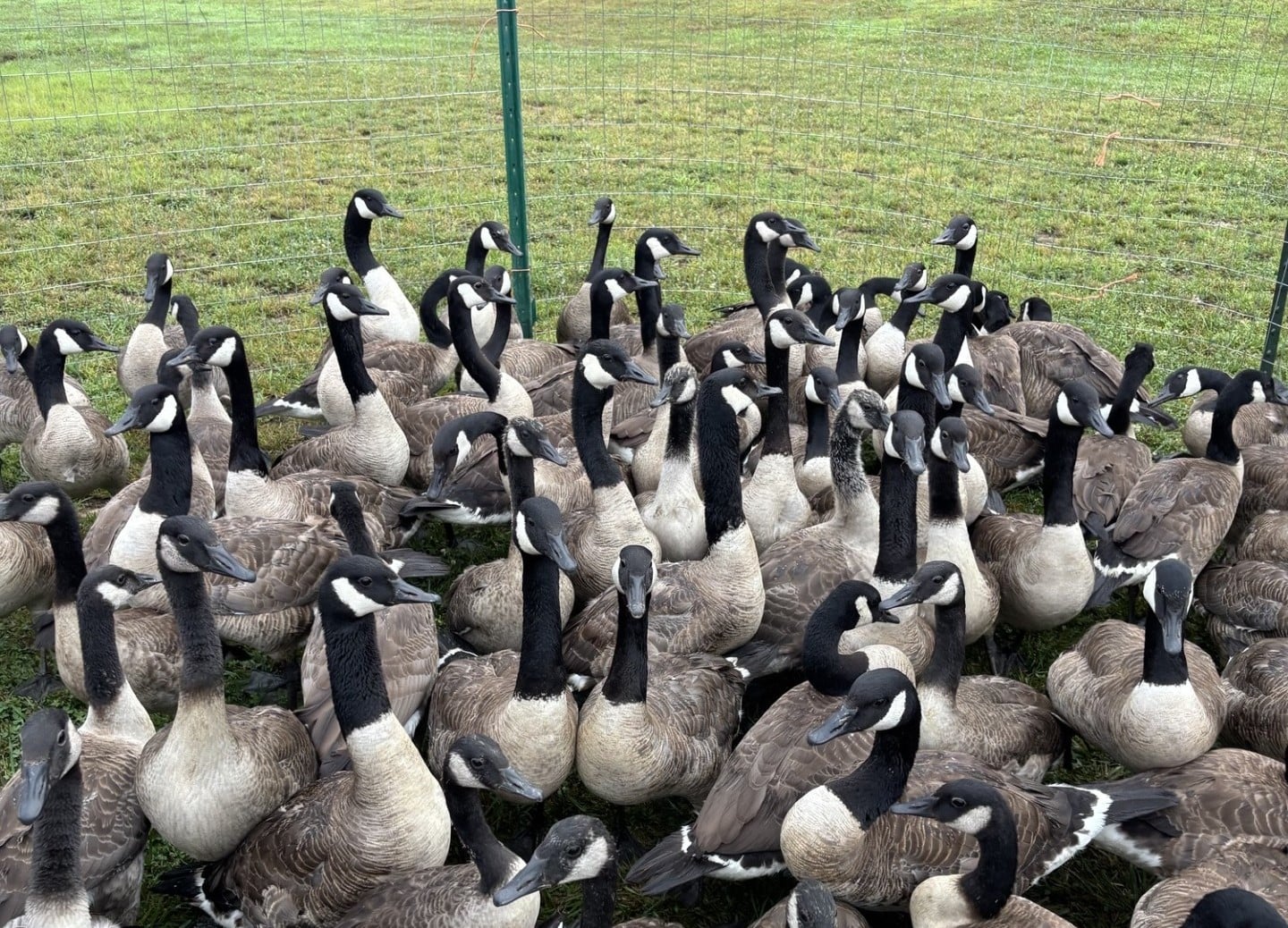
CHARLESTON, W.Va. — A flightless period for Canada geese in West Virginia represents an opportunity for the West Virginia Division of Natural Resources. In recent weeks biologists with the agency have been going through their annual banding process for the birds. The annual exercise is part of the effort to monitor the harvest activity.
“Mid-June through mid-July Canada Geese are flightless. They lose their flight feathers and it makes it a lot easier to catch them when they can’t fly. So we actually corral them up and catch them that way,” said Mike Peters, game bird biologist for the West Virginia DNR.
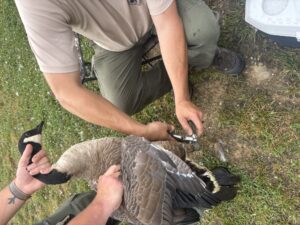
Peters said they are trying to work within the resident bird management plan for the Atlantic flyway. The bands on birds help to indicate how many are being taken through hunting. When hunters report a band it helps state and federal managers understand whether those birds being harvested during the season are actually migratory from elsewhere or resident birds which have never been out of West Virginia
“By banding birds every year, it insures we know which birds we’re killing,” said Peters. “The whole purpose is to monitor how many resident birds we’re harvesting compared to migratory birds.”
West Virginia is on the western edge of the Atlantic Flyway and the extreme eastern side of the Mississippi River flyway. There are a few migratory birds which wind up being killed by hunters in West Virginia, but the vast majority of those geese killed were hatched here in West Virginia.
Each year, West Virginia works to put leg bands on 600 birds and rotates what areas of the state they tackle.
“We mostly try to target goslings, that’s our target flocks of goslings. We know if they have goslings, they aren’t going to leave,” said Peters.
Hunters who kill a goose with a band attached can report the kill through a website, reportband.gov which covers all of the migratory waterfowl bands in North America. The data is then sent back to West Virginia to analyze and make future management decisions.