

State revenue officials described stable performance for West Virginia’s tax base, but they expressed concern about aspects of future performance.
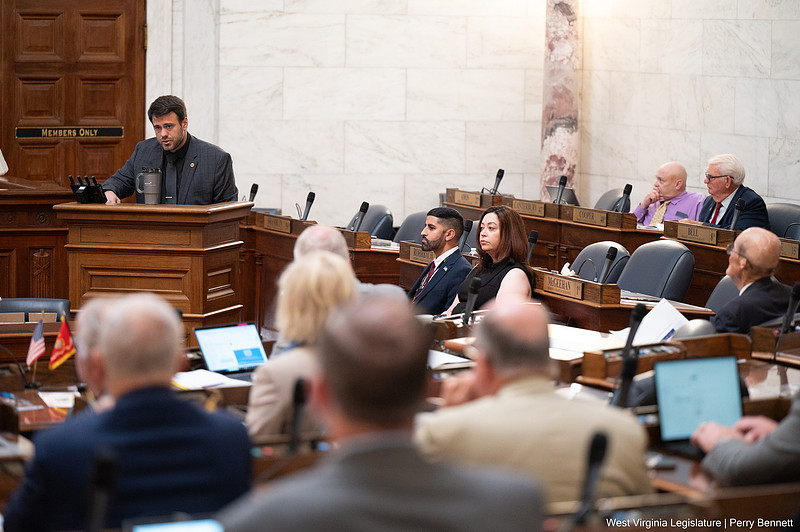
Revenue officials spoke before the Joint Standing Committee on Finance during legislative interim meetings.
Revenue Secretary Eric Nelson and Deputy Revenue Secretary Peter Shirley generally described a state economy that is active in terms of consumer sales but softening in energy markets, particularly because of lower natural gas prices.
Most recently, August general revenue came in $34.8 million above estimate and $52.5 million above last year.
Early in the fiscal year — just July and August so far — collections are $46.1 million over estimate and $53 million ahead of the prior year.
“August continued steady revenue collections versus not only estimates but prior year. We were up 8% over estimate, and just right around 13% over prior year. Pretty pleased with that,” Nelson told lawmakers.
Shirley noted positive signs for sales taxes, suggesting that people continue to spend in West Virginia despite higher prices, saying “that rate is outpacing the rate of inflation, which means that people are not only keeping up with increased prices, they’re actually buying and consuming a little bit more, which again is a good sign for the economy.”
Severance taxes reflecting markets like coal, natural gas and timber, have been down for the fiscal year versus the estimate after a weak July but recovering in August.
That isn’t because of production. It’s because of price. Coal and natural gas liquids have been comparatively stable, but the dip has been attributed to natural gas. Shirley noted the trend as something he is watching but not yet alarmed by.
“Production continues to increase in West Virginia, but there’s been a pretty substantial price drop over the past year, and that is what has softened our severance tax collections,” Shirley said.
The near-term risks are gas prices — which feed severance, income and corporate collections alike — and whether consumers grow more reluctant to spend, given that underlying wage growth is running at just 2.4%.
Lawmakers asked about the potential effects of growth related to data centers, particularly the announcement that Anthropic has reached a 6-year, $45 billion agreement with infrastructure firm Nscale to lease AI computing capacity at the Monarch Compute Campus in Mason County.
“Can you talk to me a little bit about the the tax impact that that we will feel from such a large industrial footprint coming to West Virginia?” asked Delegate John Williams, D-Monongalia.
Shirley said the first economic impact would likely come through construction work.
“So there’s going to be thousands upon thousands of construction workers,” he said. “You know, these are these are not permanent jobs, but these are jobs that would exist for a relatively significant amount of time as they as they build these facilities, and those people would earn income, pay income taxes, go to restaurants.”
The data centers would result in property taxes, going through a formula established under state law. He noted that the servers themselves are exempt from sales tax.
In all, he said, “I think there would be tax impacts from having one of these data centers located in West Virginia, yes.”