


MORGANTOWN, W.Va. — The U.S. Senate voted late Tuesday 74-23 to invoke cloture on the Protect College Sports Act, sending the measure to a final vote in the next couple of weeks.
U.S. Senator Shelley Moore Capito, R-West Virginia, said the proposal is an effort to protect athletes, institutions, and the pathways to the Olympics and professional sports.
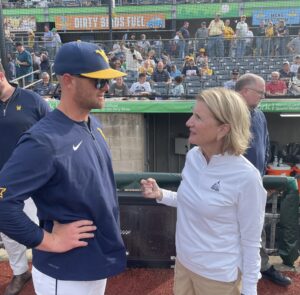
“It’s very bipartisan, and I think we’ve done a good job of trying to thread the needle of what the most important aspects of getting college athletes back on track and not onto this out-of-control money-spending chaos,” Capito said Wednesday on WAJR’s “Talk of the Town.”
Unlike the major professional leagues, college sports function from the top down. In professional sports, unions represent player concerns regarding working conditions, safety, and compensation, whereas college athletes have very little say, if any. The new Name, Image, and Likeness environment has welcomed frequent transfers, large sums of money, and a lack of stability, Capito said.
“What we see is wild, wild west right now with students transferring every year, huge sums of money, and under-the-table money—all these kinds of things,” Capito said.
This change responds to the numerous college athlete plaintiffs who have exhausted their NCAA eligibility but who seek to continue playing or return to competition.
“We are looking at regulating this to protect the integrity of our college sports and making sure our athletic programs move forward and that we preserve women’s sports,” Capito said.
The bill would also end unlimited transfers and establish five years of eligibility for athletes and restrict the eligibility of athletes who have competed professionally. The measure would include some exceptions for prize money earned in sports other than football and basketball. Athletes would be guaranteed one transfer with no consequences, and additional transfers would be allowed without penalty under certain conditions, like if a head coach left a program.
“It would mandate national rule for transfers, you can only transfer once,” Capito said. “You have five years for five years of eligibility; there would be enforceable standards for recruiting so it’s fair and equitable, and you can’t create a ‘super league.'”
This measure will not fix all of the issues, especially some of the attempts by professional athletes to reenter college sports. Capito said the measure will ensure the safety of competitors and return fairness to college sports.
“I thought this issue was interesting,” Capito said. “Where you have the 19-year-old recruit coming in and playing against and in some cases playing against a 25-year-old college student—that’s not a college student; at least it wasn’t back in the day.”
The House has introduced their version of the bill but is unlikely to be voted on until after the November election. House members are scheduled for recess beginning Wednesday night.