

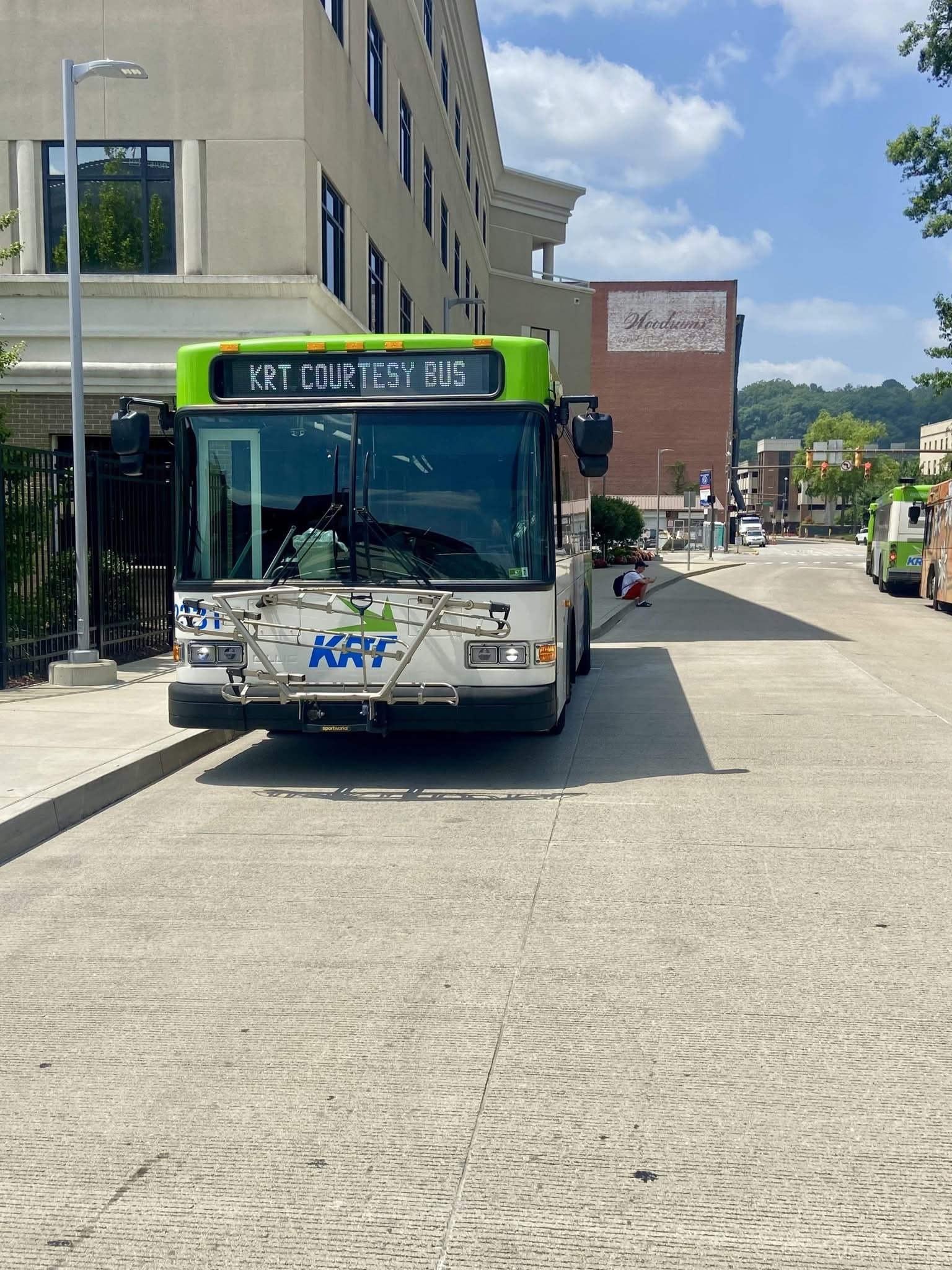
CHARLESTON, W.Va. — Recent changes within the state’s public transportation system have paid off.
The Kanawha Valley Regional Transportation Authority (KRT), looking to right size its budget going forward, eliminated some “underperforming” fixed-route bus routes within Kanawha County this summer. In the place of those routes, KRT has promoted its ride-share KRTplus offerings in six zones: West Charleston, East Charleston, South Hills, Southridge, Kanawha City, and South Charleston.
KRT Executive Director Sean Hill told MetroNews that the early numbers are encouraging.
“The changes there as far as utilizing KRTplus has been really positive,” Hill said. “Our on-demand ridership has gone up every month over the last three months.”
Hill said that the authority’s budget deficit is $1.6 million this fiscal year. That number goes up to $2.5 million in 2030, he said. These alterations are part of KRT’s efforts to get things back on track.
“What we continue to see is those zones that we’ve taken some of those underperforming routes and basically transformed them into KRTplus zones have actually seen some increased ridership,” Hill said. “Anytime we can say, ‘hey, we’re going to save money on the operations while still maintaining service to those areas, that’s a win-win for us.'”
Hill said KRT has increased its community engagement efforts, with the hope of letting people know about the challenges the authority is facing. He said they held a stakeholder meeting in August with different entities to hear what alterations to KRT service would do to them.
“Whether it was healthcare providers, you name it, trying to get an understanding of exactly how any potential changes could impact the community,” Hill said. “One of the main reasons that we want to do that is because we want to understand exactly what the impact of any proposed changes would be.”
As far as other changes to KRT’s offerings, Hill said those are still being considered. He added that they’ll hold public meetings to get community input, but the dates for those meetings haven’t been set. He said they’re also optimistic that the state Department of Transportation (DOT) and legislature can help them figure out paths toward new revenue.
KRT is also the manager of the Kanawha County Fuel Consortium, an agreement among nearly 100 local agencies to provide fuel at fixed costs, including to Kanawha County Senior Services, the Kanawha County Sheriff’s Office, and the Kanawha County Emergency Ambulance Authority (KCEAA). Hill said that they’re currently paying $2.02 a gallon for gas, and $2.55 a gallon for diesel.
He said as the agreement reaches the one-year mark next month, the gas price will drop to $1.92 a gallon and diesel will decrease to $2.45 a gallon.
Hill said that’s a win for everyone, including taxpayers.
“To be paying less than $2 for a gallon of gas in 2026 is really nice and it’s a way for us to save taxpayer dollars across the board,” Hill said. “Essential services — law enforcement, emergency medical response, public works, and public transit — can keep operating without having to worry about how fuel prices can disrupt their service.”
As gas prices continue to be at the forefront of the nation’s attention, Hill said that KRT’s ridership — fixed-route, ADA, and on-demand — has benefitted.
“We’re up about three percent in September,” Hill said. “I would attribute that to the gas prices. We want to make sure that individuals, especially new riders, can embrace our transit app, which can help track buses in real time, help them plan their trips quickly and confidently.”
Learn more about KRTplus here.