

CHARLESTON, W.Va. — West Virginia’s largest county school system has not been spared from enrollment decline.
Kanawha County lost 933 students from 2025-26 to 2026-27, a 4.2-percent decline. As a whole, West Virginia saw a drop of 8,270 students compared to one year ago.
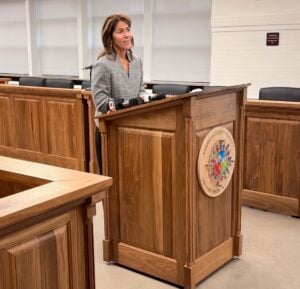
Kanawha County Superintendent of Schools Dr. Paula Potter, during a gathering with local media reporters Thursday in Charleston, pointed to several factors to explain the numbers. She said that Kanawha County, as a whole, is experiencing a population drop. She added that an increase in school choice options, such as the Hope Scholarship program, have played a role.
“The school system is a microcosm of our society,” Potter said. “We have a lower population. We have a lower birth rate. Therefore, we have less school-age children entering our school system.”
Last year, the system had 22,132 students.
This year, that number became 21,199.
The decline didn’t come as a surprise to Potter. She said that she’s been keeping close tabs on the latest enrollment numbers. She said that her commitment, same as the school system, is on the 21,199 students still within Kanawha County Schools, along with staff and service personnel. Potter said that she wants Kanawha County Schools to continue to be the place to be for quality education.
“We’re just committed on trying to find ways to bring any student that isn’t a part of our school system, that may be living here, back to Kanawha County Schools, or enrolling for the first time,” Potter said. “Of course, we’ll have to make adjustments if that doesn’t happen and we continue to see a decline in enrollment.”
The Kanawha County Schools Excess Levy is appearing on ballots for the November General Election. That levy funds nearly one-quarter of the system’s operating budget, enabling Kanawha County Schools to fund 200 additional positions above the state’s funding formula. Voters will be asked to renew the levy, which has been approved by residents since 1937.
Potter said Kanawha County Schools has to be financially responsible going forward.
“We have to be good stewards of the taxpayer dollars,” Potter said. “We will have to look at some of our schools that have fewer students in them than the more populated schools.”
The state Department of Education recently rolled out a framework to alter the state’s school aid funding formula. WVDE Financial Operations Officer Uriah Cummings said the proposal would take a three-year average of school district enrollment, comparing the higher of that three-year average up against the most recent year’s net enrollment.
“The higher of those two numbers would be what the state aid funding formula would be, that base funding amount that would drive funding for the students of that individual school district,” Cummings said at a meeting last week.
Potter said that the proposed formula changes would provide some “relief” to all 55 counties. She said that the new framework would help, with rising special education funding costs, as well as the normal, everyday expenses that don’t go down even with student enrollment decline.
“The cost of utilities, keeping a building running with the proper amount of staff to address all of the needs for students, don’t change — and transportation costs don’t just go away — because we have some students that leave the area,” Potter said. “We still have to run buses. We still have to operate the schools and employ people.”
Potter noted that currently, the Reductions in Force — RIF — process requires school systems to eliminate their “least senior” employees. She said that it’s not based on merit; it’s based on tenure. She said that penalizes younger employees to come to work in Kanawha County Schools.
Potter said that they’re going to move forward by spending resources “the best way that we know how.” She said they’ll examine every potential avenue going forward to deal with dropping enrollment.
“Currently, our funding formula is based on student population, so, we will not receive funding for students that aren’t in our school,” Potter said. “We will have to consider all areas of school closures, consolidations, unless the funding formula has changed somewhat.”
The four-percent decline doesn’t necessarily tell the complete picture, Potter said. She added that Kanawha County has more school choice options than its counterparts across the state.
“You also have to keep in mind, Kanawha County is the largest school district, so even though the percentage is a little bit higher, our population is higher than most other school districts,” Potter said. “The opportunity for school choice, because we’re in the Capital City, it’s closer in location. Some of your more rural counties don’t have as many opportunities as Kanawha County does.”
Potter said that the enrollment decline’s impact on Kanawha County Schools’ operating budget next year will present itself in December or January, when the budget numbers come in.
MetroNews Statewide Correspondent Brad McElhinny contributed to this story.