

LEWISBURG, W.Va. — Labor and delivery services are coming back to Greenbrier County.
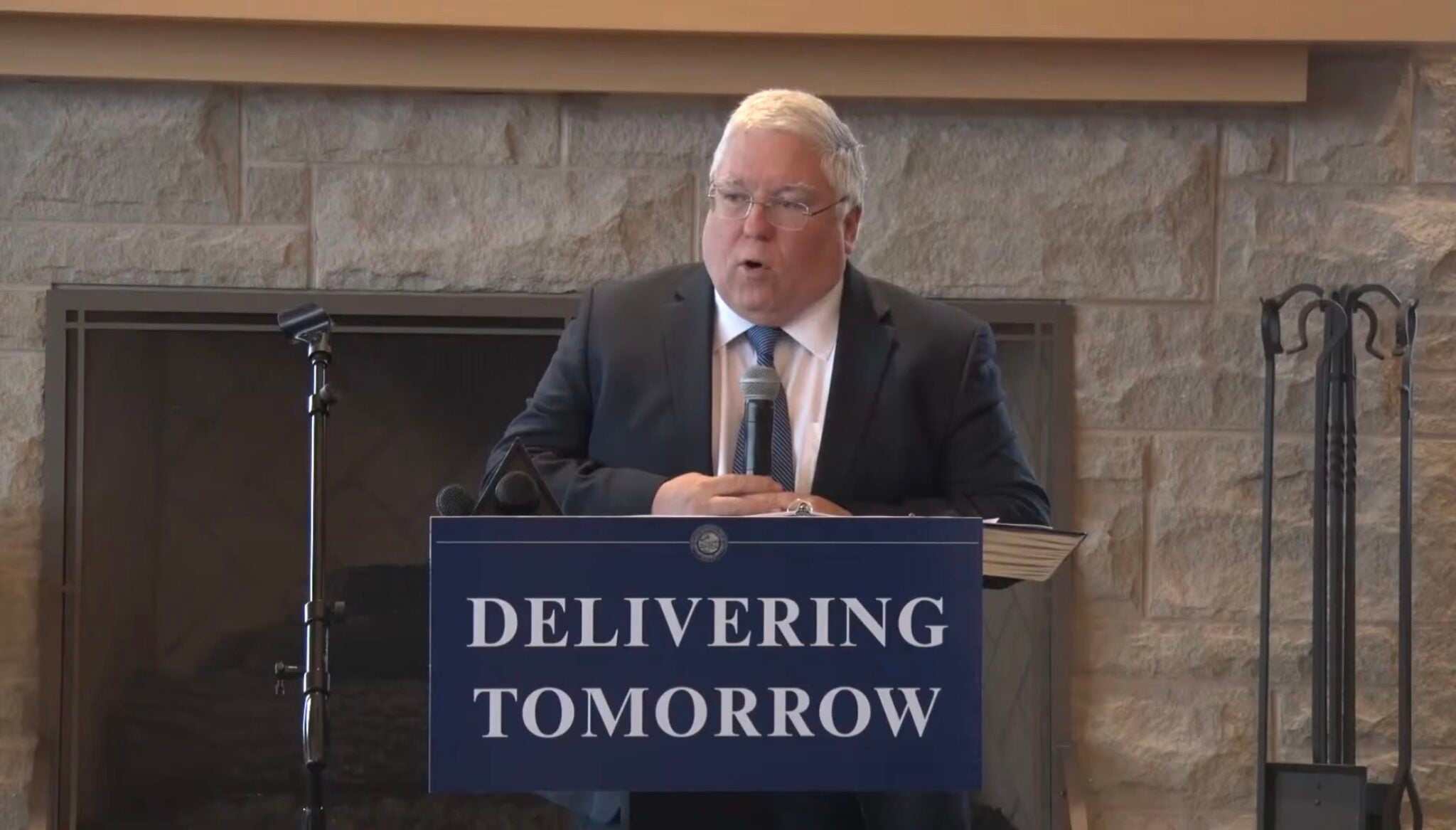
Gov. Patrick Morrisey announced a partnership between Vandalia Health and the West Virginia School of Osteopathic Medicine (WVSOM) on Thursday that will allow those services to return to the Greenbrier Valley Medical Center in Lewisburg. In addition to the agreement between Vandalia Health and WVSOM, the Mountain State’s second freestanding birthing center will be erected through a nearly $4 million grant from the Rural Health Transportation Program.

Morrisey touted the economic investments coming to West Virginia but noted that healthcare has to keep pace. When those services recently went away from the Greenbrier Valley Medical Center, the governor said, that created a void in the region.
“If families can’t access essential healthcare services,” Morrisey said. “That’s a real obstacle to getting more people to work and having a strong local community.”
Through Vandalia and WVSOM’s partnership, an ‘Academic Integration Agreement’ will bring back obstetric services to the Greenbrier Valley Medical Center. The osteopathic medicine school will become Vandalia Health’s main academic affiliate, not exclusively, a process that will unfold in phases starting next July.
“It gives us a pathway to find new, fresh blood to come into this area,” Morrisey said. “We need more doctors. We need more nurse practitioners. We need more healthcare providers. That great sign of like that beating that’s going to help allow us to track more people here and keep the kids here who live in this area.”
There will be expanded Graduate Medical Education (GME) and Residency Programs through this agreement. Vandalia Health President and CEO Jeff Sandene said that many people played a role making this happen.
“It was about a year ago that we announced the closure, and there’s a lot of reasons for it,” Sandene said. “But I’ll tell you, we’ve been steadfast in our conversations with the governor’s office around how can we solve some of the challenges of rural healthcare? We have a great opportunity with rural transformation. It’s transformational.”
Care for C-sections, epidurals, and higher-risk pregnancies will occur at the hospital. The community-based birthing center will also feature more prenatal and postpartum care and women’s health options.
Dara Aliff, DO, specializes in Obstetrics and Gynecology at Vandalia Health. She’s spent thirty years working in the region. She said the return of labor and delivery services will mitigate a huge barrier.
“Distance is a health problem,” Aliff said. “It doesn’t show up in a chart the way that a lab value does, but it does shape who does care and when they get it. As hospitals across the rural West Virginia have stepped back from doing deliveries, the women are still having babies. They just drive for them for prenatal care and for deliveries.”
West Virginia Secretary of Health Dr. Arvin Singh said this investment through the Rural Health Transformation Program is much needed.
“What makes this effort especially important is that we are bringing partners together around a coordinated approach to maternal care rather than treating each level of care separately,” Singh said. “For families, that means a clearer path between community-based services and hospital care, with the right level of support available when they need it. Our goal is to build a system that works together and can serve mothers and babies for years to come.”