

The state school board won an appellate review of who is the final authority on education regulations.
The West Virginia Board of Education distributed a statement praising the ruling “to uphold the will of the voters and the State Constitution, which grants the State Board of Education authority over the rulemaking and oversight of education policy.
“The WVBE will continue its important work of providing leadership, oversight and support to the education system and children in West Virginia.”
Justice H.L. Kirkpatrick, who is relatively new to the court, wrote the opinion. Justice Charles Trump dissented and wrote a separate opinion.
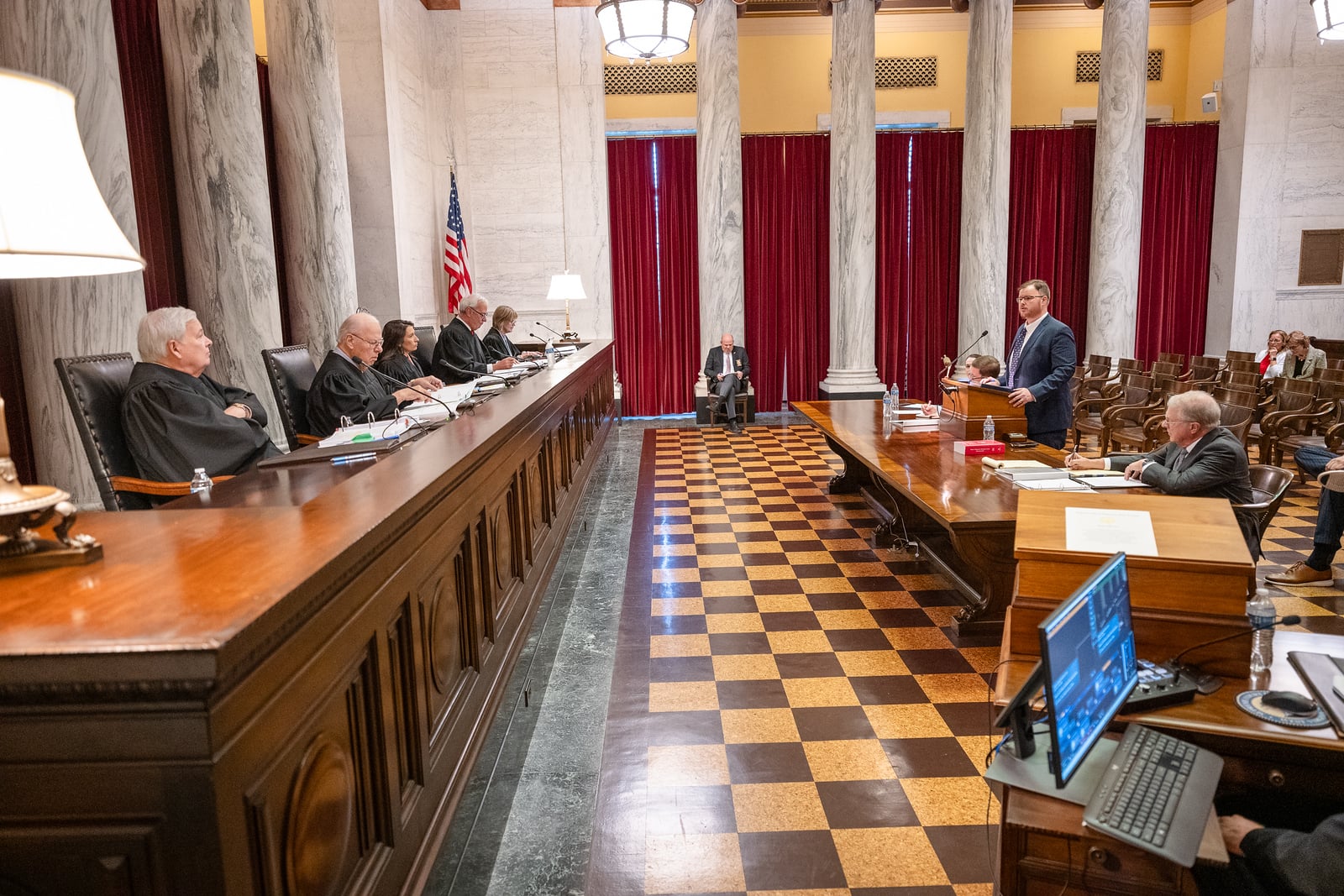
West Virginia Supreme Court justices heard arguments in September. Retired Justice Beth Walker sat in with the court for the oral arguments. Newly elected Justice Bill Flanigan, who recently served as a state delegate, stepped aside.
At the center of the conflict is a bill passed during the 2025 legislative session, House Bill 2755, which makes a case that the Legislature exercises authority over the state Board of Education and thus has ultimate say-so on the rules governing the state education system.
That runs counter to the way the board has operated until now. The state board has had the final say on the policies that fill in the details on how to carry out education laws passed by the Legislature.
The West Virginia Constitution says, “The general supervision of the free schools of the State shall be vested in the West Virginia board of education which shall perform such duties as may be prescribed by law.”
There is some duality of the responsibilities because the Constitution also says, “The Legislature shall provide, by general law, for a thorough and efficient system of free schools.”
The way the balance has typically been struck in practice is that the Legislature passes laws about education and the superintendent and state board are responsible for filling out the details through specific rules.
This balance of power question between the state board and the legislature has arisen over and over in West Virginia.
Four years ago, West Virginians rejected a constitutional amendment that would have given the legislature authority to review and approve the state Board of Education’s rules and policies, leaving the board’s current constitutional authority intact.
Years before that, the issue was considered in 1988’s West Virginia Board of Education vs. Hechler, referring to then-Secretary of State Ken Hechler, whose office was being asked to file rules approved by the board.
The state Supreme Court, reviewing the situation then, concluded that the Board of Education has “general supervision” of state schools under the Constitution and that any statutory provision that interferes with such rule-making is unconstitutional.
Justice Trump, in his separate dissenting opinion, said the bill passed by the Legislature is not an unconstitutional encroachment into the state Board of Education’s constitutional authority over general supervision of the public schools.
“Rather, it establishes procedures governing the exercise of the rulemaking authority that has been delegated to the Board by the Legislature in statute. The Legislature possesses the sole constitutional authority to prescribe those procedures,” Trump wrote.