

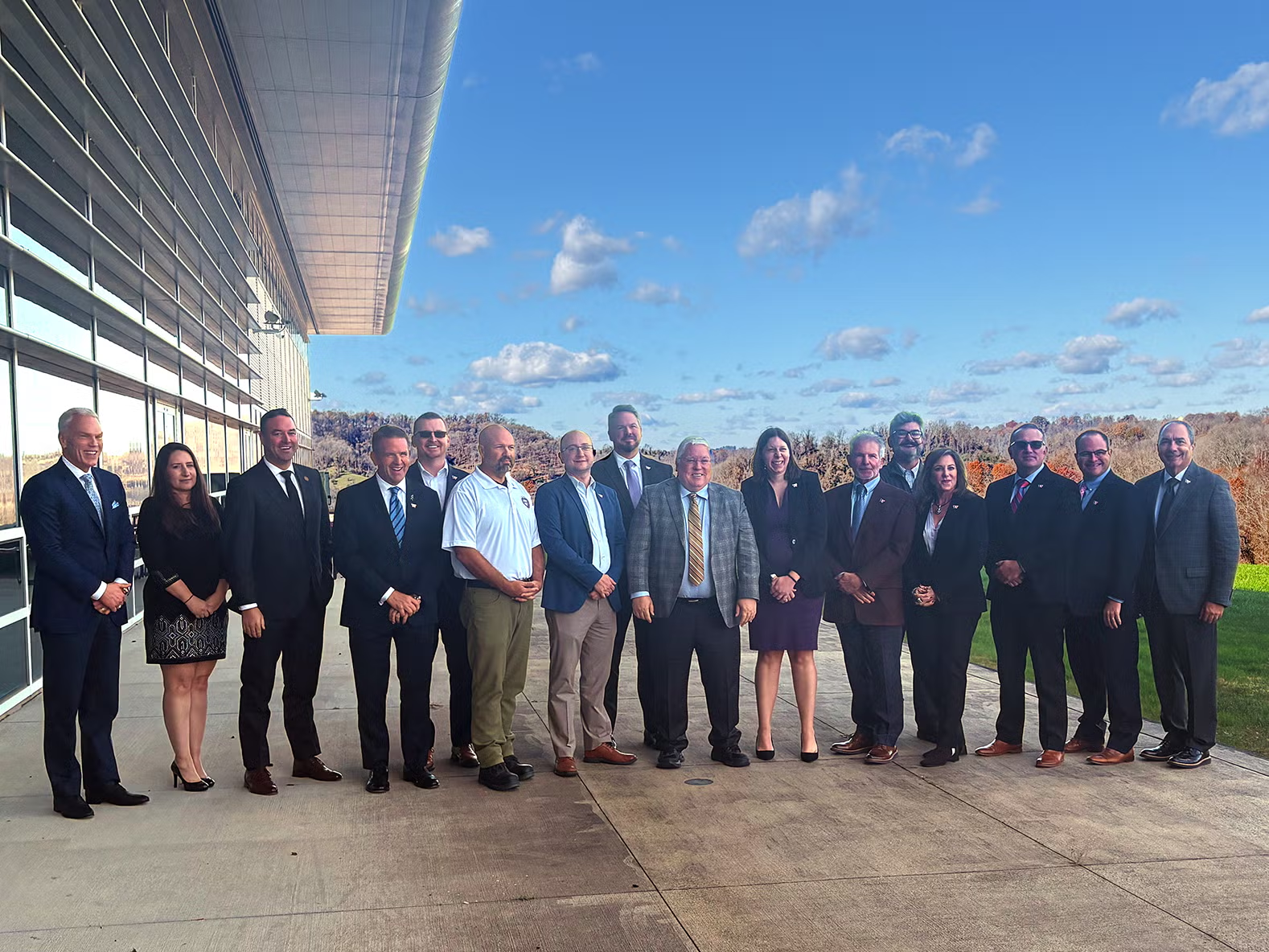
MORGANTOWN, W.Va. — More details are being released about the historic partnership between the West Virginia First Foundation and six universities to improve the grant delivery process and maximize the investments made into addiction treatment with opioid settlement funds.

The West Virginia First Foundation is the organization developed by current governor Patrick Morrisey when he was attorney general to manage the influx of damage awards from opioid litigation.
On WAJR’s “Talk of the Town,” Executive Director of the foundation Jonathan Board said they are charged with making the most of a generational investment designated to help families broken by the opioid crisis. The foundation will now have access to the expertise of West Virginia University, the Rockefeller Neuroscience Institute, Marshall University, West Virginia Wesleyan College, the University of Charleston, Johns Hopkins University, and the University of Notre Dame.
“We want to ensure historical funds are steered exclusively toward programs with proven and measurable returns on what we call health investments for saving lives,” Board said.
The partnership will provide an opportunity for people associated with some of the finest programs in the country to watch and evaluate their operations in real time. The return input from that observation could lead to changes that could improve the delivery of care and get the most for each dollar spent.
“It’s to ensure not just short-term impact but long-term impact on studies to ensure objective funding decisions are met with not just speed to impact but long-term success,” Board said.
The foundation expects to gain value and expertise by tapping into the Center of Excellence for Recovery at Marshall University, the Wilson Sheehan Lab for Economic Opportunities at the University of Notre Dame, and the capabilities of the Rockefeller Neuroscience Institute. The ability they have to breakdown and analyze processes will help them get effective treatment to as many people suffering from substance abuse disorder as possible.
“The idea is to replace quasi-science and guesswork we’ve seen across the country,” Board said. “And even some of the bias we’ve seen with rigorous accountability.”
Johns Hopkins has looked closely at how other opioid settlements have been used, and they can help the foundation steer clear of things that don’t work. Board said the professionals at Johns Hopkins were very eager to offer their input into the process.
“The Bloomberg School of Public Health there at Johns Hopkins had done a great job of organizing some of those speed bumps and identified areas that could be better,” Board said. “We reached out to them, and they immediately came on board.”
All of the work and analysis, including the work of the WVU Health Affairs Institute, will assist the foundation in finding gaps in services and in prevention. Additionally, this work is expected to continue the trend of lower deaths attributed to opioid overdose.
“Expose gaps in services and service area deserts that we know exist and highlight those so we can get in there and make sure they are funded in the way that best benefits the community,” Board said.