


CHARLESTON, W.Va. — At the beginning of last year’s legislative session and again in his departure address, then-Gov. Earl Ray Tomblin proposed bumping up the state’s consumer sales tax by a percentage.
Doing so, Tomblin suggested, would provide about $200 million in new revenue for the state as it struggles to balance its budget.
Tomblin’s tip remains on the table, but the Republican majority in the state Legislature seems unlikely — at least for now — to take it even as new Gov. Jim Justice’s administration prepares a budget with up to $606 million in potential cuts.

“Right now, at least as I read the tea leaves, it has some headwinds to pass,” said state Senate Finance Chairman Mike Hall in a telephone interview.
“Anything has the potential to happen. I don’t think it will happen right out of the gate, and I think there would have to be a lot of soul searching and looking at the consequences of budget cuts before the speaker and Senate president would propose it.”
Hall, a Republican from Putnam County, recalled that he put Tomblin’s suggested 1 percent sales tax hike on the Senate Finance agenda last year. He said it went nowhere.
As a piece of a different bit of legislation, the Senate last year actually approved a 1 percent increase in the sales tax as the major part of an effort to generate more money for the state Road Fund. But the tax proposal skidded out when it hit the House.
This year, Hall continued, “That would have to come from the top down, from leadership of both houses, if it’s going to happen. Right now I’m not hearing the leadership of the House and Senate say they’re going to support it.”
After Justice’s chief of staff, Nick Casey, revealed this week on “Talkline” with Hoppy Kercheval that the administration is looking at a range of $390 million to $606 million in potential cuts, both House Speaker Tim Armstead and Senate President Mitch Carmichael said they welcome that approach.
For a tax increase to be palatable to the Republican majority in West Virginia’s Legislature — even one that might reduce the potential cuts by a third — legislators would need to take a long, hard look at what is being cut, Hall said.
“Situations just have to ripen,” he said. “I don’t think we’ve reached that yet with a tax increase.”
Another Republican on the Senate Finance Committee, Craig Blair of Berkeley County, said he would not currently embrace a tax increase of any kind.
“I can only speak for myself, but I believe there’s zero appetite for a wholesale increase of any tax in the state of West Virginia,” Blair said in a telephone interview. “I guess things could change if we went through and did 3 and 4 and 5 hundred million dollars in cuts and that still wasn’t enough.”
He continued, “For coming in and saying we’re going to increase the sales tax 1 percent without reducing somewhere else — if I were a betting man, I wouldn’t touch that one because I’d be a loser.”
Blair says he is looking forward to the budgeting process because the cuts could provide an opportunity to re-think state government’s role.
“You’re starting out somewhat fresh again,” he said.
He said that if some agencies or programs don’t survive this year’s budgeting process, it’s possible that elected officials could try to revive them once times get better.
“Yes, there’s going to be hard cuts made. Those are tough, hard cuts,” Blair said.

In the House of Delegates, Finance Chairman Eric Nelson recalled that last year, as the Legislature struggled to get a handle on the budget, a bill in House Finance that would have raised the consumer sales tax by 1 percent generated some interest late in the session. Then it fizzled.
“It was Delegate (Jim) Morgan’s bill he introduced each of the last four years, raising the consumer sales tax one percent,” Nelson said. “We used it and amended it to broaden the base, and we added maybe a dozen categories that are exempt right now that would have raised a certain level of revenue.
“It came to the floor and got a second reading, and I had to pull it for various reasons,” Nelson said in a telephone interview.
That experience also led Nelson to conclude an increase in the sales tax isn’t likely to go far, especially early in the session.
Nelson noted that greater home rule flexibility has allowed some cities and counties to increase the consumer sales tax on their own. So citizens who live in communities that have chosen to do so might wind up experiencing more than one sales tax bump.
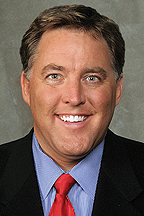
House Minority Leader Tim Miley, D-Harrison, talked about the possibility of raising the consumer sales tax while responding to a question Tuesday on “Talkline.” He said raising the sales tax, even temporarily, could provide some shelter from enormous cuts. But in the House, Democrats like Miley are outnumbered 63 to 36 with one independent.
“The benefit of doing it that way is that it would give Jim Justice and his administration time to go in and make structural changes to the way our government operates,” Miley said. “So that, to me, might be the preferred route unless we’re ready to go in and eliminate the sale tax exemptions on so many services — which ultimately means raising taxes who pay for various types of services who aren’t paying now.”
Here’s a visual representation of the 2017 state budget in millions of dollars. The tiny block in the lower right-hand corner representing transportation is just what comes out of the general fund; the bulk of state funding for transportation comes out of the state Road Fund:

The West Virginia Center on Budget and Policy generally believes the consumer sales tax is regressive because those with fewer resources pay more, said Ted Boettner, executive director of the organization.
But if choosing between an increase in the sales tax and state budget cuts of $600 million, the center would advocate for the tax increase, Boettner said.
“If we’re going to increase the sales tax or cut higher education by $200 million, I would lean toward the sales tax,” Boettner said.
Last spring, while the Legislature was struggling with the budget, the Center on Budget and Policy suggested some revenue options that included tinkering with the state sales tax. The suggestions included:
Apply the sales tax to digital downloads: West Virginia has not updated its sales tax to reflect today’s economy. A good step is to cover various goods and services sold and delivered on the Internet – including books, music, movies, and other digital products downloaded electronically. There is an element of equity here because West Virginia taxes the sales of identical items sold in stores. This change would also slightly reduce the extent to which the sales tax falls disproportionally on lower-income households, since most digital goods are more likely to be purchased by higher-income households that make more online purchases. According to the West Virginia Tax Department, the revenue forgone from this exclusion is $10 million per year.
Apply the sales tax more widely to personal services: The sales tax now excludes the money paid to barbershops, beauty and nail salons, massage and tattoo parlors, and private fitness centers. While West Virginia taxes more services than most states, these personal services remain exempt for no discernable reason and should be part of the state’s sales tax base. According to the West Virginia Tax Department, the revenue forgone from this exclusion is $2.0 million for personalized fitness and $3.8 million for other personal services.
Those sales tax options, while potentially worthy of consideration, obviously wouldn’t amount to $600 million.
Boettner expressed skepticism over whether legislators who say the state can cut its way out of its budget mess actually realize what $600 million in cuts looks like.
“Nobody who wants to make $600 million in cuts has even identified a hundred million in cuts they want to make,” he said.
“Tell me a line item or an agency in the budget that will go down $600 million. Nobody will give you an answer on that. It tells you that most likely they’ll be looking at revenue increases.
He continued, “You can’t get to that magnitude of cut without shutting down complete agencies. You just can’t.”

The Cardinal Institute, a Charleston think tank that advocates for conservative approaches, said big cuts will have to come first. Garrett Ballengee, executive director, said state leaders will likely have to consider law and order, infrastructure and education funding as the main roles of government.
“The first thing we have to do is figure out where to cut,” Ballengee said. “Beyond that, folks really need to look at what is it that folks in West Virginia can afford.”
The Cardinal Institute is not excited about raising the consumer sales tax to balance the budget, Ballengee said.
“We would want anything to be revenue neutral,” he said. “We’re not interested in seeing the size of government grow. We would like to see the budget deficit met with cuts or getting creative.”
If state employees are to be laid off — and that seems unavoidable given the size of the cuts described — Ballengee suggested a humane approach might be to offer some form of buyouts.
“I think West Virginia should look at something like that — some ways to cut the size of government in a humane way that doesn’t rely on across-the-board layoffs.”