

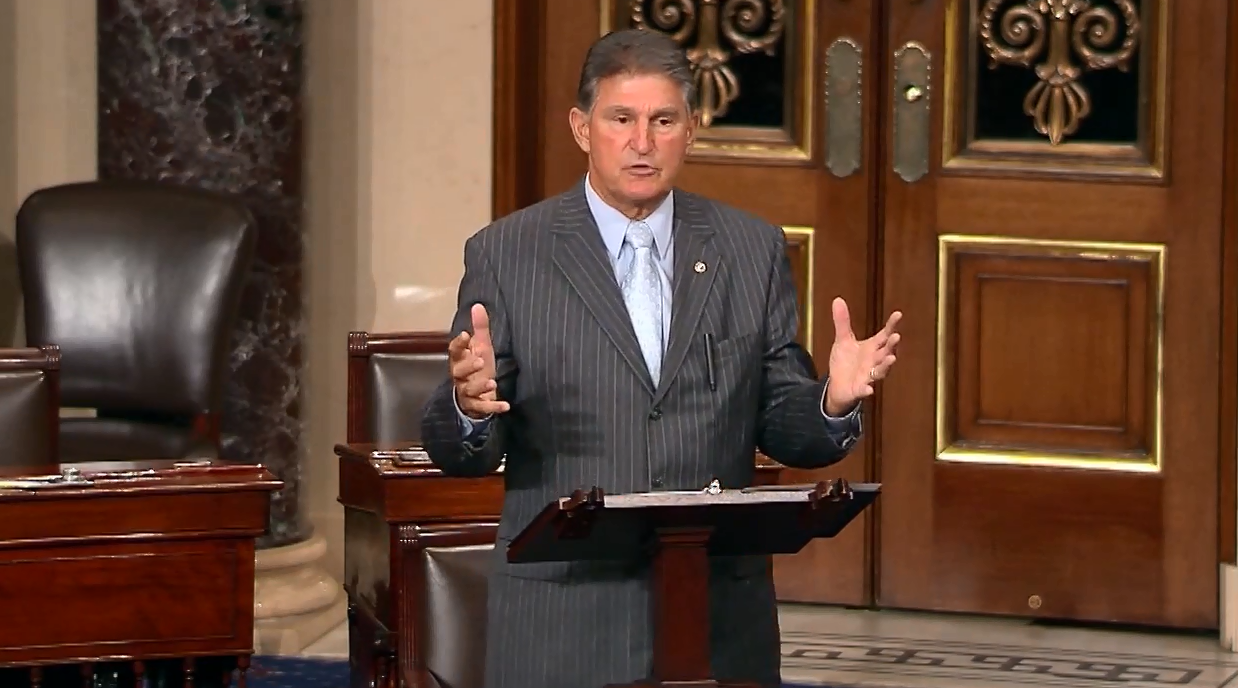
The U.S. Senate Energy Committee led by Joe Manchin passed out a broad-ranging bill with $95 billion for energy technologies and infrastructure.
In remarks about the vote, Manchin described the bill as the first piece of a bipartisan infrastructure proposal to pass out of committee. The committee vote was 13-7.
“I know how long and how hard everybody worked to get this done,” said Manchin, D-W.Va. “On the bipartisan infrastructure agreement that’s out there, we’re the first committee that has absolutely a working document.”
The Energy Committee meeting lasted for hours, with senators proposing and debating amendments plus taking breaks for votes and other congressional business.
MORE: In scuffle over federal funding of hyperloop development, Manchin wins in a tie
Among many provisions, the bill includes $11.2 billion in new funding to clean up abandoned mine lands and the reauthorization of the Abandoned Mine Lands fund.
In an opening statement as the committee started its work today, Manchin lauded aspects of the bill.
“I will acknowledge once again that we may not all agree on the size or scope of investment we need, but it is abundantly clear that my colleagues on the committee share the belief that our committee has a role to play when it comes to infrastructure,” Manchin said.
“While every section of the bill has seen some changes, at a high level those conversations have resulted in the inclusion of an extension of the fee that funds reclamation of abandoned mine lands, $8.3 billion for western water infrastructure, and the removal of a permitting provision for gathering lines.”
Manchin noted that the bill also:
- invests in the reliability and resilience the electric grid while expanding transmission;
- builds out domestic supply chains for clean energy technologies – from the sourcing of minerals to recycling of batteries;
- invests in water infrastructure needed by western states, restores ecosystems, and mitigates wildfire risk;
- and cleans up the abandoned energy infrastructure “that powered our country to greatness while also reducing methane emissions.”