


Almost all participants in a public hearing spoke against a bill that would ban aspects of gender affirming care for minors. The bill is lined up for a passage vote in the House of Delegates on Friday.
One of the speakers expressing deep criticism of the bill has no doubt it will pass.
“I will tell you I’m more fatalistic about this bill than probably everyone in here. I know it’s going to pass,” said Danielle Stewart, an Army veteran who transitioned to be a woman.
“There are too many people with hate in their hearts who don’t understand the subject, don’t care about our kids. And what’s more important to them is to bully kids than actually take care of real issues. Our state has issues, economic issues, huge education issues; we have issues with our infrastructure, but we’re here today transgender youth.”
Stewart concluded, “This is an easy target that this Legislature gets to say ‘Yes, we did something.'”
Stewart also appeared on MetroNews’ “Talkline.”
There was a public hearing today regarding the bill that would prohibit gender reassignment surgery or medications for teens. Danielle Stewart and Christian Baisden discuss this bill with @HoppyKercheval. WATCH: https://t.co/yCFQ3nDJuy pic.twitter.com/GsCRhHZYp5
— MetroNews (@WVMetroNews) February 2, 2023
The original version of House Bill 2007, “Prohibiting certain medical practices,” focused on irreversible gender-affirming surgery. A revised version advanced this week by the House Judiciary Committee also includes gender-altering medication.
Supporters pointed generally toward news coverage of gender-affirming procedures elsewhere and said the policy is meant to ensure West Virginia doesn’t face growing acceptance of the treatment.
Critics of the bill have said such surgery doesn’t occur in West Virginia because medical providers already have policy against it. On the issue of medicines such as hormone blockers, critics have said the government is getting in the way of decisions that should be among medical professionals, youths and their families.
The public hearing in the House chamber drew about 50 speakers who each had a minute to make their point. Most said the teenage years are difficult and that gender identity issues can make that period of life even more so. They asked lawmakers to stay out of the decisions that teens and families make.
One of the first to speak was Dr. Allison Holstein, a Charleston pediatrician who urged a no vote on behalf of the West Virginia chapter of the American Academy of Pediatrics.
“Any legislation that bans a gender affirming care encroaches on the physician patient relationship and ignores any complexity involved in with medical decision making process,” Holstein said.
Dr. Stephen Deci, an adolescent psychiatrist from Morgantown, also urged a no vote and said the legislation would interfere with medical care of youths.
“I have seen many young patients and their families transformed by this medical therapy. These therapies allow children to be who they are and not experience distressing sex characteristics. When these therapies are not provided in these children, anxiety and depressive symptoms from the psychological distress result in suicide. These therapies save lives,” he said. “This bill will harm our children.”
 Delegate Jim Butler, R-Mason, was among the speakers too. He read a letter from someone advocating in favor of the bill. The mother who wrote the letter described herself as the mother of a trans-identifying teenager.
In seeking help, the woman wrote in the letter read by Butler, medical professionals “exclusively encouraged him to be transgender and renounce his parents and family. Our family has been wrecked — every dynamic, every person. So-called professionals who operate in these places need to be stopped.”

During the House floor session a few hours later on Thursday, delegates considered amendments to the bill.
Delegate Kayla Young, D-Kanawha, proposed one that would add other non-medical, cosmetic surgeries to the bill. “We’re talking nose jobs, we’re talking boob jobs; we’re talking all the jobs,” she said.
One of her colleagues, Democrat Mike Pushkin of Kanawha County, said that would be consistent.
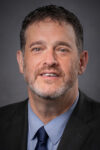
“Do we want to protect children from making a decision that could alter the rest of their lives? Why single out one kind of surgery. Any type of aesthetic, elective surgery would be banned. This is not singling out just one type of surgery. We’re saying we don’t want minors getting plastic surgery that they don’t need. If you support the bill, it would make sense to support this amendment.”
The amendment was voted down.
Delegate Shawn Fluharty, D-Ohio, proposed another amendment that would have added requirements for parental consent to the bill.
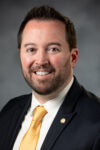
“I am trying to put parental rights in this bill. I’ve heard a lot about parental rights in regards to children’s healthcare in this body year after year. Yet I’ve searched high and low in this legislation and couldn’t find it. So right now, under the bill currently, the decisions are made between the doctor, the patient and the politicians, not the parents.”
Fluharty asked if the concept of parents rights just doesn’t apply to some kids.
“Just two days ago, we amended in parental rights decision making for transferring schools. It was important then. It’s not important today, apparently. So if you support parental decision making, if you support smaller government, if you support a decision making process to be between the doctor, the patient and the parents, you’ll support my amendment.
“If you support big government being in the exam room, then go ahead and vote against the amendment.”
That amendment was rejected too.