


Development Secretary Mitch Carmichael gave lawmakers a rundown of positive signs for West Virginia’s economy, including improved jobs numbers, steady improvement for gross domestic product and millions of dollars in corporate investment.
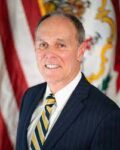
“If we highlight the many accomplishments that are occurring, people will begin to feel this momentum,” Carmichael told members of the Joint Standing Committee on Economic Development & Tourism during a Sunday afternoon interim committee meeting.
His presentation was an overview of economic progress in a state that has struggled historically.
From 2017 to 2021, he said, West Virginia generated $6.2 billion in private capital investment. Then, he said, the state generated $6.2 billion in 2022 alone. “In one year, we did more than the previous years,” Carmichael said.
Employment growth also surged, although Carmichael acknowledged that started from the point that the bottom dropped out during the covid-19 pandemic. Nevertheless, he said, West Virginia’s economy experienced growth of 125,000 jobs over the past 38 months.
“Now someone will say, because it measures from April 2020, the low of the pandemic numbers — but still, look at the amount of growth that we’ve had in this amount of time,” he said. “It’s a family earning a wage. It’s someone going to work.”
West Virginia’s unemployment rate is just about 3.4 percent, a rate that continues a long downward trend.
Gross domestic product for West Virginia has been steadily rising the past couple of years.
Average wage rate was up up 7 and a half percent in 2022, Carmichael said.
“So why is West Virginia succeeding at this amount, at this rate? What is our value proposition to the world?” Carmichael asked. “This is the sales pitch that we provide to corporate America, and it’s incredibly compelling.”
First is central location, just a day’s drive from key locations in the region. Low cost of business operations, including workers compensation rates, is another factor. Energy resources are yet another attribute.
“It’s fun to win,” Carmichael said, “and we’re winning, you’re winning, the state’s winning, and we just want to continue the momentum that we’ve built. I think the future’s very bright for our state.”
The MetroNews West Virginia Poll showed that, generally, many residents believe the state’s economy is doing worse.
Forty-four percent of respondents believe the state’s economy is getting worse, according to the latest edition of the poll.
About 37 percent of respondents described the state’s economy as about the same.
Just 19 percent say the economy is getting better.

“First and foremost, I believe that the state economy is betting better, not worse, in contrast to the poll results,” said John Deskins, director of the Bureau of Business & Economic Research, at West Virginia University.
Deskins was responding by email to the poll results about economic attitudes — not specifically to Carmichael’s presentation before lawmakers.
“One factor that may be driving the poll results is that many parts of West Virginia are not growing at all. The growth that we see is concentrated in a few counties. That may certainly skew the poll results, as I believe people tend to look at the own community and not the entire state.”
The biggest issue facing the state in the near term is the national economy, Deskins said.
“Remember, a year ago we were in the midst of very high uncertainty nationally. Inflation was the highest that it has been in about 40 years, and the Fed was in the middle of an incredibly aggressive rate hike campaign. This situation raised the likelihood of a recession to probably 50-50. And that would have certainly impacted West Virginia severely as well, not just the nation,” he said.
“But now, moving forward a year, we seemed to have navigated the rate hikes pretty well, and inflation is way down. We are not out of the woods yet, inflation is still not where we want it to be, and we certainly haven’t felt the impact of all of the rate hikes. But we are way BETTER than a year ago. This is true nationally, and in West Virginia.”
The near economic future, Deskins suggested, is partly sunny with some clouds.
“The main issue that I see going forward is the fact that we expect very slow growth, state and nation, going forward over the next couple of years,” he said. “Slow growth, but not decline.”